 Ozikoro
 Anthropology and Ethnography · Published history
The Demography of Biafran Slave Exports (1650–1850)
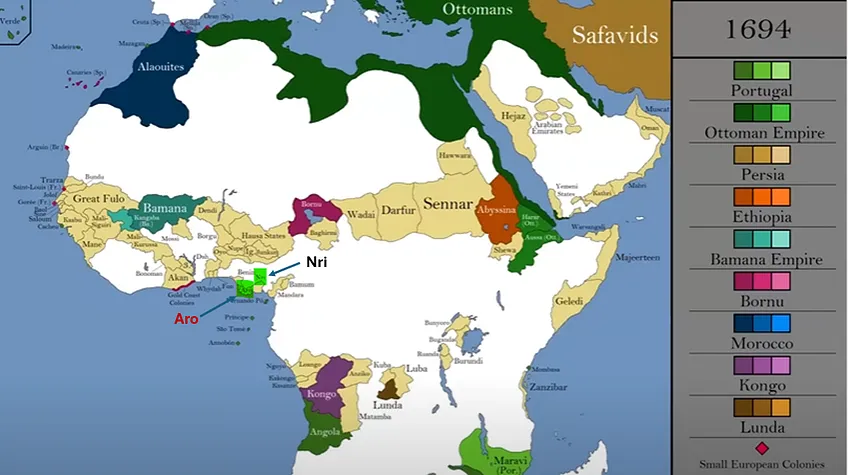
Between 1650 and 1850, the Bight of Biafra emerged as one of the Atlantic world’s most significant export zones for enslaved Africans. The region comprising the eastern Niger Delta and the densely populated Igbo hinterland supplied millions of captives to the Americas over two centuries. Scholars have established that the Biafran interior was overwhelmingly Igbo-speaking and socially interconnected, which meant that the demographic patterns of the slave trade from this region were overwhelmingly Igbo in character. The book establishes that the “hinterland supplying the Bight of Biafra was almost entirely Igbo-speaking” and that this demographic clarity is crucial for understanding the composition of enslaved Africans in the Atlantic world. The demographic flows, age and gender distributions, regional variations, and long-term implications therefore form an essential part of the history of Igbo participation and victimhood in the Atlantic slave system.
The written record
-
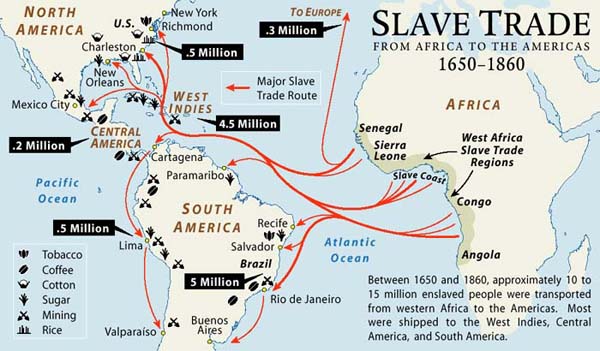
- Slave trade from Africa to America from 1650 to 1860.
- Photo credit; University of Richmond blogs.
This essay examines the demography of Biafran slave exports between 1650 and 1850 focusing on population pressure, sex ratios, age categories, interior migration networks, and destination patterns while situating these demographic dynamics within the larger historical context of the Igbo Atlantic world.
Historical context
Population Structure and Internal Pressures
The demographic profile of the Igbo hinterland played a foundational role in shaping slave exports. The eastern region of the lower Niger basin as an area characterized by “large population, low fertility, and high emigration.” These demographic pressures created internal instability and mobility patterns that allowed slave-trading networks particularly those controlled by Aro merchants and their allies to flourish. Migration, both voluntary and coerced, became a defining demographic force, as communities sought new farmland, safety from conflict, or economic opportunities. A high population density meant that households were often fragmented by warfare, disputes, and accusations mediated through religious institutions such as the Arochukwu oracle. These pressures contributed to a steady supply of captives who could be funneled toward coastal ports. The demographic structure of the interior therefore shaped the scale and intensity of Biafran exports, creating a pool of captives that fed into Atlantic markets from the mid-seventeenth to mid-nineteenth centuries.
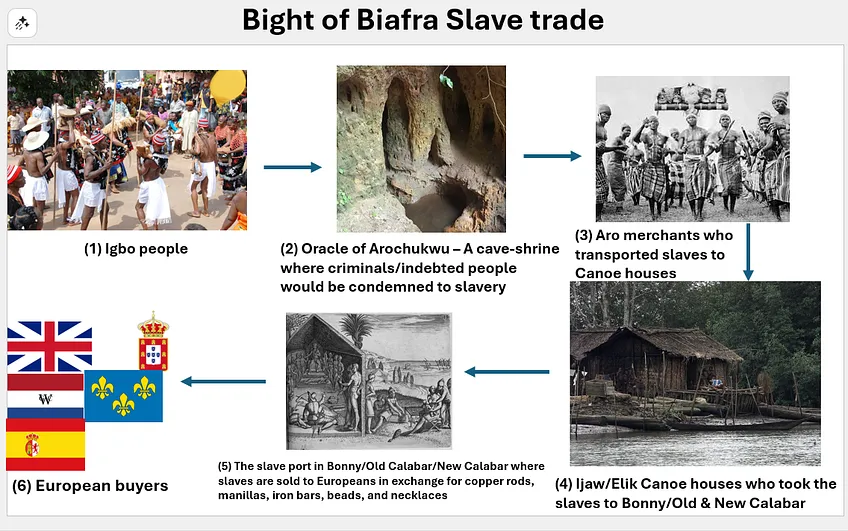
Photo credit: Yaw’s Brief.
Ethnic Composition and Regional Identity
One of the most distinctive demographic features of the Biafran slave trade was its ethnic homogeneity. Unlike regions such as the Bight of Benin or West Central Africa, which exported multiple ethnic groups, the Bight of Biafra exported a population that was overwhelmingly Igbo-speaking. The book repeatedly emphasizes this ethnic uniformity, noting that the Biafran hinterland was populated by Igbo-speaking communities whose cultural, linguistic, and social connections extended across large distances.
This homogeneity influenced both the demographics of the trade and the diasporic identities that formed in the Americas. Plantation records in the Caribbean, North America, and parts of South America later reflected the numerical dominance of Igbo captives. The demographic specificity of Biafra therefore set it apart from most other African export zones. The region supplied a distinct ethnic population with shared cultural traits, something that made the Igbo diaspora particularly identifiable in Atlantic history.
Age Structure of Biafran Captives
A striking demographic pattern identified in the book is the unusually high proportion of children exported from Biafra. Scholars cited in the text show that the Biafran trade was “notably child-intensive,” with children forming a large share of captives by the eighteenth and nineteenth centuries. This pattern differed from West Africa’s western regions, where adult males typically dominated the slave trade. The reasons for this child-heavy demographic profile included:
- the internal political structure of Igboland, which discouraged extensive warfare but allowed kidnapping or judicial enslavement of minors
- the household-level conflicts common in lineage-based societies
- the relative ease of transporting children over long distances along trade routes
- the demand for children in the Americas, where child captives could be socialized more easily into plantation labor systems.
Children therefore became a demographic cornerstone of the Biafran export economy. Their displacement had profound consequences for Igbo society, including the weakening of age-grade systems, lineage continuity, and inheritance structures.
Gender Ratios and Their Implications
Gender ratios in the Biafran slave trade differed from patterns found elsewhere on the continent. While many African export zones sent disproportionately high numbers of men to the Americas, the Biafran trade often exhibited a more balanced or even female-leaning ratio. Specific cultural, judicial, and social dynamics of Igboland made both men and women vulnerable to enslavement especially through oracle judgments, debt pawning, and disputes.
Women and girls were targeted because of their economic roles in agriculture, their value in Atlantic domestic labor markets, and the demand for reproductive labor in slave societies. This gender pattern profoundly shaped both Atlantic plantation societies and the demographic evolution of Igboland. The removal of reproductive-age women had long-term effects on population growth and lineage continuity in the Igbo hinterland.
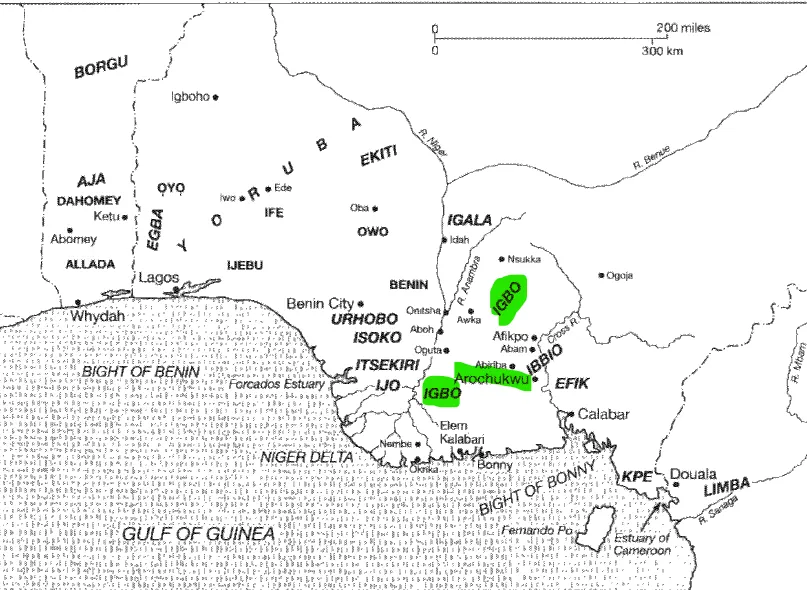
Photo credit: Yaw’s Brief.
Interior Trade Networks and Population Mobility
Another demographic insight from the book is the scale of internal movement that preceded Atlantic exportation. Large numbers of captives were transported from deep in the hinterland, sometimes hundreds of kilometers to coastal markets controlled by Delta city-states such as Bonny, Elem Kalabari, New Calabar, and Opobo. The “economic patterns of the interior,” including migration, dispersal, and settlement shifts, were central to understanding how people became incorporated into the slave trade. These interior movements were facilitated largely by Aro networks, which linked remote communities with coastal ports. As a result, demographic flows from 1650 to 1850 involved multiple stages of displacement first within Igboland itself, and then across the Atlantic. The demographic profile of Biafran captives was therefore shaped not only by export patterns but also by earlier population movements within the region.
Atlantic Destinations and Diasporic Distribution
The demographic profile of Biafran exports also appears in destination data analyzed in the book. The Bight of Biafra supplied a disproportionately large number of captives to British North America (especially Virginia and Maryland), Jamaica, Barbados.
The smaller British Caribbean territories, comparatively fewer captives went to Brazil or Spanish America, making the Igbo diaspora heavily concentrated in British-controlled territories. The mapping of slave destinations shows that the demographic imprint of Igboland was strongest in regions where British trade dominance intersected with the Bight of Biafra’s export networks. This destination pattern influenced the cultural retention of Igbo identity in the Americas. In places like Jamaica and Virginia, high concentrations of Igbo captives created distinctive cultural footprints, linguistic patterns, burial traditions, and resistance methods that historians continue to trace.
Long-Term Demographic Impact on Igbo Society
The demographic consequences of the Biafran slave trade for Igbo society were profound. Population loss was severe between 1650 and 1850, especially among children and women whose removal disrupted lineage systems and slowed demographic recovery. Communities experienced long-term shortages of labor, altered inheritance patterns, and weakened kinship networks.
The demographic trauma also coincided with an increase in internal migrations as families fled vulnerable areas or attempted to escape Aro-controlled routes. By the nineteenth century, these patterns reshaped settlement distribution across Igboland, as shown in the analyses of population movement. The demography of Biafran slave exports between 1650 and 1850 reveals a complex interplay of population structure, interior politics, ethnic identity, and Atlantic demand. The uniquely Igbo-speaking composition of the hinterland made Biafra the most ethnically uniform export zone in West Africa. The child-heavy and relatively gender-balanced structure of its slave exports distinguished the region from others, while internal migration networks shaped the flow of captives long before they reached the Atlantic coast. These demographic patterns left lasting marks not only on the Igbo homeland but also on the Atlantic world, where Igbo identity became one of the most recognizable African cultural influences.
Sources and references
- Falola, T., & Njoku, R. C. (2016). Igbo in the Atlantic World: African Origins and Diasporic Destinations. Indiana University Press.
Cite this article
Discussion
Sign in to join the discussion
Comments are checked by an editor before they appear. Leave a source or a correction and it is read first.
Continue reading
Related histories
 Anthropology and EthnographyMasquerade Traditions from Igboland to the Caribbean (Jonkonnu, Mocko Jumbie)Read history →
 Anthropology and EthnographyMapping Igbo Destinations in the Americas: A Comparative AnalysisRead history →
 Anthropology and EthnographyIgbo Linguistic Influences on Caribbean Creole LanguagesRead history →
No comments yet
Nothing has been approved on this record yet. Comments are checked by an editor before they appear, so one written now shows on this page after that check.