 Ozikoro
 Cultural Heritage · Published history
A Young Bride and the Marriage Tradition of Awka (Ọka)
The written record
Historical context
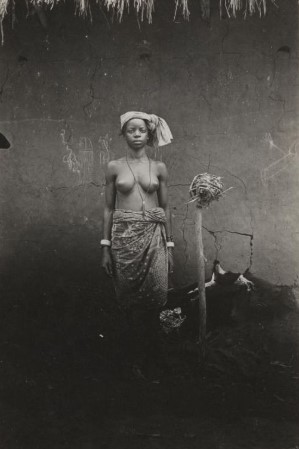
This photograph, taken by Swedish ethnographer Gustaf Bolinder during his travels in Igboland between 1930 and 1931, captures a recently married young woman standing in front of a dilapidated building in Awka, northern Igboland. Next to her is a carved figure, which Bolinder describes in Swedish as a symbolic marker placed outside a father’s house when his daughter marries.
The use of such figures reflects the deep cultural significance of marriage among the Igbo people. Traditionally, marriage is not just a union between individuals but a link between families and lineages (Uchendu, 1965). The placement of the figure may have served as both an announcement of the daughter’s transition into her new marital home and a marker of familial pride. Awka, historically known for its skilled blacksmiths and woodworkers, had a rich tradition of using symbolic carvings in social and spiritual practices (Basden, 1921).
This image provides insight into early 20th-century Igbo marital customs and the way material culture was used to signify key life events.
Sources and references
- Basden, G. T. (1921). Among the Ibos of Nigeria. Seeley, Service & Co.
- Uchendu, V. C. (1965). The Igbo of Southeast Nigeria. Holt, Rinehart & Winston.
Cite this article
Idenze Ezeme. “A Young Bride and the Marriage Tradition of Awka (Ọka).” Ozikoro, 2025. https://ozikoro.com/a-young-bride-and-the-marriage-tradition-of-awka-oka/Discussion
Sign in to join the discussion
Comments are checked by an editor before they appear. Leave a source or a correction and it is read first.
Continue reading
Related histories
 Cultural HeritageEleven Days of Nwafor Ogidi: Inside the Festival Keeping an Old Igbo Tradition AliveRead history →
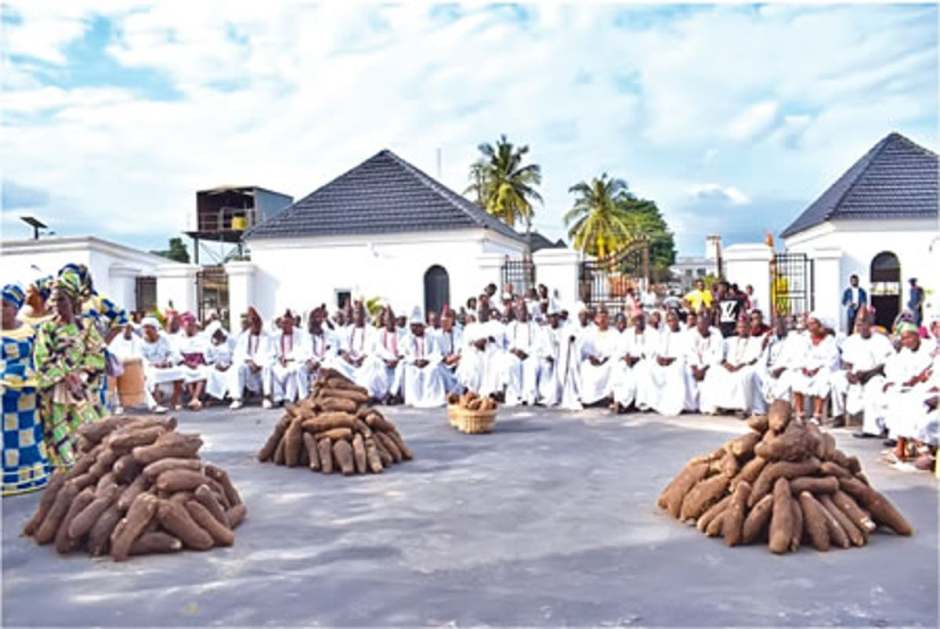 Cultural HeritageIli Ji Nkpor Obododike: The Indigenous Agricultural Ritual CycleRead history →
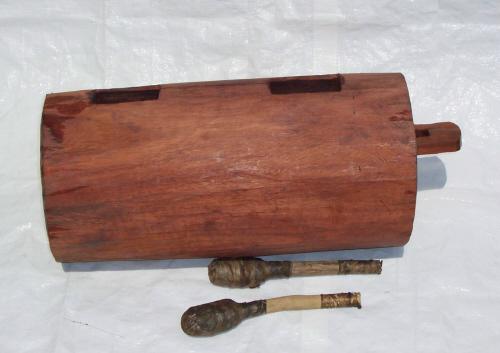 Cultural HeritageMusic and Drum Traditions: Tracing the “Igbo Drum” in the AmericasRead history →
No comments yet
Nothing has been approved on this record yet. Comments are checked by an editor before they appear, so one written now shows on this page after that check.