 Ozikoro
 Anthropology and Ethnography · Published history
Ajibodo and the Owu Masquerade: Cultural Significance and Social Order in Riverine Igbo Communities
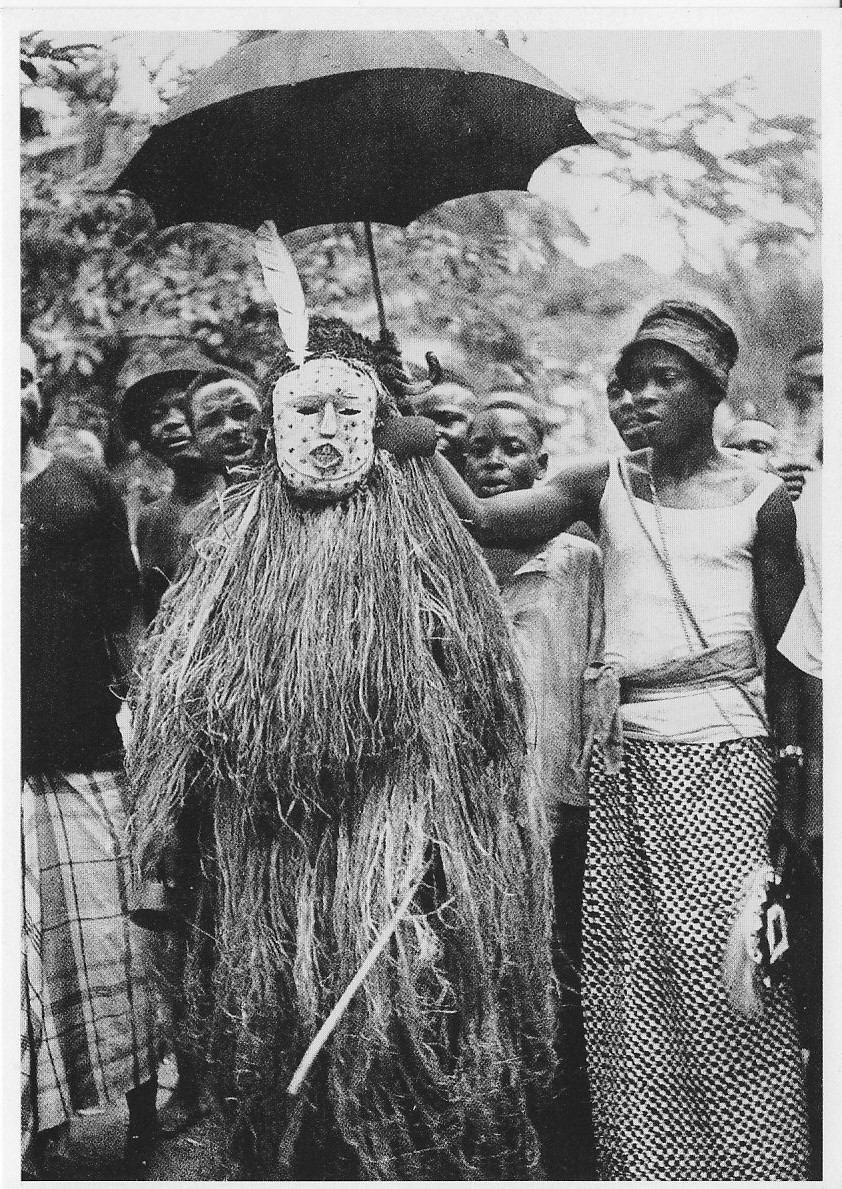
Forde, D., & Jones, G. I. (1957). Ibo and Ibibio-speaking people of Southeastern Nigeria.
The written record
Historical context
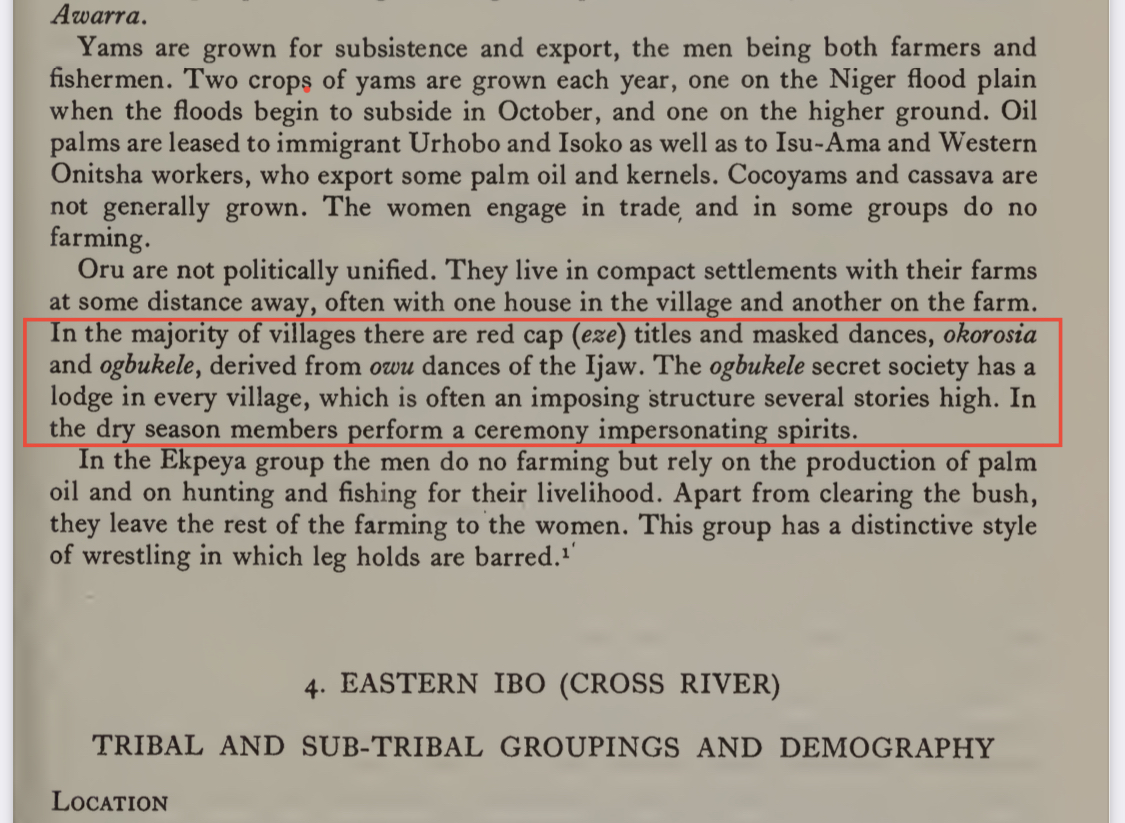
Darryl Forde and G.I. Jones. 1957.
“Owu Masquerade at Play” The Owu masquerade, a highly revered cultural entity, originated from Oguta, a prominent town in southeastern Nigeria, known for its rich traditions and strong connection to the riverine Igbo (Oru/Olu) identity.
Over time, this masquerade tradition spread across the Oru/Olu Igbo areas, extending into various riverine Igbo communities and even reaching the neighbouring Ijaw areas. Note that the Owu masquerade originated from Oguta, while the Owu dance is from Ijaw and was borrowed by the Oguta people from their southward Ijaw neighbours.
The Owu masquerade has become more than just a cultural performance; it is critical in enforcing laws, maintaining social order, and preserving the ethical codes within the riverine Igbo society and beyond.
Reference:
Sources and references
- Forde, D., & Jones, G. I. (1957). Ibo and Ibibio-speaking people of Southeastern Nigeria.
Cite this article
Chuka Odike. “Ajibodo and the Owu Masquerade: Cultural Significance and Social Order in Riverine Igbo Communities.” Ozikoro, 2024. https://ozikoro.com/ajibodo-and-the-owu-masquerade-cultural-significance-and-social-order-in-riverine-igbo-communities/
Continue reading
Related histories
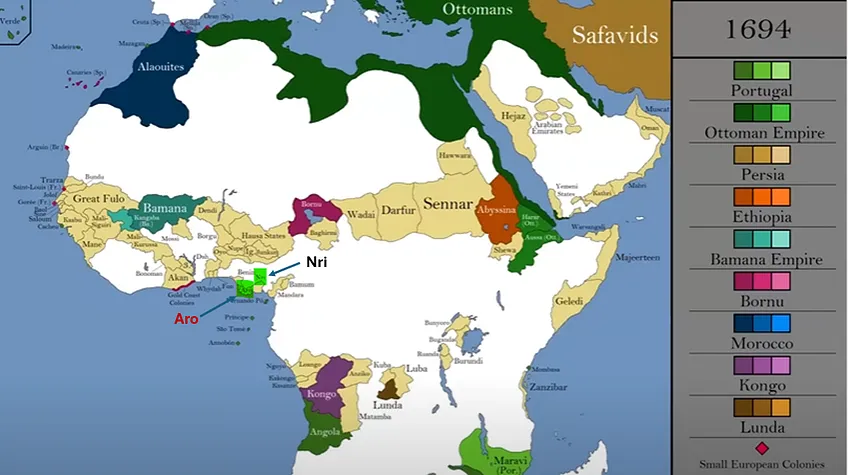 Anthropology and EthnographyThe Demography of Biafran Slave Exports (1650–1850)Read history →
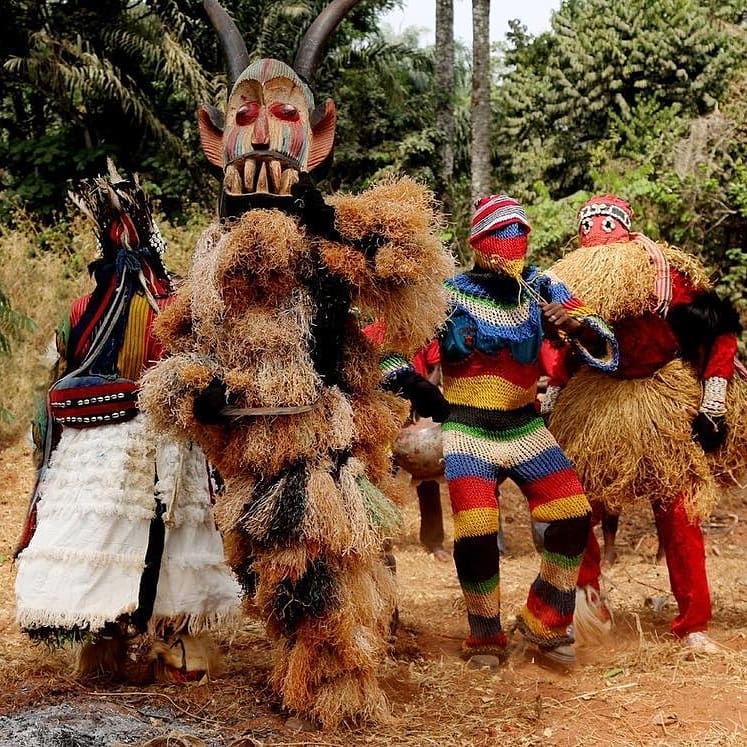 Anthropology and EthnographyMasquerade Traditions from Igboland to the Caribbean (Jonkonnu, Mocko Jumbie)Read history →
 Anthropology and EthnographyMapping Igbo Destinations in the Americas: A Comparative AnalysisRead history →
No comments yet
Nothing has been approved on this record yet. Comments are checked by an editor before they appear, so one written now shows on this page after that check.