The figure of Akalaka occupies a central position in the collective memory of the Igbo people of Ogba, Ekpeye, and Ikwerre peoples of present-day Rivers State, Nigeria. His story blends history, oral tradition, and ethnolinguistic continuity, linking three closely related communities to a shared ancestral source. While various traditions claim Akalaka was a Benin prince, emerging linguistic and cultural evidence indicate that he was of Igbo origin who lived within the Idu-Benin cultural sphere. This article reconstructs the Akalaka narrative through oral, linguistic, and historical data, situating it within the broader migratory movements of western Igboland and the Niger Delta.
The written record
Among the peoples of the lower Niger region, oral tradition serves as both archive and identity, preserving histories that written records often neglect. The history of Akalaka, revered as the progenitor of the Ogba, Ekpeye, and Ikwerre groups, is one such tradition, complex, layered, and contested. Several versions of Akalaka’s origin exist. Some oral historians (griots) describe him as a Benin prince who fled following a failed assassination attempt, a story that has achieved wide circulation among his descendants. Others, however, question this narrative, pointing instead to linguistic, cultural, and genealogical evidence that situates Akalaka within the broader Igbo civilisation.
This article synthesises these accounts to trace the probable origin, migration, and legacy of Akalaka and his descendants, showing how their present identities as Ogba, Ekpeye, and Ikwerre are rooted in early Igbo–Benin interactions.
Historical Background: The Idu–Benin Context
Historical context
The ancient Benin (Idu) Kingdom, under the Ogisodynasty (c. 900–1200 CE), was a cosmopolitan centre of commerce and culture. Its population included various ethnic groups, Edo, Ijo, and Igbo communities, who interacted through trade, intermarriage, and political service. Within this multicultural milieu, Igbo communities were known to have settled in Benin and its environs, participating actively in trade and governance. Their presence is attested by similarities in ritual practice, personal names, and clan organisation.
It is within this environment that Akalaka is believed to have lived. Oral traditions state that he was an Igbo man residing in Idu (Benin), married to a Benin woman. During a period of internal strife, remembered as the Agha na Idu na Oba (the war between Idu and Oba), Akalaka fled the city with his wife and their son, Ekpaohia (later known as Ekpeye).
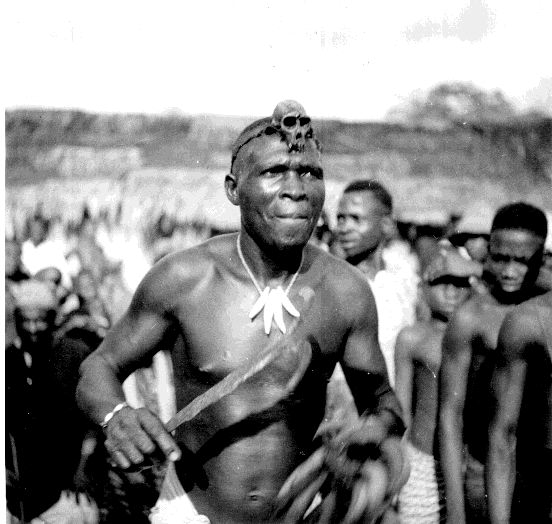
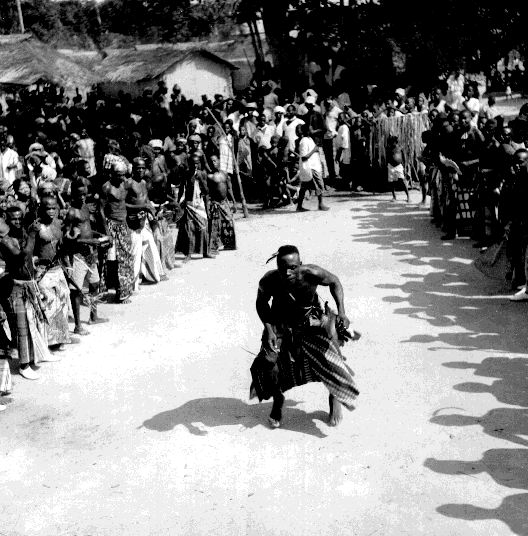
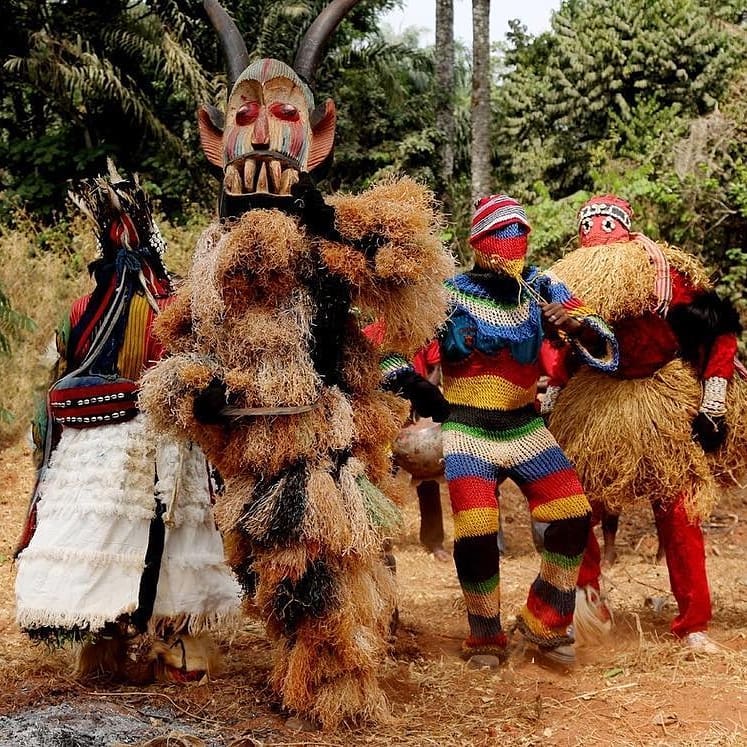
Dancer Ogbukele festival, Ekpafia Igbo.Photographed by G.I. Jones in the 1930s.
Migration and Settlement
After their flight from Idu-Benin, Akalaka and his family travelled eastward along the Niger. They first settled in Aboh, an ancient trading settlement on the lower Niger River, where Akalaka married a woman of Aboh descent. She bore him a second son named Ogba. After several years in Aboh, Akalaka moved further inland to Ubie, a region in present-day Ekpeye land, seeking fertile soil and security. Later, finding Ubie less favourable, he moved again to Ahiahu, where he lived out his final days and eventually died.
Following Akalaka’s death, a dispute arose between his sons, Ekpeye and Ogba, over where to bury their father. The quarrel tragically led to the death of Ekpeye’s first son. At the time, Ogba already had two sons, Egi and Igburu. The families separated thereafter: Ekpeye returned to Ubie, founding what would become the Ekpeye Kingdom, while Ogba and his two sons settled in Obigwe, which grew into the nucleus of the Ogba Kingdom.
The Ikwerre people, according to many oral accounts, descend from later generations of the Ekpeye who migrated southwards and westwards, blending with the Aboh and Abua populations. In some traditions, Ikwerre’s founder, Elele or Akpo (Akpor), is said to have been a descendant of Ekpeye or Ogba, reinforcing the genealogical unity of the three peoples.
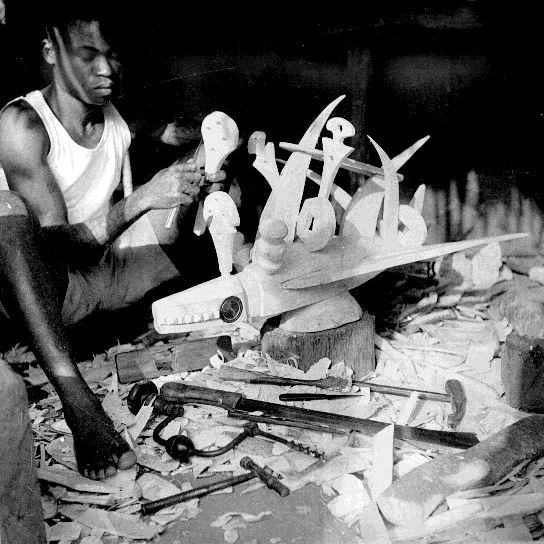
Carver of the masks from Ikwerre Igbo. Photographed by G.I. Jones in the 1930s.
Linguistic and Ethnographic Evidence
Modern linguistics provides strong support for Akalaka’s Igbo origin. The dialects spoken by the Ogba, Ekpeye, and Ikwerre belong to the Lower Niger group of Igboid languages. These dialects retain the phonological and lexical features of Igbo proper, though with Niger Delta influences from Ijoid and Edoid contact.
Cultural patterns further reinforce this link:
The people observe the four Igbo market days (Eke, Orie, Afor, Nkwo).
They bear Igbo personal names (e.g., Amadi, Nwoke, Obioma).
They practise Igbo-style age-grade systems, title-taking, and kola nut rituals.
Their cosmology includes chi (personal spirit), ndichie (ancestors), and reverence for Ala/Eli/Ali (earth deity), key elements of Igbo religion.
These shared linguistic and cultural markers discredit the claim that Akalaka was ethnically Benin. Instead, they affirm a strong Igbo heritage integrated into the western Niger Delta environment through migration and acculturation.
Chronology and Historical Framework
While oral traditions rarely preserve precise dates, the Akalaka migration likely occurred during the transition from the Ogiso dynasty to the Oba dynasty in Benin (circa 12th–13th centuries CE). This was a time of dynastic reorganisation and territorial expansion, prompting population movements westward and eastward across the Niger.
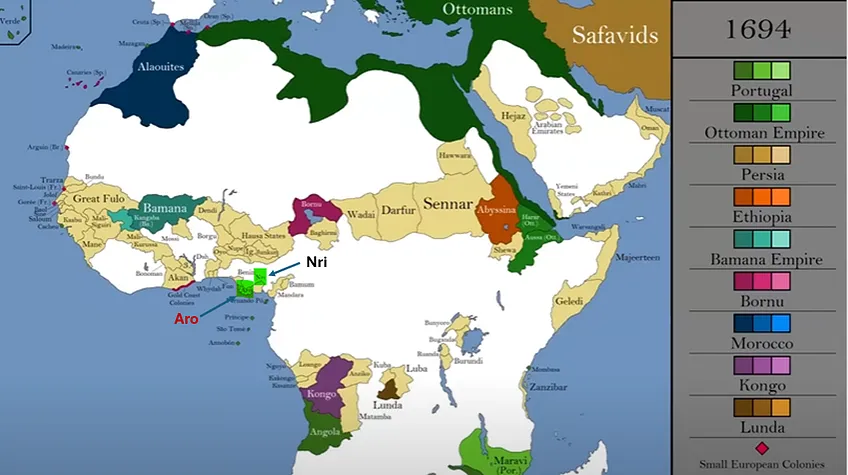
Akalaka’s story parallels similar Igbo migratory traditions from Nri, Arochukwu, and Nsukka, reflecting a wider pattern of dispersal that shaped the formation of western Igbo subgroups such as Ukwuani, Ndokwa, and Ika.
Cultural Continuities and Ancestral Legacy
The memory of Akalaka endures among his descendants through festivals, ancestral veneration, and oral recitations.
Among the Ekpeye, the annual Ubie festival celebrates their ancestral origins and migration.
Among the Ogba, the Obigwe and Egi clans maintain genealogical chants linking them to Akalaka.
The Ikwerre New Yamand Ekine masquerade traditions preserve rituals reflecting both Igbo and Niger Delta influences.
These practices illustrate how Akalaka’s descendants preserved their ancestral memory while adapting to new ecological and cultural contexts.
Colonial-era observations and modern reappraisal
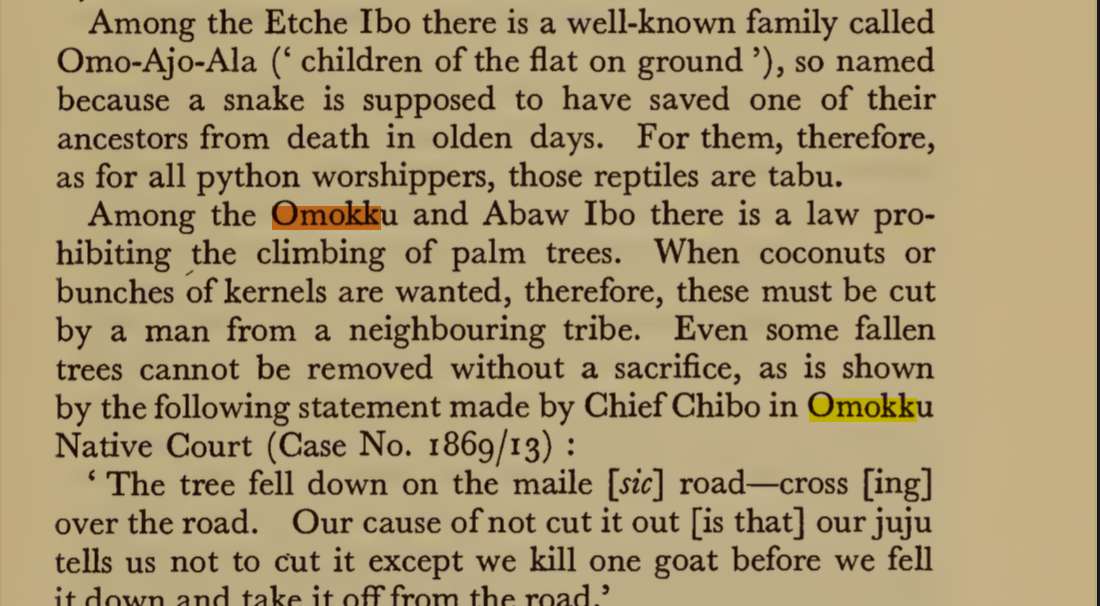
Early twentieth-century colonial ethnographers and administrators documented a wide variety of origin stories for the Riverine groups and often noted the complexity and fluidity of identities in the lower Niger. Authors such as P. A. Talbot and C. K. Meek recorded local accounts, political arrangements and social institutions across southern Nigeria, and their work preserved many of the competing oral traditions about provenance and migration. They did not present a single, definitive ethnic classification for groups on the western Igbo frontier; instead, their writings sometimes reflected the piecemeal and multilingual evidence they encountered in the field.
Page 325 of “he Niger Delta” by Percy Amaury Talbot
Subsequent Nigerian historians and linguists conducted comparative linguistic, ethnographic and oral-history research that reassessed earlier descriptions and clarified the affinities of Ogba, Ekpeye and Ikwerre. Scholars such as A. E. Afigbo and E. J. Alagoa use linguistic data and cultural patterning to situate these peoples within the Igboid continuum while also emphasising the region’s long history of interaction with neighbouring Niger-Delta societies. The modern consensus, therefore, treats the Ogba, Ekpeye and Ikwerre as part of a western Igbo cultural frontier, communities shaped by both Igbo roots and sustained contact with adjacent riverine cultures.
The history of Akalaka, his life, migration, and descendants, illuminates the intertwined origins of the Ogba, Ekpeye, and Ikwerre peoples. While early traditions depicted him as a Benin prince, the cumulative evidence from oral history, linguistics, and ethnography points convincingly to an Igbo origin within the Idu–Benin sphere. His descendants’ enduring linguistic unity, shared cosmology, and parallel socio-political systems testify to a common ancestral heritage that has survived centuries of migration, conflict, and cultural adaptation.
In reconstructing Akalaka’s story, one also reconstructs a microcosm of the wider Igbo historical experience, a story of movement, resilience, and cultural synthesis at the crossroads of the Niger Delta and Igboland.
Sources and references
Afigbo, A. E. (1981). Ropes of sand: Studies in Igbo history and culture . Oxford University Press.
Alagoa, E. J. (2005). The land and people of Rivers State: Eastern Niger Delta . Onyoma Research Publications.
Dike, K. O. (1956). Trade and politics in the Niger Delta 1830–1885: An introduction to the economic and political history of Nigeria . Oxford University Press.
Green, M. M., & Williamson, K. (1970). The Igbo language and its dialects . Ibadan University Press.
Isichei, E. (1976). A history of the Igbo people . Macmillan.
Onwuejeogwu, M. A. (1981). An Igbo civilisation: Nri Kingdom and hegemony . Ethnographica Ltd.
Ryder, A. F. C. (1969). Benin and the Europeans 1485–1897 . Longman.
Talbot, P. A. (1932). The Tribes of the Niger Delta ). Oxford University Press.
Ogwe, C. (2025). The Origin of Akalaka . Egi Voice .
Cite this article
Idenze Ezeme. “Akalaka: The Progenitor of the Ogba, Ekpeye, and Ikwerre People.” Ozikoro, 2025. https://ozikoro.com/akalaka-the-progenitor-of-the-ogba-ekpeye-and-ikwerre-people/
Discussion
Sign in to join the discussion
Comments are checked by an editor before they appear. Leave a source or a correction and it is read first.
Nothing has been approved on this record yet. Comments are checked by an editor before they appear, so one written now shows on this page after that check.
 Ozikoro
 Anthropology and EthnographyThe Demography of Biafran Slave Exports (1650–1850)Read history →
 Anthropology and EthnographyMasquerade Traditions from Igboland to the Caribbean (Jonkonnu, Mocko Jumbie)Read history →
 Anthropology and EthnographyMapping Igbo Destinations in the Americas: A Comparative AnalysisRead history →
No comments yet
Nothing has been approved on this record yet. Comments are checked by an editor before they appear, so one written now shows on this page after that check.