 Ozikoro
Anthropology and Ethnography · Published history
Rituals of Protection: The Akalogoli Charm and Igbo Beliefs on Malevolent Spirits in the Early 1900s
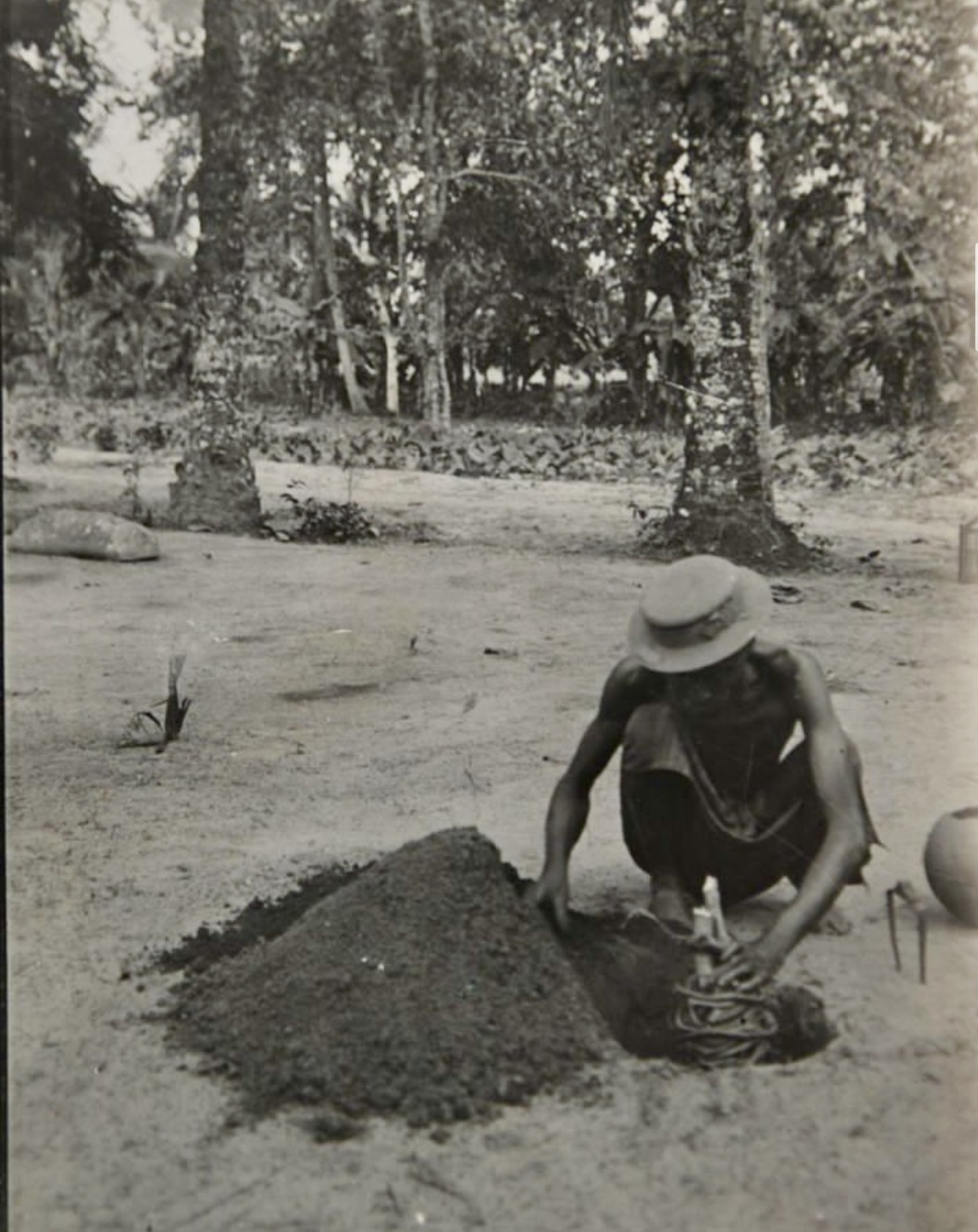
In the early 1910s, Northcote Thomas captured a photograph titled “Burning palm flower [man burying akalogoli charm to ward off evil spirits].” The term Akalogoli is thought to derive from the Igbo words akala, meaning sign or mark, and ogoli, referring to a wastrel or ne’er-do-well. It denotes a malicious, tricky, or malevolent spirit, believed to be the wandering specter of individuals who led troubled lives.
The written record
In Igbo culture, as well as in neighboring communities, people who died under unfortunate or unnatural circumstances—such as suicide, execution, or mysterious illness—were often denied proper burials. These deaths, known as onwụ ike (hard death), left the deceased in limbo. Instead of being buried in family land or a graveyard, their bodies were disposed of in the wilderness, often referred to as the “evil forest” (a term readers of Chinua Achebe’s Things Fall Apart might recognize). In such cases, the individual’s spirit would be unable to transition into the afterlife, where they would typically become ancestors or await rebirth. As a result, they were believed to remain on earth, sometimes becoming violent spirits or mischievous poltergeists. These spirits caused disturbances such as making household items disappear, frightening people, or causing distress to relatives.
Historical context
In Igbo belief, spirits have an aversion to earth or soil. This is also seen in the legend of owummiri (mami water), a spirit that hovers above the ground when walking. Throwing soil or earth on malicious spirits is therefore believed to repel them, a key element in rituals like the one Thomas documented.
Sources and references
- Northcote W. Thomas – Anthropological Report on the Ibo-speaking Peoples of Nigeria, (Igbo-speaking people of the Awka district), 1913.
- Achebe, C. (1958). Things Fall Apart. Heinemann
Cite this article
Discussion
Sign in to join the discussion
Comments are checked by an editor before they appear. Leave a source or a correction and it is read first.
Continue reading
Related histories
 Anthropology and EthnographyThe Demography of Biafran Slave Exports (1650–1850)Read history →
 Anthropology and EthnographyMasquerade Traditions from Igboland to the Caribbean (Jonkonnu, Mocko Jumbie)Read history →
 Anthropology and EthnographyMapping Igbo Destinations in the Americas: A Comparative AnalysisRead history →
No comments yet
Nothing has been approved on this record yet. Comments are checked by an editor before they appear, so one written now shows on this page after that check.