Anthropology and Ethnography · Published history
Alusi in Igboland
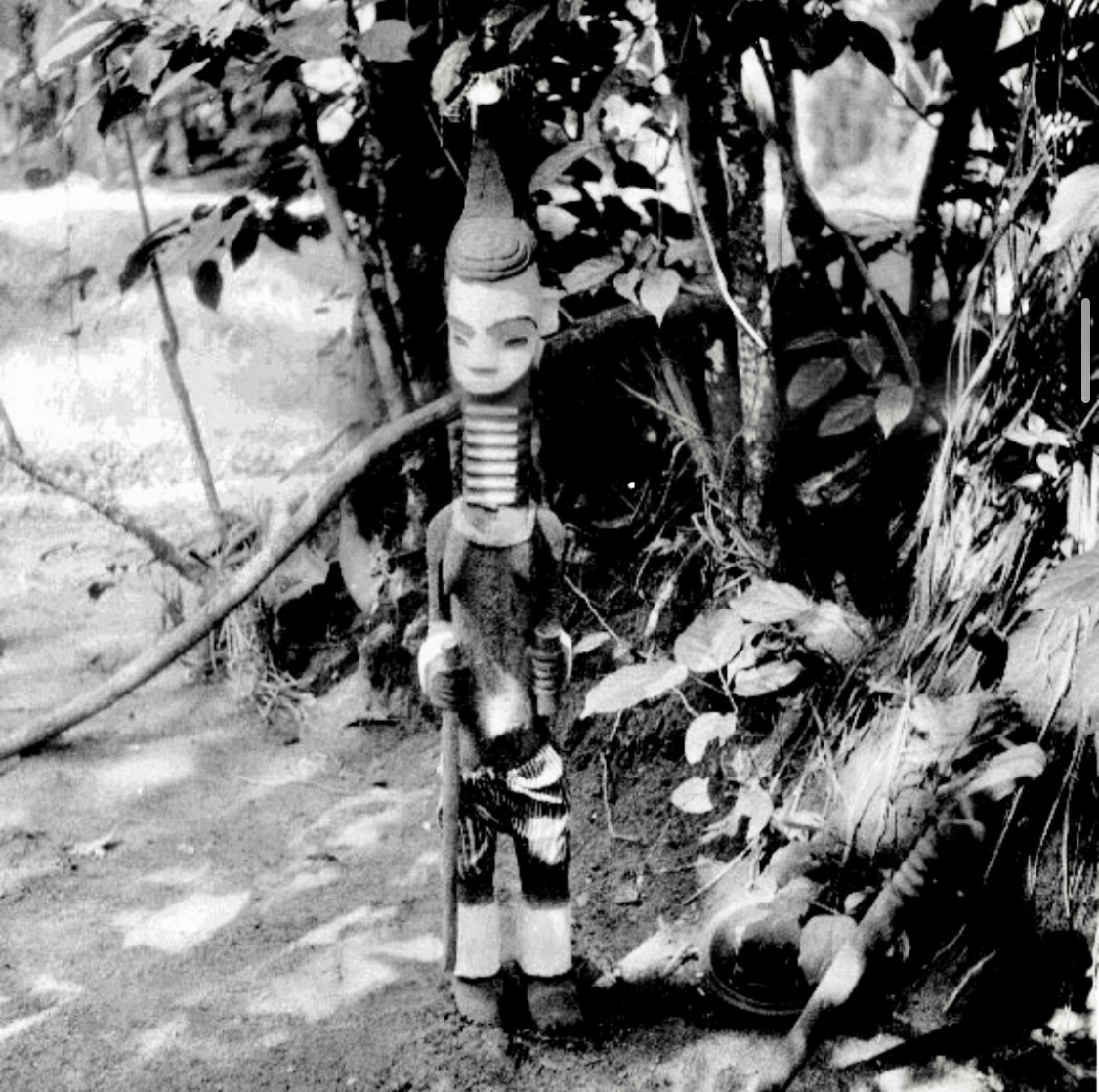
The archive holds no clan, town or place recorded for this entry. A link is made when the record's own title names one that the dictionary already holds, so a record that names none opens no register page.
In Igbo cosmology, Alusi (also known as Arusi or Chukwu’s servants) are deities or spirits that serve as link between the Supreme Being (Chukwu or Chi Ukwu) and humans. They represent various aspects of the natural world, morality, and community governance. The reverence of Alusi is central to traditional Igbo religion and culture, influencing spiritual, political, and social life.
The written record
Characteristics of Alusi
1. Spiritual Roles:
Alusi embody specific attributes or domains of nature, such as fertility, rivers, forests, war, and justice. For instance, Ala (the Earth goddess) is the most prominent Alusi, overseeing morality, fertility, and community laws.
Historical context
2. Manifestation and Representation:
Alusi are often represented through physical structures or objects like shrines, wooden carvings, or symbolic artifacts. Shrines (obu Alusi) are sacred spaces where people interact with these deities through rituals, offerings, and prayers.
3. Human Interaction:
Community members consult Alusi for guidance, healing, and intervention during crises. Priests (dibia) or diviners (ndi afa) often mediate between the people and the Alusi, interpreting the will of the deities.
4. Moral and Social Order:
Alusi enforce communal norms, ensuring justice and punishing wrongdoers. This is particularly evident with Amadioha, the god of thunder and justice, who is invoked to address moral violations.
The Alusi Shrine at Orsu, West Isuama Igbo
The shrine captured by G. I. Jones in the 1930s provides a visual representation of an Alusi’s physical manifestation in a traditional Igbo community. Located in Orsu, a part of West Isuama Igbo, the shrine exemplifies how architecture, art, and spirituality merge in Igbo religious practice. Jones’ documentation highlights the detailed designs and symbolic elements used to honour the Alusi, showcasing the rich artistic traditions associated with these deities.
Significance of Alusi in Contemporary Times
While the influence of Alusi has diminished due to the spread of Christianity and modernization, elements of their worship persist in cultural festivals, oral traditions, and the practices of those who adhere to African Traditional Religion (ATR). The ongoing reverence for Alusi underscores the resilience of Igbo spirituality and its adaptive nature.
References
Jones, G. I. (1930s). Alusi [shrine], Orsu, West Isuama Igbo. [Photograph].
Kalu, O. (2003). African Christianity: An African Story. Pretoria: University of Pretoria.
Okeke, P. O. (2016). Igbo Traditional Religion and Christian Faith: A Theological Reflection. African Journal of Religion and Culture, 12(3), 45-56.
Onwuejeogwu, M. A. (1981). An Igbo Civilization: Nri Kingdom & Hegemony. Ethiope Publishing Corporation.
Uchendu, V. C. (1965). The Igbo of Southeast Nigeria. New York: Holt, Rinehart, and Winston.
Sources and references
- Jones, G. I. (1930s). Alusi [shrine], Orsu, West Isuama Igbo. [Photograph].
- Kalu, O. (2003). African Christianity: An African Story. Pretoria: University of Pretoria.
- Okeke, P. O. (2016). Igbo Traditional Religion and Christian Faith: A Theological Reflection. African Journal of Religion and Culture, 12(3), 45-56.
- Onwuejeogwu, M. A. (1981). An Igbo Civilization: Nri Kingdom & Hegemony. Ethiope Publishing Corporation.
- Uchendu, V. C. (1965). The Igbo of Southeast Nigeria. New York: Holt, Rinehart, and Winston.
Cite this article
Continue reading
Related histories
 Anthropology and EthnographyThe Demography of Biafran Slave Exports (1650–1850)Read history →
 Anthropology and EthnographyMasquerade Traditions from Igboland to the Caribbean (Jonkonnu, Mocko Jumbie)Read history →
 Anthropology and EthnographyMapping Igbo Destinations in the Americas: A Comparative AnalysisRead history →