 Ozikoro
Anthropology and Ethnography · Published history
An Igbo Family Shrine: Ikenga, Ofo, and Ancestor Reverence in Onicha Olona
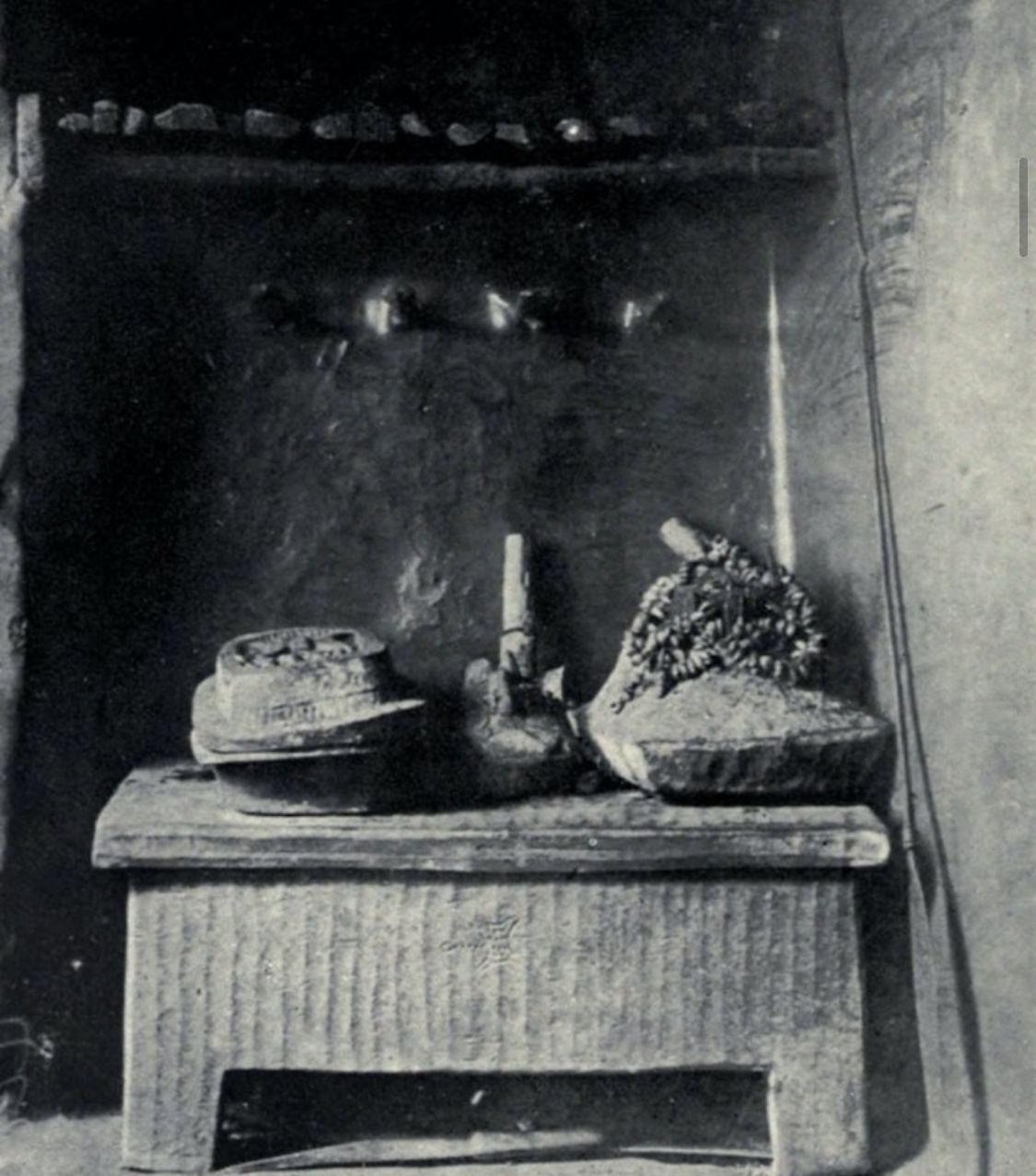
The family shrine is a cornerstone of Igbo spirituality, reflecting the community’s connection to their ancestors, deities, and symbols of authority. In the early 1910s, Northcote Thomas, an anthropologist, photographed a family shrine in Onicha Olona, located in present-day Delta State. The shrine prominently featured key elements of Igbo religious and cultural life: the Ikenga, Ofo, and representations of ancestors.
The written record
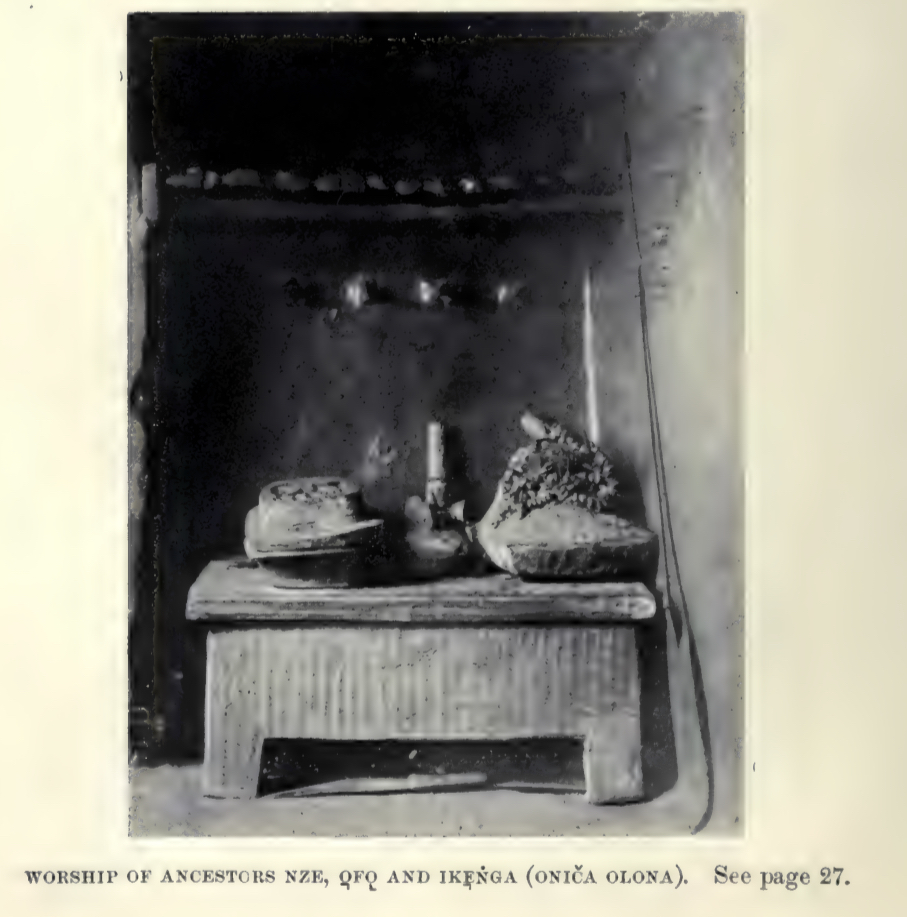
The Ikenga is a revered symbol of personal achievement, strength, and male authority, often depicted as a carved figure with horns. It embodies the individual’s chi (personal god), strength, and success. Every Igbo man traditionally keeps an Ikenga, which is regularly venerated to ensure continued blessings in personal endeavors.
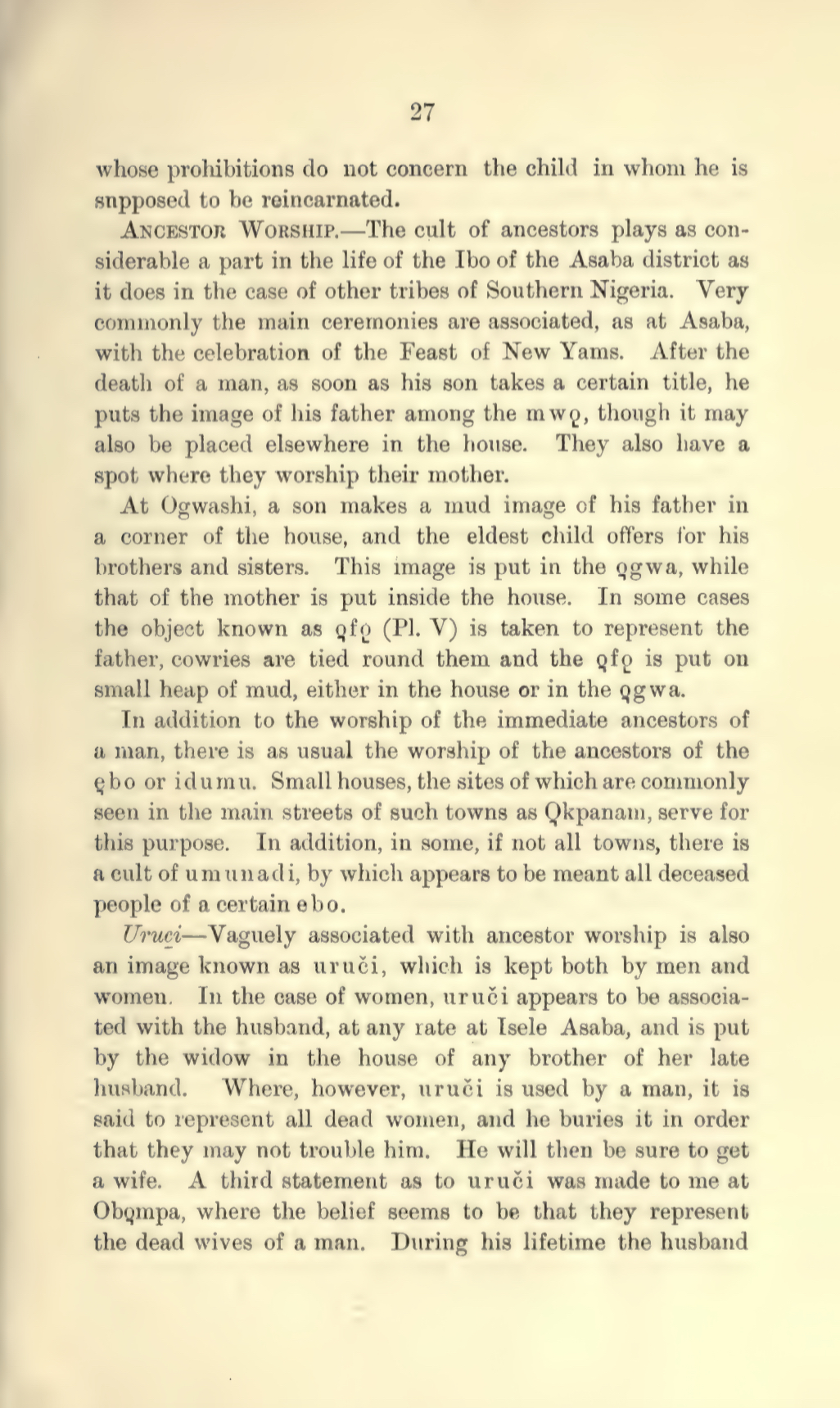
IBO-SPEAKING PEOPLES OF NIGERIA.
BY NORTHCOTE W. THOMAS, GOVERNMENT ANTHROPOLOGIST.
PART IV.
LAW AND CUSTOM OF THE
IBO OF THE ASABA DISTRICT, S.NIGERIA. Page 27.
The Ofo represents justice, truth, and the ancestral authority of a family or community. It is a sacred staff or stick that connects the living with the spirits of the ancestors, symbolizing morality and governance. In the family shrine, the Ofo serves as a reminder of the sacred trust passed down through generations.
Historical context
Ancestor veneration is central to Igbo spirituality. The shrine contains symbolic representations of deceased family members, honouring their role as spiritual intermediaries. These ancestors are believed to watch over the family, guiding and protecting their descendants in exchange for regular offerings and respect.
The head of the family, typically the eldest male, serves as the primary priest of the Igbo family. Known as the Okpala or “Okpala Ukwu” as the car may be, this figure acts as a custodian of the shrine, performing rituals, making offerings, and maintaining spiritual harmony within the family. The Okpala ensures that the ancestors’ spirits are appeased and that the household remains aligned with divine principles.
This familial priesthood underscores the intimate relationship between the Igbo people and their spirituality, where religion, morality, and kinship are inseparably intertwined.
Sources and references
- Thomas, N. (1910s). An Igbo family shrine with Ikenga, Ofo, and representation of ancestors, Onicha Olona, today’s Delta State. Photograph.
- Ikenga and Ofo in Igbo Culture. (n.d.). In Nigerian Heritage Journal.
- Okpala’s Role in Igbo Religion. (n.d.). In African Traditional Religion: The Igbo Perspective.
Cite this article
Discussion
Sign in to join the discussion
Comments are checked by an editor before they appear. Leave a source or a correction and it is read first.
Continue reading
Related histories
 Anthropology and EthnographyThe Demography of Biafran Slave Exports (1650–1850)Read history →
 Anthropology and EthnographyMasquerade Traditions from Igboland to the Caribbean (Jonkonnu, Mocko Jumbie)Read history →
 Anthropology and EthnographyMapping Igbo Destinations in the Americas: A Comparative AnalysisRead history →
No comments yet
Nothing has been approved on this record yet. Comments are checked by an editor before they appear, so one written now shows on this page after that check.