 Ozikoro
 Anthropology and Ethnography · Published history
Benin’s Democratic Leap: The 1990 National Conference and the Multi-Party System.
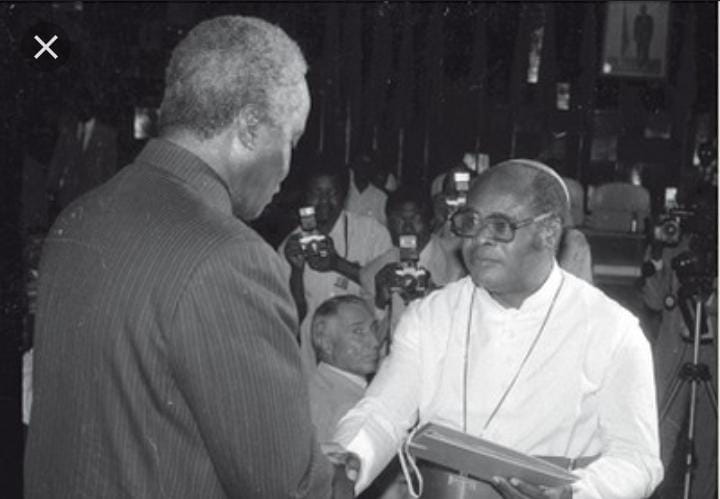
The West African nation of Benin (formerly the People’s Republic of Benin) underwent one of Africa’s most remarkable transitions from a single-party Marxist-Leninist regime to a multi-party democracy in the early 1990s. Central to this transformation was the sovereign 1990 National Conference of Benin (Conférence nationale souveraine), held in February 1990, which paved the way for the legalisation of political pluralism, a new constitution, and free elections. This article explores the context, the Conference itself, the institutional reforms (particularly the multi-party system), and the subsequent consolidation of democracy in Benin. This shift stands as a monumental event in African political history. This peaceful shift, known as the 1990 National Conference of Forces Vives (National Conference of Active Forces), served as a pioneering blueprint for democratic transitions across the continent. Facing a devastating economic crisis and widespread civil unrest, the sitting dictator, General Mathieu Kérékou, ceded power to civilian leadership, thereby establishing the foundation for Benin’s enduring multi-party system.
The written record
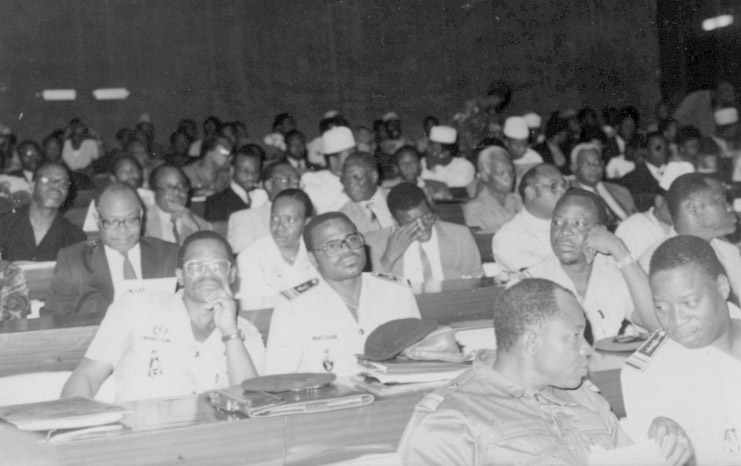
Photo Credit: The photo is commonly attributed to a collection from the Sovereign National Conference in Benin.
Historical context
Historical and socio-political context to 1990
By the late 1980s, Benin was governed by Mathieu Kérékou under a one-party Marxist-Leninist system (the ruling party, the People’s Revolutionary Party of Benin) that had dominated since the early 1970s.
Several factors combined to undermine the regime’s stability:
Domestic pressure from unions, students, civil society, and opposition voices grew steadily, showing that the government’s legitimacy was eroding.
Economic Collapse: Benin suffered crippling national debt, and the state’s banking sector had collapsed. The government was unable to pay civil servants, teachers, and soldiers for many months, leading to widespread misery.
Social unrest: A deep economic crisis led to unpaid salaries (notably for teachers and civil servants) and growing unrest beginning in 1989. The non-payment of wages sparked large-scale strikes and protests by students, unions, and the military, effectively grinding the government to a halt. Kérékou realized that he had lost the institutional support necessary to maintain power.
International dynamics: the collapse of the Berlin Wall and broader end of the Cold War undermined ideological support for Marxist regimes in Africa. The former colonial power, France, and international financial institutions like the World Bank and IMF, demanded fundamental political and economic reforms as a precondition for any desperately needed financial aid. In this climate, Kérékou’s regime decided (or was forced) to convene a national conference of the “living forces of the nation” to chart a path of reform. The result would be a peaceful transition rarely seen among African one-party regimes.
The 1990 National Conference
In response to this terminal crisis, General Kérékou dramatically called for a National Conference in February 1990. Unlike previous controlled political meetings, Kérékou agreed to a meeting with sovereign powers, meaning its decisions could not be overturned by the government.
The National Conference, held in Cotonou from 19 to 28 February 1990, brought together over 400 delegates representing political parties, trade unions, religious groups, civil society organisations and the military.
Key Decisions: Over 10 days, the delegates dismantled the one-party state and established a framework for liberal democracy:
Abolition of Marxism: The Marxist-Leninist ideology and the associated institutions were immediately abolished.
Transitional Government: A High Council of the Republic was established, stripping Kérékou of his executive powers.
Interim Prime Minister: It set up a transitional government headed by a Prime Minister, while Kérékou remained President but with diminished powers. For example, Nicéphore Soglo, a former World Bank executive, was appointed as the interim Prime Minister to oversee the transition to democratic elections.
New Constitution: A new, liberal constitution was drafted, paving the way for a multi-party system, protection of fundamental rights, and presidential term limits. It laid out a timetable for drafting a new constitution and organising multi-party elections.
The Conference provided the political legitimacy for moving away from the Marxist regime toward democracy and political pluralism.
By mid-1990 the legal framework for multiparty politics was put in place and in August 1990 a charter authorised the formation of independent political parties with nationally-based membership rather than regional/ethnic/sectarian blocs.
A constitutional referendum in December 1990 then approved a new constitution which formally established the multi-party system.
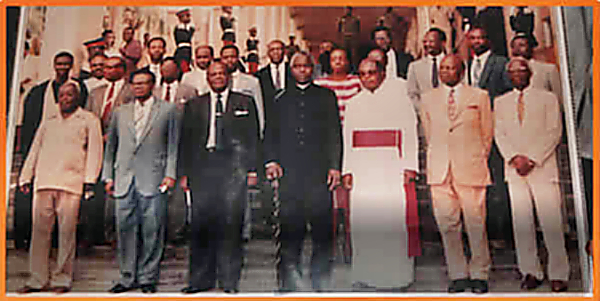
Establishing the Multi-Party System
The Conference’s decisions marked the birth of Benin’s third republic and its transition to a fully competitive multi-party system.
Referendum and Elections: On 13 August 1990 the parliamentary transitional body, the High Council of the Republic, adopted the Constitutional Law providing for multi-party competition, separation of powers, and individual rights. The December 1990 constitutional referendum approved the new constitution setting out two-round presidential elections, term limits, an independent legislature and judiciary. The new constitution was overwhelmingly approved in a referendum later that year. In the 1991 presidential election, General Kérékou, running as a civilian, was defeated by the transitional Prime Minister, Nicéphore Soglo.
By early 1991 multiple political parties had formed (some two dozen by end of 1990).
In February 1991, legislative elections under the new system were held, the first truly competitive, multiparty elections in Benin.
In March 1991, the presidential election took place and Nicéphore Soglo defeated the incumbent Kérékou in a second round, marking a peaceful transfer of power.
The “Benin Model”: Crucially, Kérékou respected the election results and peacefully handed over power. This event, a dictator voluntarily stepping down, became known as the “Benin Model” or the “second independence” of Africa, inspiring similar national conferences and democratic movements in countries like Congo-Brazzaville, Togo, and Mali.
Democratic Consolidation: Benin demonstrated the maturity of its new system when Kérékou successfully ran for president again in 1996, defeating Soglo, and Soglo, in turn, respected the results. This peaceful handover between rivals cemented the institutionalization of democracy in Benin.
The shift to a multi-party system introduced a new system;
Political pluralism: legal parties competing for power rather than one monolithic party.
Institutional checks: separation of powers and new oversight bodies (e.g., the establishment of a Constitutional Court in 1993) to safeguard the constitution.
A degree of party fragmentation: though many parties registered, few built strong institutional bases; many were personality-driven or region/ethnic-based.
Benin’s democratic leap was a triumph born out of necessity, proving that bottom-up pressure and a visionary, sovereign national conference could successfully dismantle a dictatorship and establish resilient, multi-party democratic structures. However, the transition did not eliminate all structural issues:
The multi-party system remained weakly institutionalised; parties often centred around personalities or regional bases rather than ideologies or stable organisational structures.
Fragmentation; The large number of parties and fluid alliances resulted in electoral volatility and difficulties in governance stability.
Executive dominance; Even after reform, the executive branch often held greater power relative to other institutions, limiting the deepening of democratic accountability.
Implications and Legacy
The Benin experience has broader significance for African political transitions:
It became a model of a peaceful negotiated transition to multi-party democracy on the Continent. It underscored that structural prerequisites (such as high income, large middle class) are not always necessary for democratic transition, domestic agency and favourable conjuncture matters.
For Nigeria and other African countries, Benin’s path offers a case study of how civil society, transitional institutions, and broad consensus can underpin democratic reforms and the 1990 National Conference in Benin marked a decisive break from authoritarian single-party rule toward a multi-party democratic system. By convening a broad-based conference, drafting a new constitution, legalising political pluralism and holding competitive elections, Benin charted a path of democratic renewal. While challenges remain, notably party system weakness and executive dominance. The transition has endured, and the multi-party system has taken root. Benin’s experience illustrates that even under adverse conditions, democratic transformation is possible when actors seize opportunity and craft credible institutional reforms.
Sources and references
- Allen, C. (2000). Benin: “The struggle for democracy. The Journal of Modern African Studies”, 38(2), 241–264.
- Decalo, S. (1995). “Historical dictionary of Benin” (3rd ed.). Scarecrow Press.
Cite this article
Discussion
Sign in to join the discussion
Comments are checked by an editor before they appear. Leave a source or a correction and it is read first.
Continue reading
Related histories
 Anthropology and EthnographyThe Demography of Biafran Slave Exports (1650–1850)Read history →
 Anthropology and EthnographyMasquerade Traditions from Igboland to the Caribbean (Jonkonnu, Mocko Jumbie)Read history →
 Anthropology and EthnographyMapping Igbo Destinations in the Americas: A Comparative AnalysisRead history →
No comments yet
Nothing has been approved on this record yet. Comments are checked by an editor before they appear, so one written now shows on this page after that check.