 Ozikoro
 Anthropology and Ethnography · Published history
Britain’s First Capital: Calabar’s Role as the Headquarters of the Niger Coast Protectorate and Its Influence on Modern Nigeria
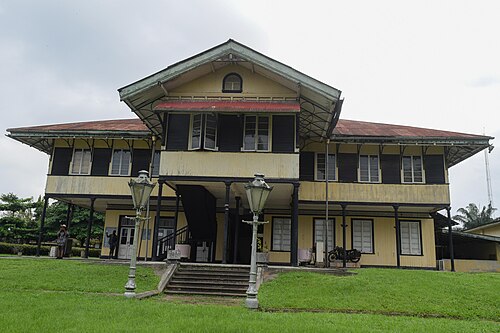
Calabar, historically known as Old Calabar, played a central role in the early colonial administration of what would become modern Nigeria. From the late nineteenth century until the early twentieth century, Calabar served as the administrative headquarters of the British Oil Rivers Protectorate, the Niger Coast Protectorate, and later the Southern Nigeria Protectorate before the colonial capital was moved to Lagos. During this era, Calabar was a vital hub for commerce, diplomacy, and colonial governance in West Africa. Its position on the Calabar River made it strategically important for trade and the projection of British power in the region.
The written record
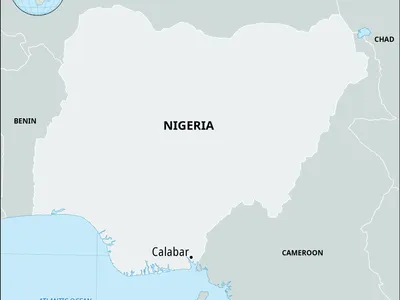
Photo credit;Britannica
Historical context
Calabar Before Colonial Administration
Calabar’s history as a port city predates colonial rule by centuries. Originally inhabited and developed by the Efik people, it emerged as a major seaport on the Gulf of Guinea from the sixteenth century onward. European traders, especially the Portuguese, referred to the region as Calabar, a name that stuck over time. During the Atlantic slave trade, Calabar was a key export point for enslaved Africans. After the British abolition of the slave trade in 1807, the city shifted toward the export of legitimate commodities such as palm oil and palm kernels. It thus retained commercial significance, which would become one of the reasons the British selected it as a colonial administrative center.
Protectorates and the Establishment of British Administration
In the late nineteenth century, as European powers scrambled to consolidate territorial control in Africa, the British formalized their influence along the Niger Delta coast. In 1884, Queen Victoria signed a treaty of protection with the chiefs of Akwa Akpa (Old Calabar), enabling Britain to exercise control over the surrounding territory. Soon after, the Oil Rivers Protectorate was established in 1885 to manage trade and suppress inter-tribal conflicts in the coastal region. In 1893, this territory was renamed the Niger Coast Protectorate. Calabar was designated as the official capital of these protectorates.
As the capital of the Niger Coast Protectorate, Calabar became the base from which British officials administered the eastern coastal region of present-day Nigeria. British consuls and later commissioners such as Edward Hyde Hewett and Claude Maxwell MacDonald oversaw political relations, trade regulation, and security operations from Calabar. The protectorate extended British jurisdiction inward as far as Lokoja in theory, linking the coastal administration to inland territories.
Calabar as Administrative Capital
Calabar’s status as the colonial headquarters lasted until 1906 when the British government moved the central administration to Lagos. During its tenure as capital, Calabar hosted the main offices of the British colonial government in southeastern Nigeria. It was the site where treaties were negotiated with local rulers, where colonial officials coordinated policing and expeditions, and where legal and economic policies were shaped for the protectorate. The city’s importance is reflected in surviving colonial buildings such as the Old Residency Museum, which once housed British officials and now preserves the history of that era.
Trade, Commerce, and Colonial Influence
Calabar’s location and commercial history underpinned its selection as headquarters. It had long been a thriving port for palm oil and other exports that were critical to British industrial needs. The transition from the slave trade to palm oil shifted economic power to local merchant houses, which then negotiated with European firms. British protection treaties signed with Efik chiefs in the 1880s facilitated smoother trade and strengthened British influence in the region. This commercial reach also fed into colonial objectives, enabling the British to tighten control over indigenous socio-economic networks.
Political and Cultural Developments in the Colonial Era
Beyond administration, Calabar became a center for early educational and religious developments in Nigeria. Scottish missionaries established schools and churches in the mid-19th century, influencing local institutions and social reforms. For example, the Hope Waddell Training Institution, founded in 1846, became one of the earliest secondary schools in the region. Such institutions shaped local elites and contributed to the cultural synthesis that characterized colonial Calabar.
In addition to education, Calabar was the site of early colonial legislative engagement. In 1922, the British established the Legislative Council with elected members from Calabar and Lagos, marking one of the first forms of representative governance in British West Africa. This council approved budgets and enacted laws, laying important groundwork for the later political evolution of Nigeria.
Decline of Calabar’s Colonial Primacy
Despite its early prominence, Calabar’s prominence declined once the capital shifted to Lagos. The opening of the railroad to Port Harcourt in 1916 diverted trade flows, weakening Calabar’s economic centrality. Over time, Lagos, with its deeper harbor and larger population, became the focus of colonial economic and administrative investment. Nonetheless, Calabar’s legacy as an early colonial capital remains significant.
Legacy and Influence on Modern Nigeria
Calabar’s role as the headquarters of the Oil Rivers Protectorate, the Niger Coast Protectorate, and the Southern Nigeria Protectorate positioned it as a birthplace of modern colonial governance structures in Nigeria. Its early adoption of formal administrative practices, legislative representation, and missionary education had lasting effects on the political culture of southeastern Nigeria. While Lagos ultimately became Nigeria’s geopolitical center, Calabar’s colonial history helped shape early engagements between indigenous institutions and colonial authority.
The city’s colonial architecture, educational institutions, and museums continue to commemorate this legacy, bridging pre-colonial commercial history with colonial governance and post-colonial identity. Its multifaceted influence underscores the complexity of Nigeria’s formation as a modern nation.
Calabar’s designation as the headquarters of the Niger Coast Protectorate marked a pivotal moment in Nigeria’s colonial history. Between 1885 and 1906, the city functioned as the administrative heart of British authority in the eastern delta and played a defining role in shaping trade, diplomacy, and governance. Though its tenure as capital was succeeded by Lagos, Calabar’s impact on Nigeria’s colonial administration and institutional development remains a crucial chapter in the story of how modern Nigeria took shape.
Sources and references
- Calabar. (2025). In Britannica.
- Calabar. (2025). In Wikipedia, The Free Encyclopedia.
- Niger Coast Protectorate. (2025). In Wikipedia, The Free Encyclopedia.
- Old Residency Museum. (2025). In Wikipedia, The Free Encyclopedia.
Cite this article
Discussion
Sign in to join the discussion
Comments are checked by an editor before they appear. Leave a source or a correction and it is read first.
Continue reading
Related histories
 Anthropology and EthnographyThe Demography of Biafran Slave Exports (1650–1850)Read history →
 Anthropology and EthnographyMasquerade Traditions from Igboland to the Caribbean (Jonkonnu, Mocko Jumbie)Read history →
 Anthropology and EthnographyMapping Igbo Destinations in the Americas: A Comparative AnalysisRead history →
No comments yet
Nothing has been approved on this record yet. Comments are checked by an editor before they appear, so one written now shows on this page after that check.