 Ozikoro
 Anthropology and Ethnography · Published history
“Cavalry and Musketry: The Integration of Locally Manufactured Firearms into the Military Strategy of the Sokoto Caliphate”
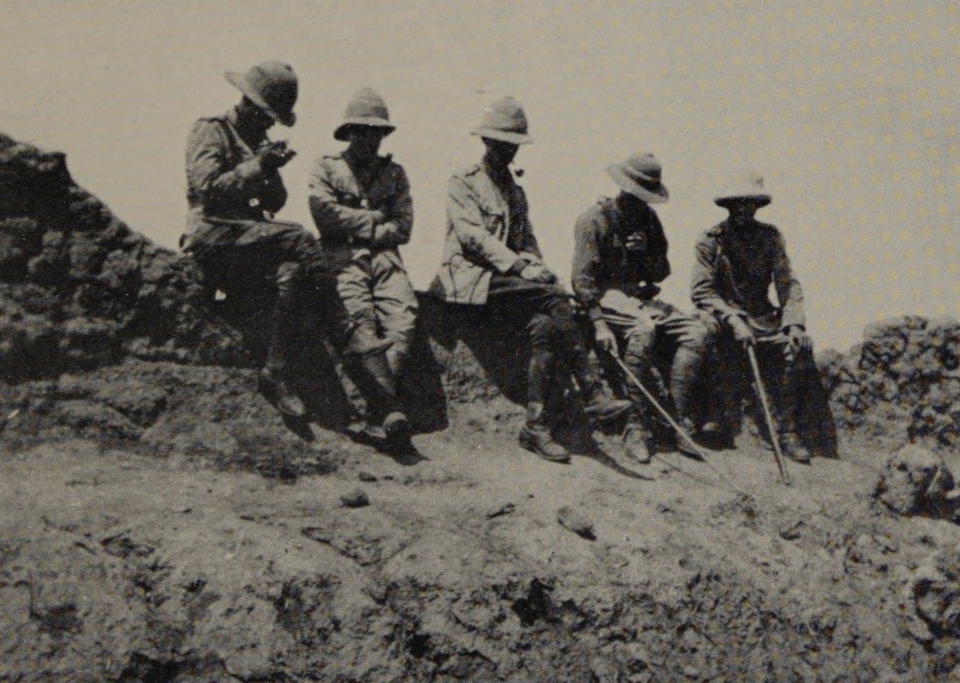
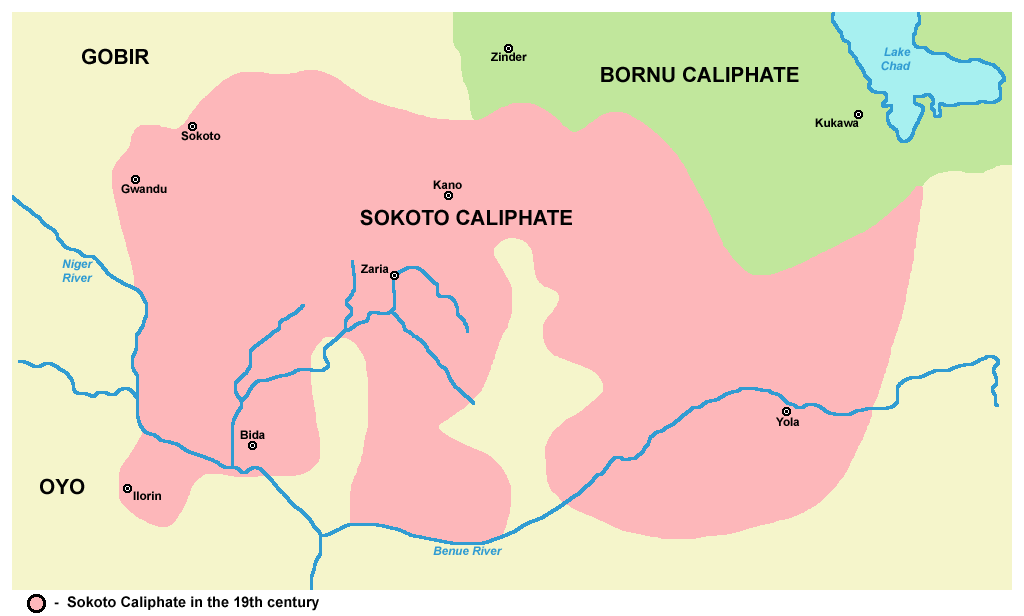
Photo credit; Public domain/ Wikimedia Commons.
The written record
Throughout the 19th century, the Sokoto Caliphate emerged as one of the largest and most militarily sophisticated political entities in West Africa. With a cavalry-dominated army, a strong manufacturing culture, and growing exposure to global trade, the caliphate integrated both locally forged muskets and imported European rifles into its expanding military system. However, this integration was not seamless. A significant tension developed between the cheaper, more accessible indigenous muskets and the more powerful but scarce European rifles. Understanding this tension is essential to analyzing the caliphate’s battlefield strategies, political choices, and eventual decline under British colonial pressure.
Historical context
Historical Background of Sokoto Military Tradition
The Sokoto Caliphate, founded by Usman dan Fodio in 1804, maintained its dominance through a combination of Islamic reformism, administrative organization, and military prowess. The army relied heavily on cavalry units drawn from Fulani pastoral nobility, supported by infantry armed with spears, swords, and later, firearms. According to the Sokoto Caliphate entry, the military was decentralized but highly adaptive, with emirs using local resources to equip their forces.
Firearms became increasingly important during the 19th century as neighboring kingdoms such as Bornu and the Yoruba states acquired weapons through Atlantic and Saharan trade networks.
Indigenous Firearm Production: Locally Forged Muskets
Local blacksmiths across Hausaland developed the capacity to forge muskets using iron smelted in regional furnaces, including the famous centers of Kano and Katsina. These muskets, often called “kurmi guns,” were long, heavy, and slow-loading, but they were cheap and accessible for infantry.
Key characteristics included:
Locally produced barrels made from rolled and welded iron,
Wooden stocks carved by Hausa artisans,
Use of gunpowder produced from charcoal, sulfur, and saltpetre. Although less reliable than European rifles, they were important because they were widely available across emirates.
Imported European Rifles and Their Growing Presence
European firearms such as flintlock muskets, percussion-cap rifles, and later breechloaders entered the region through trans-Saharan caravans, coastal markets, and North African intermediaries. The Sokoto aristocracy preferred these weapons because they offered:
Longer firing range,
Greater accuracy,
More stopping power,
Better durability.
However, their supply was extremely limited, controlled by North African merchants, and often regulated by treaties that restricted arms flow to the interior of West Africa. European rifles became symbols of prestige, often reserved for emirs, elite cavalrymen, and palace guards.
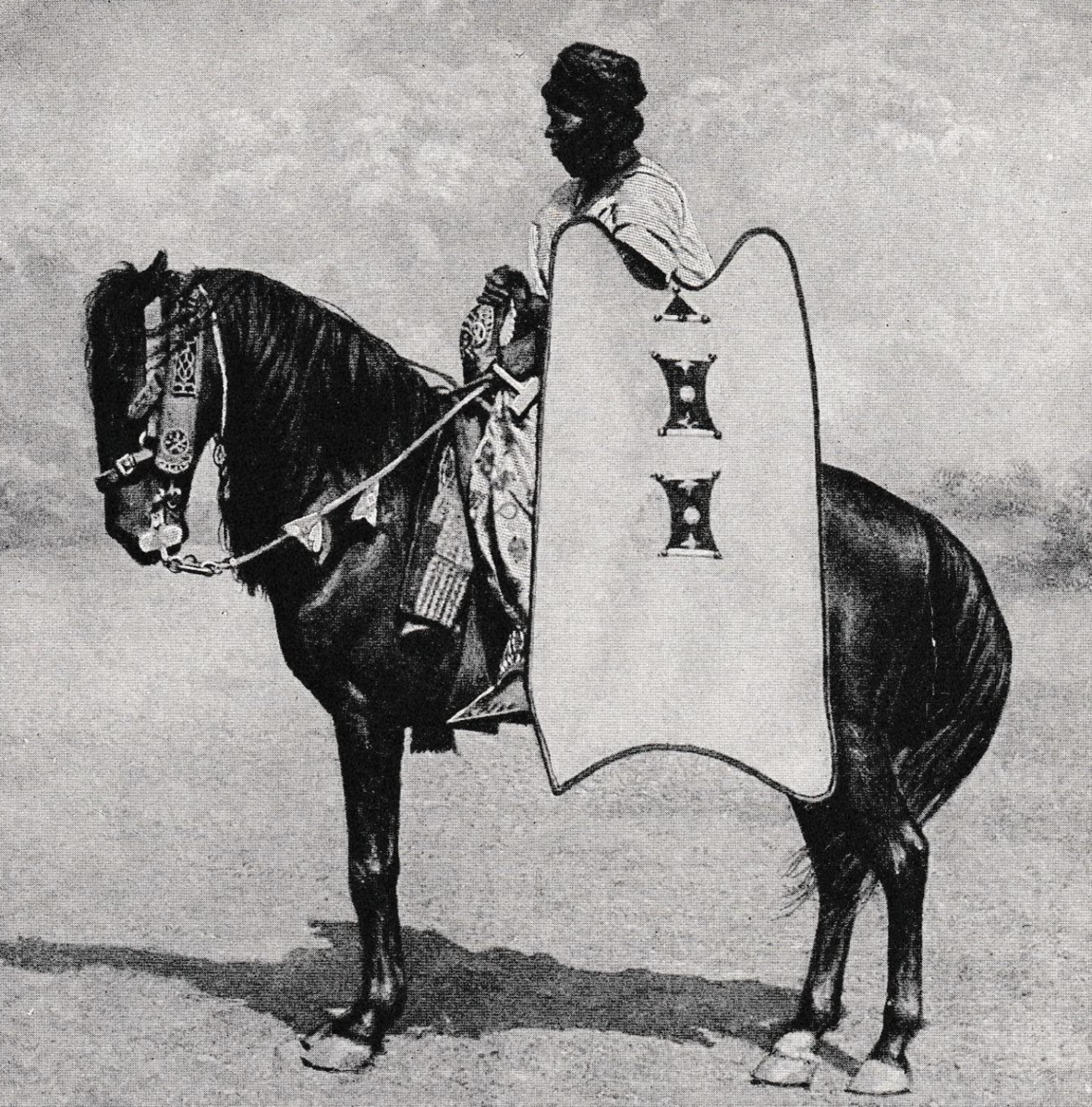
Photo credit; Sir John Alexander Hammerton & H.S. Goldsmith (Public Domain), Wikimedia Commons
The Tension Between Imported Rifles and Local Muskets.
The Sokoto Caliphate faced a strategic imbalance between two firearm systems that shaped its military doctrine:
- Accessibility vs. Superiority
Local muskets were easy to obtain and repair. Almost every emirate had blacksmith guilds capable of manufacturing spare parts. Infantry units could be mass-equipped with them.
European rifles, however, were scarce. Only wealthy elites possessed them, creating a technological hierarchy within the army.
This created tension: commanders needed large numbers of muskets for massed infantry, but also relied heavily on the superior performance of imported weapons for decisive cavalry charges.
- Tactical Limitations
Locally forged muskets:
Had short range, often requiring fighters to get dangerously close before firing.
Were inaccurate, especially on horseback.
Loaded slowly, reducing fire frequency in battle.
European rifles:
Allowed long-range engagement.
Could pierce armor and disable horses.
Required scarce ammunition and trained handling.
This mismatch meant Sokoto cavalry could not fully exploit European firepower. Cavalrymen armed with local muskets were far less effective than rivals who possessed imported guns.
- Economic Inequality and Weapon Control
The scarcity of rifles intensified political tension. Emirs often controlled rifle distribution to maintain their dominance. Those with access to European rifles held military advantages over rivals, contributing to internal power struggles.
- Impact on the Caliphate’s Final Wars
During the British invasion (1897–1903), the technological gap became fatal. British forces used quick-firing rifles and Maxim guns, while Sokoto troops relied mostly on locally forged muskets and a small number of outdated European weapons. The tension between the two firearm systems’ mass availability versus battlefield quality revealed its full consequence at this moment.
Cavalry and Muskets in Sokoto Military Strategy
Despite these challenges, the Sokoto Caliphate integrated firearms strategically.
- Cavalry as the Shock Force
The cavalry remained the core of the army. Even when armed with muskets, cavalry units depended on:
Speed,
Surprise attack,
Encirclement tactics,
Commanders often combined cavalry charges with infantry musket volleys.
- Infantry Fire Lines
Infantry armed with local muskets formed firing lines to soften enemy ranks before cavalry engagement. The weakness of their muskets meant they had to fire at close range, but they still provided critical support during campaigns.
Decline, Adaptation, and Legacy
By the late 19th century, Sokoto’s weapon system was outdated compared to European powers. Local gunsmiths lacked the metallurgical skills to create breechloaders or repeating rifles, leading to a dependence on foreign trade. The caliphate’s fall demonstrated the limits of indigenous firearm production in a rapidly industrializing world.
Yet, the legacy survives. Hausa blacksmiths continue to manufacture hunting guns, while museums in Sokoto, Kano, and Kaduna display muskets used during the caliphate’s peak. The Sokoto Caliphate’s military strategy reflected a complex balancing act between tradition and innovation. The tension between locally forged muskets and imported European rifles shaped its battlefield effectiveness, internal politics, and ultimately its fate. While indigenous technology ensured accessibility and cultural continuity, the scarcity and superiority of European arms exposed vulnerabilities that became decisive during colonial conquest. Understanding this tension provides insight not only into Sokoto history but into broader themes of technology, power, and adaptation in pre-colonial West Africa.
Sources and references
- Adeleye, R. A. (1971). Power and diplomacy in Northern Nigeria, 1804–1906. Longman.
- Falola, T., & Heaton, M. (2008). A history of Nigeria. Cambridge University Press.
- Last, M. (1967). The Sokoto Caliphate. Longman.
- Lovejoy, P. (198 0). Caravans of kola: The Hausa kola trade, 1700–1900. Zaria: Ahmadu Bello University Press.
Cite this article
Discussion
Sign in to join the discussion
Comments are checked by an editor before they appear. Leave a source or a correction and it is read first.
Continue reading
Related histories
 Anthropology and EthnographyThe Demography of Biafran Slave Exports (1650–1850)Read history →
 Anthropology and EthnographyMasquerade Traditions from Igboland to the Caribbean (Jonkonnu, Mocko Jumbie)Read history →
 Anthropology and EthnographyMapping Igbo Destinations in the Americas: A Comparative AnalysisRead history →
No comments yet
Nothing has been approved on this record yet. Comments are checked by an editor before they appear, so one written now shows on this page after that check.