 Ozikoro
 Cultural Heritage · Published history
Di Bụ Ugwu Nwanyị Revisited: Challenging Igbo Gender Norms through Negofeminism and Snail-Sense Feminism
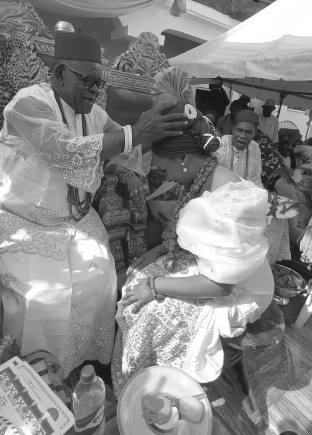
In Nigeria and other African countries, the way women fight for gender equality is not the same as how women outside the country would do it. Many of the foreign feminists’ theories cannot cope with the problems we African women face. That is why some Nigerian scholars decided to bring out theories that would match our culture, way of life and the things we value. Two major theories are Negofeminism by Obioma Nnaemeka and Snail-sense feminism by Akachi Adimora-Ezeigbo.
The written record
What Is Negofeminism?
Historical context
Obioma Nnaemeka first discussed this theory in her 2005 work. According to her, African feminism is not about carrying ego. The ‘nego’ inside the name is short for negotiation and ‘no ego’. She believed that African women could fight patriarchy, but not with power or disruption. Instead, we would use negotiation, peace, and cooperation, values already in our culture.
Negofeminism does not mean that women should just be quiet or accept suffering. No, they must know what to do at the right time. Nnaemeka explained this by using the example of a chameleon. A chameleon is slow but will reach its destination. So, African women, too, are supposed to be wise, calm, and strategic.
But the theory has its little challenges. People have said that Africa is not one, and the theory does not cover everybody. What could work for the Igbo women may not work for the Yoruba women or women from Kenya.
African women know what marriage, motherhood and community are all about. So, instead of breaking everything down, it was suggested that we should find a way to make things equal and work with men instead of seeing them as enemies. She talked about African women knowing things; she knew when to fight, when to bend, and when to ignore.
What is Snail-Sense Feminism?
This is from Akachi Adimora Ezeigbo. She said it in 2012. Ezeigbo uses the snail as a symbol of African women. The snail does not fight, and it doesn’t make noise. It will just sit down to calculate and pass the obstacle with style. She said Nigerian women started using this knowledge long ago, and it still works today.
She did not tell the women that they should endure ill treatment. No. She said they should be wise, resilient and dogged, just like snails that walk slowly but surely to where they’re going. But some people have criticised this, saying that snails are too slow, weak, and not strong enough to represent how Nigerian women are supposed to be. They believed that women are supposed to be bold and demand their rights without fear.
Snail-sense feminism states that women are supposed to first take care of themselves before they can help their family or community. This idea blends the Western idea of individual success with the African idea of community life. Ezeigbo believed that women could do better in society if they had self-worth and confidence.
Di Bụ Ugwu Nwanyị (Husbands are Women Dignity) – True or false
Both negofeminism and snail-sense feminism are trying to challenge this old Igbo saying that men, husbands, do give women their dignity. In today’s world, that saying promotes inequality. It makes it look like women are not complete unless they marry. But these feminist theories are asking, must a woman marry before she becomes someone that is known?
Negofeminism and snail-sense feminism have many similarities. First, both are Nigerian styles of feminism. They are not radical, they don’t fight men, and they do not believe that women are supposed to be separated from men to succeed. Instead, they say that men and women could work together to complement each other.
However, despite having the same foundation, there are a few differences. Negofeminism is communal, focused on community and how women and men could work together in society’s sake. It is believed that everybody, including men, needs to make gender equality work. It is like a group work.
Instead of completely breaking tradition, the theories tell women to use their brains. They teach women how to navigate tradition, culture, and modern life.
Snail-sense feminism, on the other hand, is more about the individual woman. Before she can help the community, a woman must build herself, know her worth, and focus on her strengths. This is a personal journey that later benefits the group.
Even with their differences, the two theories are real Nigerian creations. They didn’t come from outside; they march the way we live, our values, and our culture, especially among the Igbo people.
African feminism is not a one-way thing. As these theories show, the journey to gender equality in Nigeria is a slow but steady movement, just like the snail. We will still reach our goal.
Negofeminism and snail-sense feminism are an African way of saying: “We do fight patriarchy, but it is with our brains.” They do not support total war, but also do not support silence, too. The middle way blends the African culture, women’s wisdom, and quiet power. The two theories show that being a strong woman in Africa does not mean that you will shout more than everybody sometimes; the real power is knowing when to talk, when to act, and how to act.
Sources and references
- Amadiume, I. (1987). Male daughters, female husbands . Zed Books Ltd.
- Chinweizu. (1990). Anatomy of female power: A masculinist dissection of matriarchy . Pero Press.
- Christian-Wariboko, O. P., & Mbonu, C. N., HHCJ. (n.d.). Di bụ ugwu nwanyị (Husband is the dignity of a woman): Reimagining the validity of an Igbo aphorism in contemporary society .
- Chukwuma, H. (2012). Love and motherhood in Chinua Achebe’s novels. In H. Chukwuma (Ed.), Achebe’s women: Imagism and power (pp. 89–100). Africa World Press.
- Decock, P. B. (2013). Between the whore and the bride: Apocalypse 17–22: Listening to feminist readings. In P. Bere, M. S. Nwachukwu, & A. I. Umoren (Eds.), Women in the Bible: Point of view of African Biblical Scholars (pp. [insert page numbers if known]). Panafrican Association of Catholic Exegetes.
Cite this article
Discussion
Sign in to join the discussion
Comments are checked by an editor before they appear. Leave a source or a correction and it is read first.
Continue reading
Related histories
 Cultural HeritageEleven Days of Nwafor Ogidi: Inside the Festival Keeping an Old Igbo Tradition AliveRead history →
 Cultural HeritageIli Ji Nkpor Obododike: The Indigenous Agricultural Ritual CycleRead history →
 Cultural HeritageMusic and Drum Traditions: Tracing the “Igbo Drum” in the AmericasRead history →
No comments yet
Nothing has been approved on this record yet. Comments are checked by an editor before they appear, so one written now shows on this page after that check.