 Ozikoro
Anthropology and Ethnography · Published history
Duein Fubara: The Ancestor Screen and the Cult of the Forehead
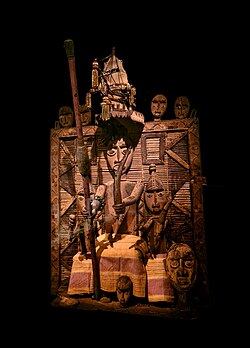
Among the Ijo (Ijaw) peoples of the Niger Delta, the Duein Fubara stands out as one of the most important sacred objects linking the living to their ancestors. While to an outsider it may appear to be a carved wooden panel, within Ijo cosmology the Duein Fubara is a spiritual device, an embodiment of lineage history, and the visual face of the clan’s ancestral authority. Deeply tied to what scholars call the “cult of the forehead,” the ancestor screen not only functions as an altar but also as a moral compass and a repository of ancestral memory.
The written record
Historical context
Duein Fubara
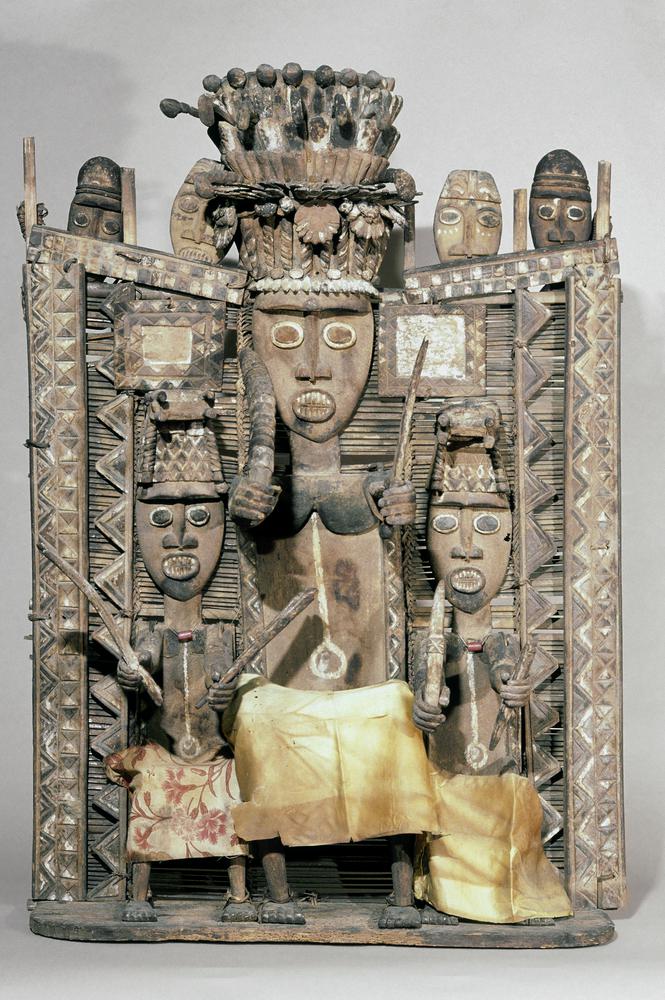
The name “Duein Fubara” translates roughly to “the forehead of the household spirit” or “the image of the family ancestor.” Traditionally used among the Kalabari, Okrika, Nembe, and other Eastern Ijo groups, the ancestor screen is a carved wooden object, often between 3 to 5 feet tall, featuring a combination of human figures, symbolic patterns, and reference motifs. It is kept in a sacred area of the household, where it serves as a focal point for communication with the ancestors.
Unlike many African ancestral objects that take the form of statues, the Duein Fubara is constructed as a screen-like panel, allowing it to serve both as an altar and a symbolic “doorway” between the human world and the spirit realm. The central figure typically represents the founding ancestor of the lineage, while smaller supporting figures symbolize junior ancestors, wives, attendants, or guardian spirits. Through these visual cues, the screen becomes a genealogical document carved in wood.
Historical Background and Cultural Development
The use of ancestor screens among the Ijo peoples is closely linked to the development of delta city-states such as Elem Kalabari, Buguma, Abonnema, and Nembe between the 16th and 18th centuries. These communities grew into powerful maritime polities through saltwater fishing, canoe trade, and participation in Atlantic commerce. As the population increased, the extended family system known as the wari became the bedrock of social organization.
With this expansion came the need to strengthen internal unity, maintain spiritual balance, and preserve lineage identity. The Duein Fubara emerged in this context as a visual and ritual device that anchored the household spiritually and socially. By the 19th century, it had become indispensable to Kalabari and Ijo religious and political life, used not only in funeral ceremonies but also in matters of inheritance, conflict resolution, and household leadership.
The Cult of the Forehead
Central to the meaning of the ancestor screen is the symbolic importance of the forehead, or “duein.” Across Ijo cosmology, the forehead is regarded as the seat of destiny, character, and ancestral imprint. It is believed that a person’s spiritual essence, what the Ijo call braide or life force, is concentrated in the forehead.
Thus, the Duein Fubara becomes the “forehead” of the entire lineage, its spiritual identity and ancestral consciousness. When elders approach the screen during rituals, they metaphorically face the very destiny of the family. This belief is so strong that many Ijo proverbs emphasize the moral function of the forehead, such as:
“A shining forehead blesses the household.”
“No one hides their forehead from their ancestors.”
Through these ideas, the cult of the forehead highlights the Ijo understanding that ancestry is not only a past to be remembered but a living force guiding present behavior.
Symbolism and Iconography of the Ancestor Screen
Every element of a Duein Fubara carries symbolic weight. The central figure, representing the founding ancestor, often has an exaggerated forehead and a dignified posture to indicate spiritual potency and authority. Carvers pay special attention to facial expression, clothing patterns, and body markings because each detail communicates something about the moral and social identity of the ancestor.
Surrounding figures may include wives, children, or attendants who played roles in the lineage’s founding story. These supporting figures reflect how Ijo society organizes kinship and hierarchy. Their presence on the screen reinforces family cohesion, reminding descendants of the relationships that shaped their lineage.
Decorative motifs, including fish, paddles, waves, geometric patterns, and spirit faces link the ancestor to water deities, the sea, and the ancestral world. Because the Ijo consider themselves “people of the water,” these motifs connect the screen to wider cosmological beliefs, binding the household to both land and sea spirits.
The Duein Fubara is activated through ritual, making it a living part of family and community life. The most common ritual practice is the pouring of libation (buru), where elders invoke the names of ancestors while spilling palm wine or gin onto the ground. This act nourishes the spirits and opens a communication channel between the worlds of the living and the dead. Households make offerings of yam, fish, oil, and kola nuts to honor the ancestors and seek guidance, particularly in times of crisis. The screen also plays a central role in: naming ceremonies, funerals of family elders, inheritance decisions, installation of new heads of household (wariowei) and reconciliation of disputes.
The Duein Fubara is thus more than a ritual object. It is a judicial and political instrument. When conflicts arise, elders gather before the screen to swear oaths, seek clarity, or make binding decisions. The belief is that lying in front of the ancestors is spiritually dangerous, ensuring honesty and accountability.
Aesthetic and Artistic Significance
Carving a Duein Fubara is a highly specialized art form passed down through secret apprenticeship. The carver must understand not only woodworking but also ancestral symbolism and spiritual protocols. Before carving begins, rituals are performed to purify the wood and invite ancestral blessing. A poorly carved screen is considered an insult to the ancestors, while a beautifully executed one enhances the family’s prestige.
Because of its artistic complexity, the Duein Fubara has drawn the attention of museums and art historians worldwide. Institutions such as the Metropolitan Museum of Art and the British Museum have collected these screens as masterpieces of West African art. Scholars like Cole and Aniakor describe the ancestor screen as one of the finest examples of Niger Delta sculpture due to its blend of realism, abstraction, and cosmological meaning.
Modern Relevance and Cultural Continuity
Despite the impact of Christianity, urbanization, and globalization, the Duein Fubara tradition remains alive in many Ijo communities. Some families still maintain ancestor screens in their homes or communal houses, especially during festivals and funerary rites. Others have adapted the tradition by replacing the physical screen with photographs or memorial structures, but the spiritual idea remains the same.
For younger generations, the Duein Fubara is now a symbol of cultural identity. Artists, filmmakers, and cultural activists reference it to celebrate Niger Delta heritage. It remains an anchor for diaspora communities and a reminder that ancestral presence continues to shape moral life.
The Duein Fubara is far more than an artifact, it is a living institution that embodies the spiritual, historical, and moral foundations of Ijo society. Through its unique iconography, ritual functions, and connection to the cult of the forehead, the ancestor screen represents continuity between generations. It reminds the Ijo that heritage is not simply the past but a guiding presence in everyday life. Even in a rapidly changing Nigeria, the Duein Fubara endures as a powerful symbol of lineage, identity, and ancestral wisdom.
Sources and references
- Alagoa, E. J. (2005). A history of the Niger Delta: An historical interpretation of Ijo oral tradition. Port Harcourt: Onyoma Research Publications.
- Cole, H., & Aniakor, C. (1984). Igbo arts: Community and cosmos. Los Angeles: Museum of Cultural History.
- Horton, R. (1969). “Stateless societies in the Delta.” In M. Douglas (Ed.), The Dynamics of Clanship in West Africa. London: Oxford University Press.
- Nabofa, M. Y. (1988). Symboli sm in African traditional religion. Ibadan: Paperback Publishers.
Cite this article
Discussion
Sign in to join the discussion
Comments are checked by an editor before they appear. Leave a source or a correction and it is read first.
Continue reading
Related histories
 Anthropology and EthnographyThe Demography of Biafran Slave Exports (1650–1850)Read history →
 Anthropology and EthnographyMasquerade Traditions from Igboland to the Caribbean (Jonkonnu, Mocko Jumbie)Read history →
 Anthropology and EthnographyMapping Igbo Destinations in the Americas: A Comparative AnalysisRead history →
No comments yet
Nothing has been approved on this record yet. Comments are checked by an editor before they appear, so one written now shows on this page after that check.