 Ozikoro
 Anthropology and Ethnography · Published history
From Defense to Display: The Evolution of Cannons from Military Tools to Symbols of Aristocratic Prestige in Southeastern Nigeria

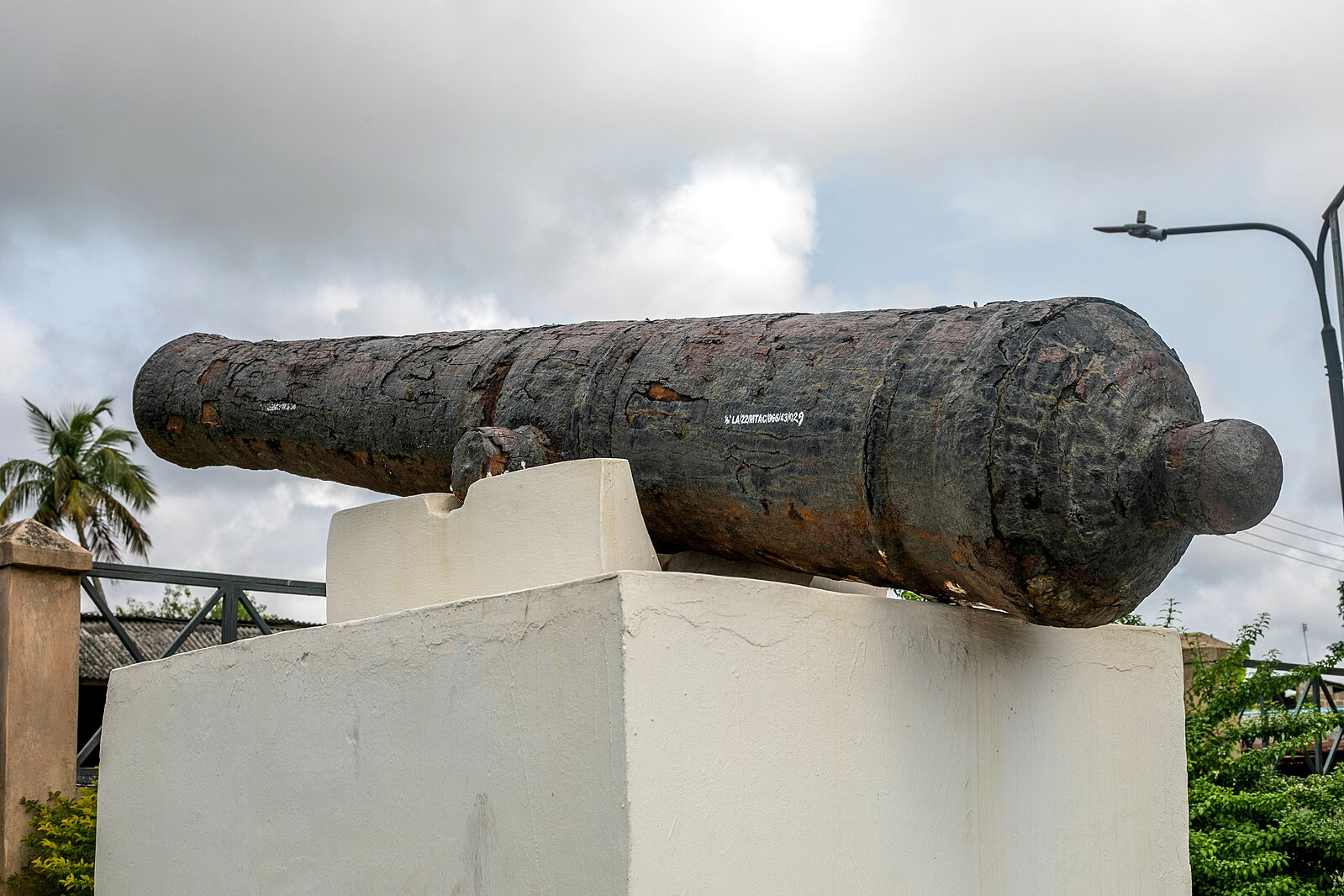
Photo credit; Wikipedia.
The written record
Cannons, known in many parts of southeastern Nigeria as “egbe nri,” “egbe igwe,” or simply “gunpowder instruments,” represent one of the most fascinating transformations in West African sociocultural history. While they initially entered the region as instruments of warfare and defense, these objects were gradually reinterpreted as emblems of prestige, power, and ceremonial authority among aristocratic lineages.
Historical context
Cannons in West African History: Entry and Early Use
Cannons arrived in West Africa largely through Portuguese contact beginning in the 15th century, a development recorded in historical summaries of early Atlantic trade. Initially, they were used in coastal polities for:
- Fort protection,
- Defense against rival states,
- Controlling trade routes,
- Protecting royal compounds.
In southeastern Nigeria, especially within Igbo and Cross River communities, cannons or devices fashioned after European cannon models were incorporated into local systems of warfare. Although large battlefield cannons were less common due to terrain and limited gunpowder supply, smaller cannons, swivel guns, and locally crafted replicas became more accessible during the 18th and 19th centuries as trade intensified.
The Igbo Sociopolitical Landscape and the Adoption of Cannons
Contrary to centralized kingdoms like Benin or Dahomey, Igbo society was decentralized, consisting of autonomous communities and powerful title holders. As documented in historical studies and Wikipedia’s “Igbo people” page, authority rested in:
- Councils of elders,
- Title societies (Ozo, Nze, Ichie),
- Wealth-based leadership,
- Ancestral lineage heads.
Local defense was critical, especially during periods of inter-village warfare, slave raids, and conflict over farmland or markets. Cannons, even when miniaturized, provided psychological warfare: the explosive sound alone could signal danger, strength, or the arrival of warriors. By the mid-19th century, portable cannons or “signal guns” had become part of many community defense strategies.
From Weapon to Prestige: The Shift in Meaning
As British pacification and colonial rule expanded in southeastern Nigeria between the late 19th and early 20th centuries, conflict declined. Communities no longer required firearms for active warfare. This shift mirrored historical patterns seen in many African societies where weapons later became ceremonial objects.
With warfare banned, the symbolic value of cannons grew. Aristocratic and wealthy families began displaying small cannons:
- At the entrances of compounds
- During festivals
- At installation rites of titled men
- At funerals of aristocrats
- During visits of colonial or regional dignitaries
Cannons transitioned from tools of protection to statements of authority, marking a household as influential and connected to prestigious trade networks.
Cannons as Status Symbols in Southeastern Nigeria
In many Igbo communities, prestige was measured through wealth, generosity, and one’s ability to sponsor public ceremonies. Cannons became part of this visual vocabulary of power. Their presence symbolized:
1. Wealth and Trade Connections
Owning a cannon indicated access to foreign goods and the economic strength to maintain gunpowder supplies.
2. Political Rank
Like the “Ozo” title emphasizing moral and ritual distinction, cannon ownership implied leadership capacity and ancestral prestige. The gun’s “voice” was a metaphor for authority.
3. Masculine Prestige and Warrior Identity
Even after warfare ceased, warriors and lineage heads continued to associate cannon blasts with courage and virility.
4. Ritual Power
- Cannons were sounded during critical rites:
- New Yam festivals,
- Funeral rites,
- Chieftaincy installations,
- Masquerade appearances.
The blast acted as a spiritual announcement, calling ancestors and signaling social order similar to how drums and gongs are used in Igbo ritual traditions.
Aesthetic and Artistic Transformations
Over time, local blacksmiths, especially renowned guilds like the Awka blacksmiths began crafting their own versions of cannons. While some were functional, others were decorative, incorporating:
Carved wooden stands,
Iron ornamentation,
Ancestral motifs,
Zoomorphic or geometric patterns.
These new forms reflected indigenous artistic preferences. Thus, cannons became both technological artifacts and works of art, paralleling the transformation seen in other imported objects like brassware, mirrors, and coral beads.
Colonial Influence and the Reinvention of Meaning
The British colonial administration introduced new political hierarchies and centralized systems of governance. Some of the newly appointed warrant chiefs used cannons as symbols of their imposed authority, while aristocratic families retained them as markers of continuity with precolonial power structures.
In certain southeastern towns, colonial officers even used cannon salutes during administrative ceremonies. Over time, this practice merged with indigenous customs, strengthening the cannon’s role as a symbol of elite status.
Today, cannons in southeastern Nigeria are used almost entirely for ceremonial and heritage purposes. They appear in:
Cultural festivals,
Palace courtyards of traditional rulers,
Museums and memorial sites,
Masquerade performances,
New Yam celebrations.
Many families still keep heirloom cannons from the early 20th century, preserving them as ancestral treasures. The firing of cannons during major events remains a potent symbol of honor and communal pride.
Their modern role reflects a broader pattern noted in historical and anthropological literature: when military artifacts lose their battlefield purpose, they often gain ritual, political, and aesthetic significance (a trend also seen in societies worldwide).
The evolution of cannons in southeastern Nigeria from tools of defense to prestigious symbols of aristocracy illustrates the flexibility of cultural meaning and the creativity of Igbo sociopolitical systems. What began as a foreign military technology eventually became woven into systems of identity, wealth, ritual, and artistic expression. Today, cannons stand not only as remnants of historical warfare but as powerful icons of heritage, authority, and ancestral pride.
Sources and references
- Adeyemi, L. (2015). Weapons and Power in Precolonial Nigeria. Lagos University Press.
- Isichei, E. (1976). A History of the Igbo People. Macmillan.
- Ottenberg, S. (1959). Ibo Receptivity to Change. Cahiers d’Études Africaines, 1(3), 5–23.
Cite this article
Discussion
Sign in to join the discussion
Comments are checked by an editor before they appear. Leave a source or a correction and it is read first.
Continue reading
Related histories
 Anthropology and EthnographyThe Demography of Biafran Slave Exports (1650–1850)Read history →
 Anthropology and EthnographyMasquerade Traditions from Igboland to the Caribbean (Jonkonnu, Mocko Jumbie)Read history →
 Anthropology and EthnographyMapping Igbo Destinations in the Americas: A Comparative AnalysisRead history →
No comments yet
Nothing has been approved on this record yet. Comments are checked by an editor before they appear, so one written now shows on this page after that check.