 Ozikoro
Anthropology and Ethnography · Published history
Ibini Ukpabi: The Voice of the Gods and the Fall of a Kingdom
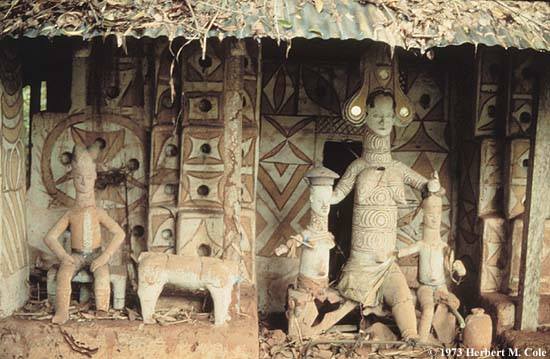
In the thick green heart of Arochukwu, where mist curls around ancient stones and the whispers of ancestors stir in the wind, stood the shrine of Ibini Ukpabi, the Long Juju of legend. Long before the British learned its name, the oracle’s voice carried across Igboland, settling disputes and sealing destinies. It was not merely a place; it was a living spirit, breathing justice and mystery. To stand before it was to stand before Chukwu Okike Abiama, the creator Himself.
The written record
Even today, elders say the path to the cave hums at dusk. They claim that when the wind blows through the gorge, you can still hear the faint echo of judgment, the same echo that once ruled kingdoms.
Historical context
The Sacred Voice that United a People
Ọ bụ ihe a na-ahụ anya ka e ji ama amamihe( Wisdom is known by what it reveals to the eyes). Long before the white man’s ships pierced the waves of the Niger and Cross Rivers, when the forests still sang with the tongues of ancestors, there was a place where the spirit world spoke clearly to men Arochukwu, the home of Ibini Ukpabi, the “Voice of the Almighty.”
Elders told how travelers came from distant lands, from Nri, Nsukka, Anioma, even Idoma to kneel before the mouth of the cave where Chukwu Okike Abiama was said to dwell. The waterfall roared like thunder, and the air trembled with awe. Inside that sacred darkness, justice was rendered, oaths were sealed, and destinies pronounced.
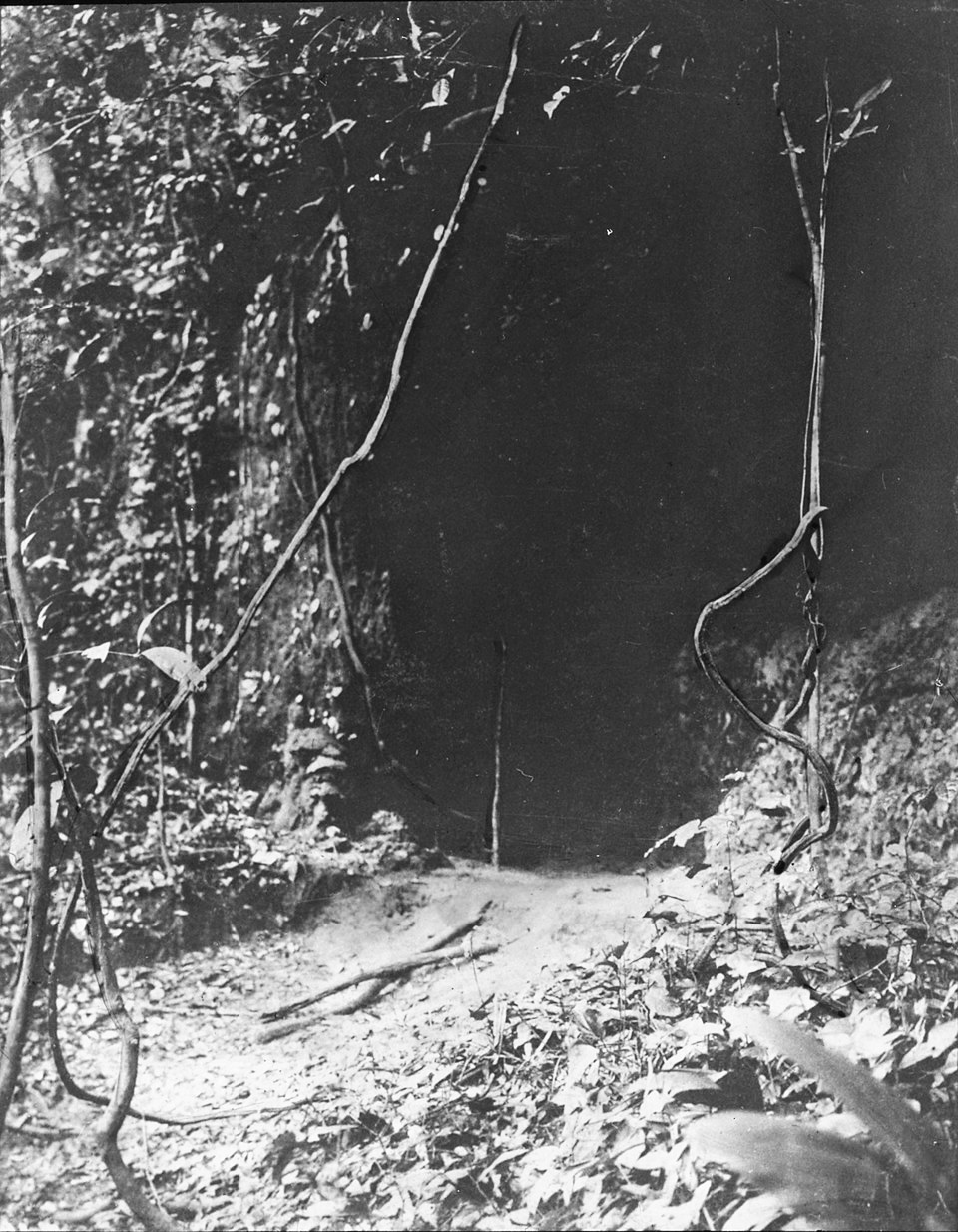
The Oracle that Ruled without a Crown
Ibini Ukpabi was not merely a shrine. It was the beating heart of a people. The Aro were its keepers( wise, shrewd, and organized). Their saying, “Àkọ bụ íje,”(Wisdom is journey) guided their dealings. Through the oracle, they held sway over wide Igboland, maintaining order among the many clans. The oracle’s decision was final; even kings from neighboring tribes bowed to it.
It was said that no crime went unpunished, no injustice unspoken. Ibini Ukpabi was the judicial and spiritual parliament of a united people, the unseen force that kept the land pure.
E mee ọjọọ, a na-ama ụjọ n’ihi mgbe ọjọọ ga-alaghachi(He who does evil must fear its return).
When Greed Crept into the Sanctuary
But as generations passed, greed crept in like a slow mist. The priests who once guarded truth began to whisper lies. Those who came for justice were sometimes led through the sacred cave and never returned. Rams were offered in place of men, not to the gods, but to cover deceit.
The Aro traders who once upheld fairness saw the profit in human flesh. The oracle became entangled in the slave trade, its sacred voice now echoing with the cries of the condemned. The balance between divine justice and human greed had tilted, and the ancestors wept in silence.
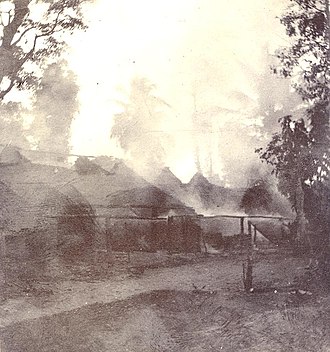
The Coming of the Whiteman and the Fall of the Oracle
By the end of the nineteenth century, rumors of Ibini Ukpabi’s corruption reached the ears of the British. To them, the oracle was both a threat and a mystery, a spiritual fortress that defied their authority. They called it the “Long Juju”and resolved to silence it.
When the Aro Expedition of 1901–1902 began, drums of war echoed across the hills. The British soldiers, armed with guns and ambition, marched into Arochukwu’s forest, where the cries of spirits met the roar of cannons. The cave that once judged men became a battlefield.
Many Aro warriors fought bravely, clutching machetes blessed in the oracle’s name. But no charm could stand against gunpowder. The Eze Aro watched his kingdom crumble; Ibini Ukpabi’s sanctuary fell silent, its priests scattered, its mystery desecrated.
From Ashes to Awakening: A New Dawn for the Igbo
The fall of the oracle was more than the fall of a shrine, it was the breaking of an entire system of unity. Without the oracle’s spiritual authority, the Igbo world splintered into fragments. The British imposed their own warrant chiefs, and a people once bound by sacred law now found themselves bound by foreign rule.
Yet from the ashes of Ibini Ukpabi rose a new dawn. The same foreigners who crushed the oracle sent missionaries who brought books and the gospel. In Aro’s silence, the first schools grew. The Igbo, ever resilient, embraced learning, trade, and new faith turning, loss into wisdom.
Lessons from Ibini Ukpabi’s Echo
Mmiri anaghị agafe n’elu ugwu enweghị akụkụ ya na-asa(When the river floods, even the mountain feels its spray). No great event leaves anyone untouched
Today, the cave of Ibini Ukpabi still stands in Arochukwu, quiet and shadowed, a tourist’s wonder and an ancestor’s warning. The people visit not to seek judgment but to remember. For even when gods fall, the stories endure, and in storytelling, the spirit of a people lives on.
Sources and references
- Okoro, I. A. (2020). A critical study on the Ibini Ukpabi (Arochukwu Long Juju) Oracle and its implications on international relations during the 20th century. London Journal of Research in Humanities and Social Sciences, 20(10), 1–12. https://creativecommons.org/licenses/by-nc/4.0/
- Kalu, O. U. (1978). Presbyterians and the Aro Expedition in The Nigerian Story. Ibadan: Daystar Press.
- Unegbu, J., & Ezeigbo, J. (2013). Exploring the Existence of the Supreme Deity Concept in Igbo Pre-Missionary Religious Thought. Ikenga International Journal of African Studies. University of Nigeria, Nsukka.
Cite this article
Discussion
Sign in to join the discussion
Comments are checked by an editor before they appear. Leave a source or a correction and it is read first.
Continue reading
Related histories
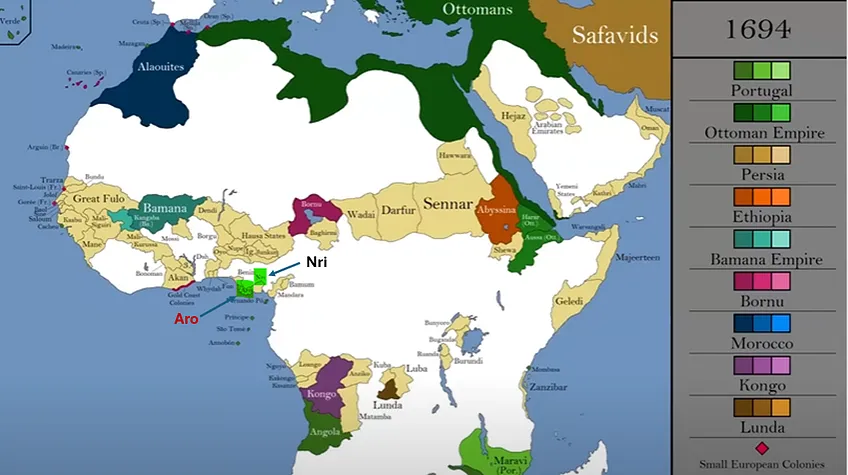 Anthropology and EthnographyThe Demography of Biafran Slave Exports (1650–1850)Read history →
 Anthropology and EthnographyMasquerade Traditions from Igboland to the Caribbean (Jonkonnu, Mocko Jumbie)Read history →
 Anthropology and EthnographyMapping Igbo Destinations in the Americas: A Comparative AnalysisRead history →
No comments yet
Nothing has been approved on this record yet. Comments are checked by an editor before they appear, so one written now shows on this page after that check.