 Ozikoro
 Anthropology and Ethnography · Published history
Igbo Musical Instruments : A lost Art : Úbò
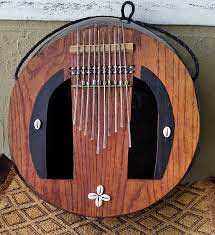
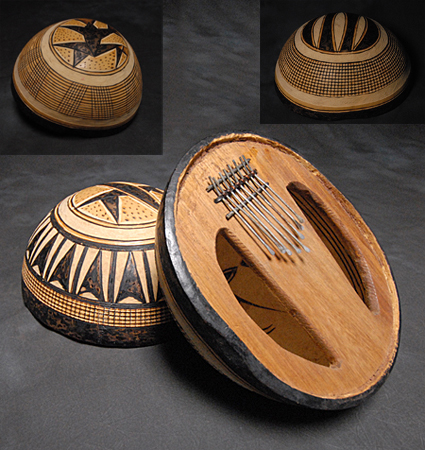
Úbò is an oval shaped instrument that takes the form of a calabash spilt into two and carved with precision . úbò or úbò-aka has 8 metal strings/ keys which are strapped to a wooden soundboard and then hammered onto a half calabash.
The written record
Historical context
Úbò
Form:
History:
Known to be the oldest musical instrument in Nigeria, Úbò aka was discovered by an archaeologist ( professor Thurstan Shaw ) in Igbo ukwu during the excavation of a site between 1959 and 1964. . Its keys were crafted in bronze which had helped it survive 1000 years of degradation. In a show of good faith to the people of Igbo ukwu , Shaw insisted that all Igbo Ukwu finds ( including the oldest musical instrument to originate from Nigeria : Úbò) be kept in Nigeria instead of being ceded to the British museum. Today you can find those well sort after artefacts and the lovely bronze Úbò in the National museum Lagos and the state museum in Anambra state.
Use:
The Úbò is used to tell stories sensitive with rich folklore and poetic songs , which communicate vital life lessons , songs of worship to deities etc.
Classification
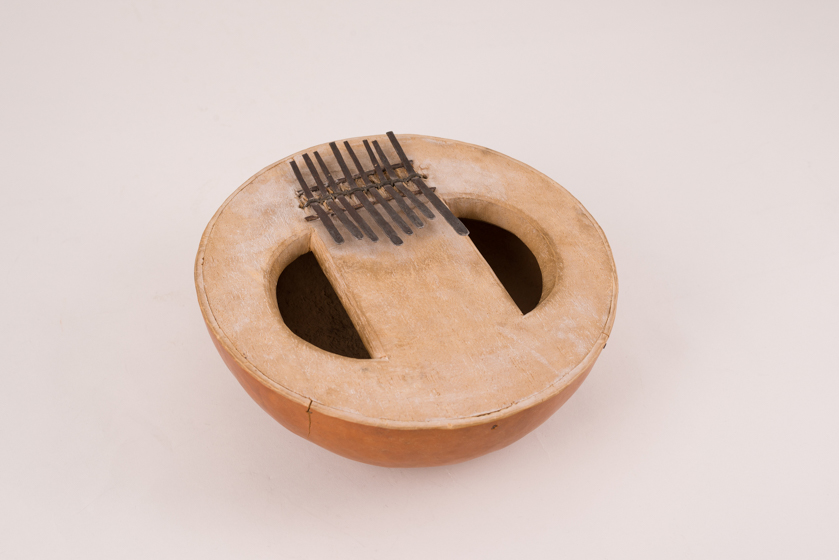
Úbò is classified as an idiophone which is a musical instrument in which the sound is produced by the vibration of the instrument itself. Through the metal keys, sound board and hollow behind, the úbò makes spirit filled sounds. It has room on both sides for grip by the player, showing the thoughtfulness of ancient Igbo craftsmanship. it is also known as the West aAfrica thumb piano.
Existential Threat
Although úbò survived the extinction of string musical instruments in ala igbo , it is still highly endangered it can’t be seen in most communities and has very few players today , because of this most wood carvers in alaigbo have seen the drop in demand and have stopped producing it. Due to this , most upcoming wood carvers never learn the art of making an úbò. Ubo-aka are found commonly in Anambra, Imo, Rivers, Cross Rivers, and Bendel States.
Preservation Efforts:
Organizations like Center for memories ( Ncheta Ndigbo) have incorporated úbò into their retinue of numerous musical instruments used for welcoming guests into the museum run by the organization. it would be best in class for our government run museums at state and federal level to adopt such and also have it as a parting gift ( souvenir) in order to keep the trade of making this dying musical instrument intact. Also, Traditional institutions should set up structures that will have an apprenticeship system for wood carvers across alaigbo.
Sources and references
- Clyde and Annie Matters Collection (1994) West African Finger Instrument, Circular. Whitworth University.
- Ed keazor (2015) A pilgrimage to the oldest existing musical instrument in Nigeria. Music in Africa.
- Center for Memories (Ncheta Ndigbo)
Cite this article
Discussion
Sign in to join the discussion
Comments are checked by an editor before they appear. Leave a source or a correction and it is read first.
Continue reading
Related histories
 Anthropology and EthnographyThe Demography of Biafran Slave Exports (1650–1850)Read history →
 Anthropology and EthnographyMasquerade Traditions from Igboland to the Caribbean (Jonkonnu, Mocko Jumbie)Read history →
 Anthropology and EthnographyMapping Igbo Destinations in the Americas: A Comparative AnalysisRead history →
No comments yet
Nothing has been approved on this record yet. Comments are checked by an editor before they appear, so one written now shows on this page after that check.