 Ozikoro
 Anthropology and Ethnography · Published history
Igbo Musical Instruments : A Lost Art : OPI/OKIKE
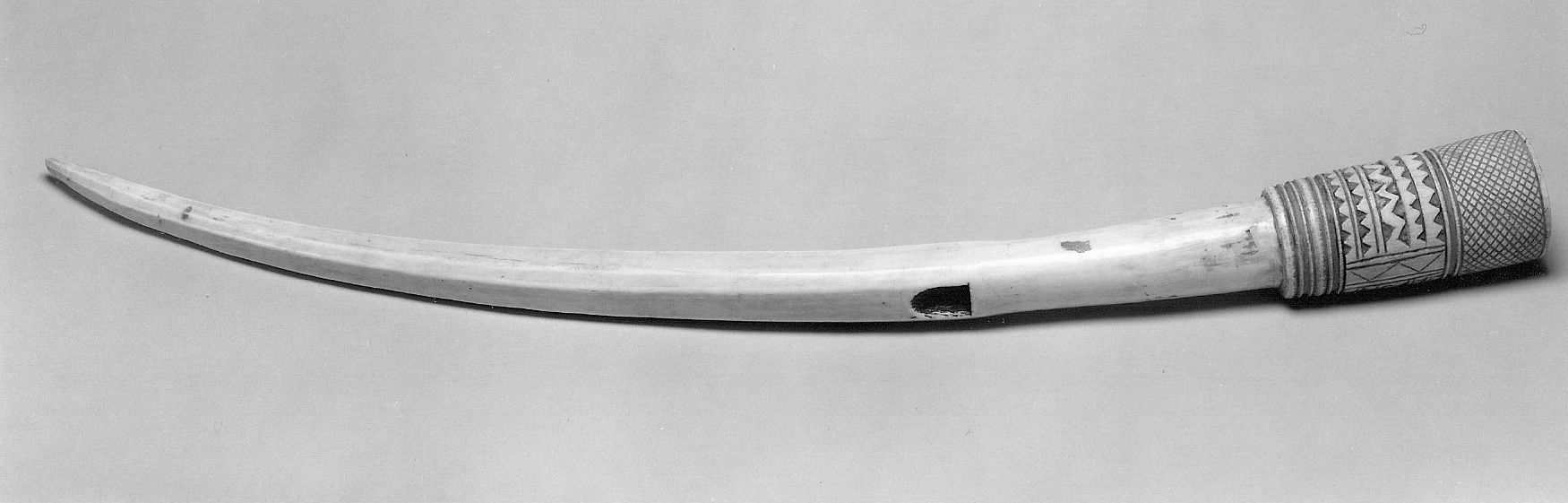
is a curved ivory colored music instrument made from elephant tusks or large horn of an Elephant. With an opening by the side and an opening at the edge for producing sound as air is forced through it. It is carried by the ọzọ titled men in Igbo communities.
The written record
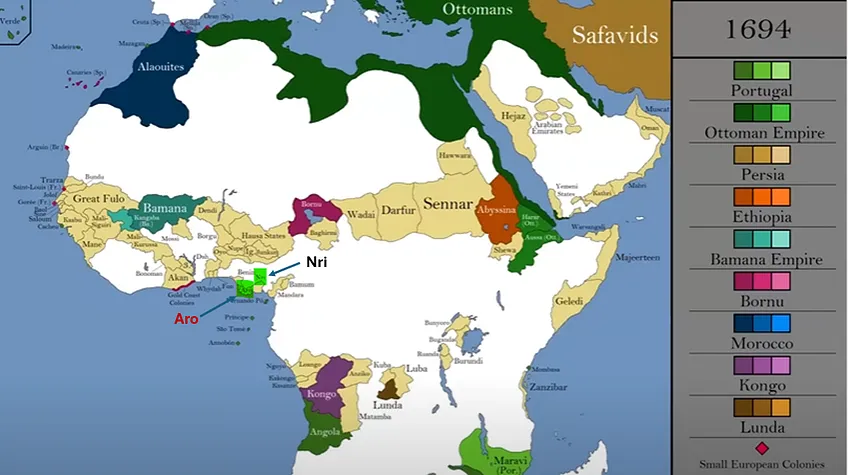
Historical context
OKIKE
History And Significance Of Okike
There’s no certain date of the introduction of opi into the cultural practices or music of ndi-igbo but it has been part and parcel of cultural practices and the musical dynamism/ discography of ndigbo.
As A Mark Of Special Attendance
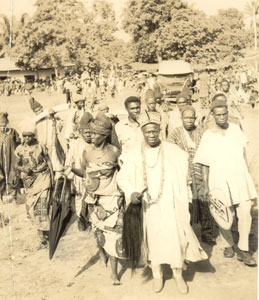
It is usually recognized as the highest symbol of social status. It is mostly used in special events and occasions. Ekwensi in 1963 when describing the series of events of the Iyi-Oji annual celebration which comes up every November, he described the function of the okike as thus “The ọkpalas from all quarters of Nkwelle-Ezunaka sit next to the Priest. The Ogbuefi, the Ndiọzọ, and all the rest of the titled men of Nkwelle-Ezunaka mark the occasion by blowing elephant tusk, trumpets dances are exhibited”
Okike-Blower-Ogbuefi-Ikelie-blowing-his-elephant-tusk-in-Ezunaka-Iyioji-festival.-Courtesy-–-Cyprian-Ekwensi-1983
As Symbolism Of The Conferment Of Titles On Individuals:
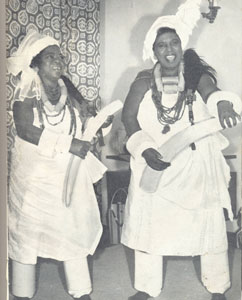
In ozo title taking, opi okike is given to symbolize Chukwu as creator of his lineage handed over to him with the alọ on the day of installation. In the same vein for women, taking a title comes with acquiring her official dress comprises her anklets and bangles, two white loin cloths tied over the other, a white head tie, an elephant-tusk trumpet, priceless coral-bead necklaces and a horse-tail which are requirements for being titled woman.
Sound Classification;
Opi/okike is classified as an aerophone , which means they produce sound primarily through the vibration of a column of air. These instruments include trumpet, opi okike ( opi ike) , and even oja. Okike/opi is used to announce the entrance of ndi nze during occasions, or even declaration.
Relevance In The Modern Igbo Setting:
Okike and Ọdu-mkpalọ are carved out of elephant tusks and are valuable machinery for recognition of social status. The Igbo man does not play with his status symbol and his family affiliations. Hence these three trumpets are highly dignified status symbols for social mobility. Due to this drive for this precious musical status symbol, it has led to the extinction of wild elephants in most parts of alaigbo. Most okike now are sourced outside alaigbo , which begs the question of whether status should be chased at the expense of the environment because of course conservation is an integral part of igbo culture.
Sources and references
- Ebighgbo, C. (2009). The trumpets: Okike, ọdu-mkpalọ, and enenke as ethnography in Igbo social commitments. GEFAME Journal of African Studies , 6 (1)
- Ekwensi Cyprian (1963) The Legend of Nkwelle Ezunaka in Nigeria Magazine, No. 78, Nigerian National Press, Apapa-Lagos.
- Shaw, T. (1970). Igbo-Ukwu: An Account of Archeological Discoveries in Eastern Nigeria . London, Faber and Faber.
- Music Africa Awake
- African Music Library
- Metropolitan Museum of Art. (n.d.). Igbo traditional music instruments . African Music Library.
Cite this article
Discussion
Sign in to join the discussion
Comments are checked by an editor before they appear. Leave a source or a correction and it is read first.
Continue reading
Related histories
 Anthropology and EthnographyThe Demography of Biafran Slave Exports (1650–1850)Read history →
 Anthropology and EthnographyMasquerade Traditions from Igboland to the Caribbean (Jonkonnu, Mocko Jumbie)Read history →
 Anthropology and EthnographyMapping Igbo Destinations in the Americas: A Comparative AnalysisRead history →
No comments yet
Nothing has been approved on this record yet. Comments are checked by an editor before they appear, so one written now shows on this page after that check.