 Ozikoro
Anthropology and Ethnography · Published history
Igbo Musical Instruments: A Lost Art – Ugbo Akwara
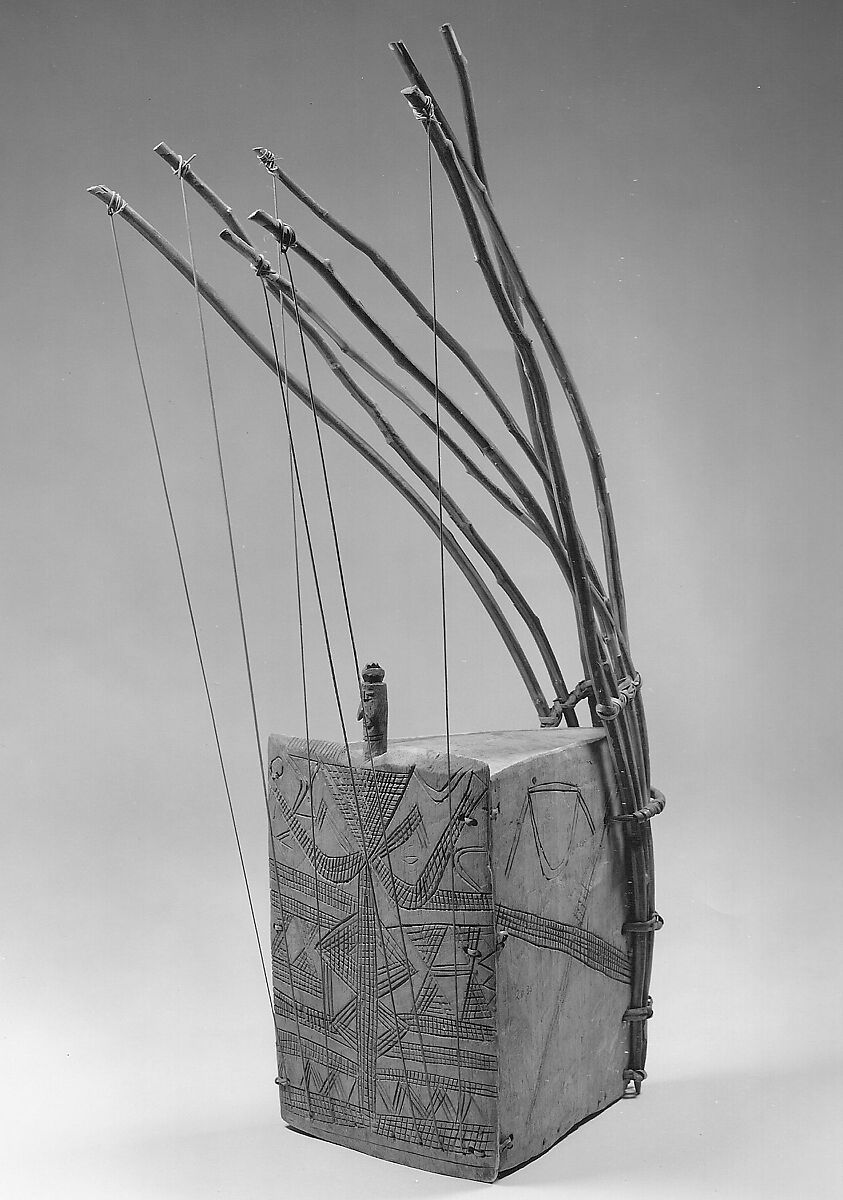
Traditional Igbo music is one of the oldest and most sophisticated indigenous musical cultures in West Africa. Rooted in rhythm, storytelling, spirituality, and communal performance, Igbo music once relied on a wide variety of instruments, drums, rattles, string instruments, horns, and wooden idiophones to transmit memory and identity from one generation to the next. Among these instruments, the ugbo akwara, also known as the pluriarc, stands out as one of the most unique yet endangered forms of Igbo musical expression. Once central to courtly entertainment, ritual ceremonies, and praise-singing, the instrument has now largely disappeared from everyday Igbo life. This essay explores the history, structure, cultural relevance, and gradual disappearance of the ugbo akwara, drawing from museum records, ethnomusicological studies, and documented fieldwork.
The written record
Historical context
Understanding the Ugbo Akwara: Structure and Design
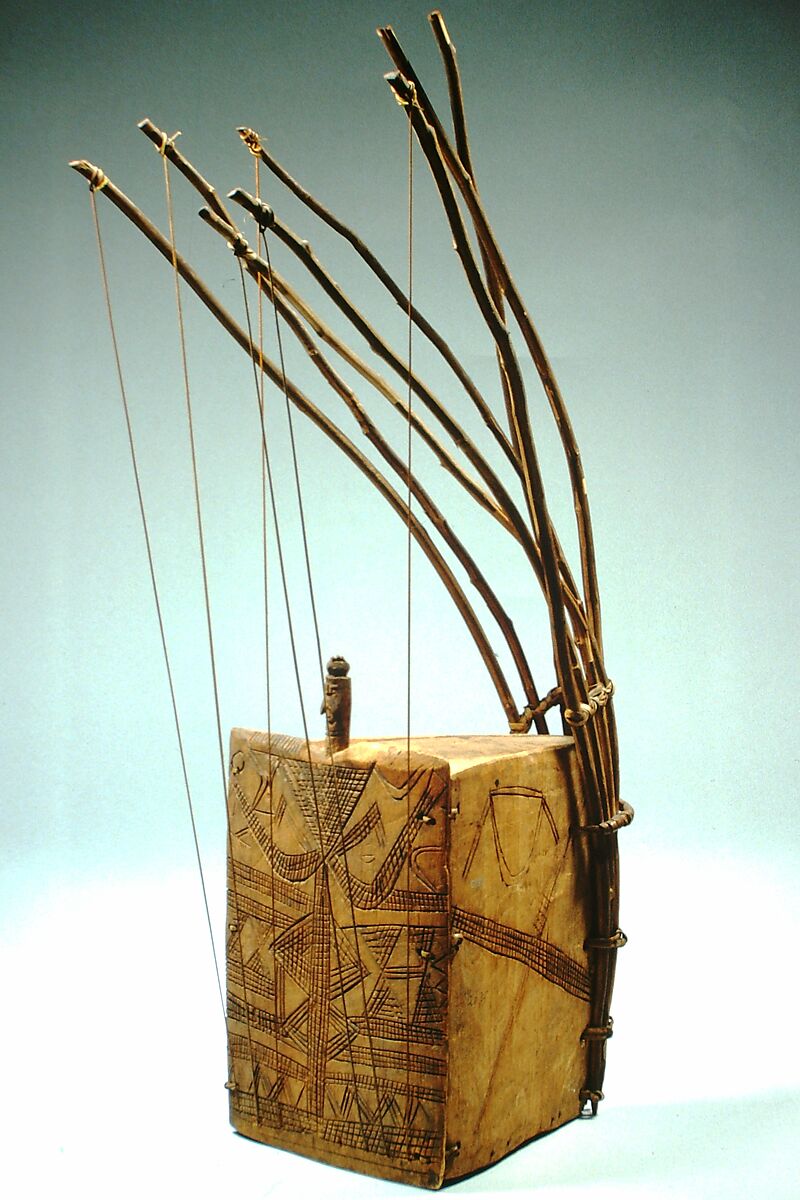
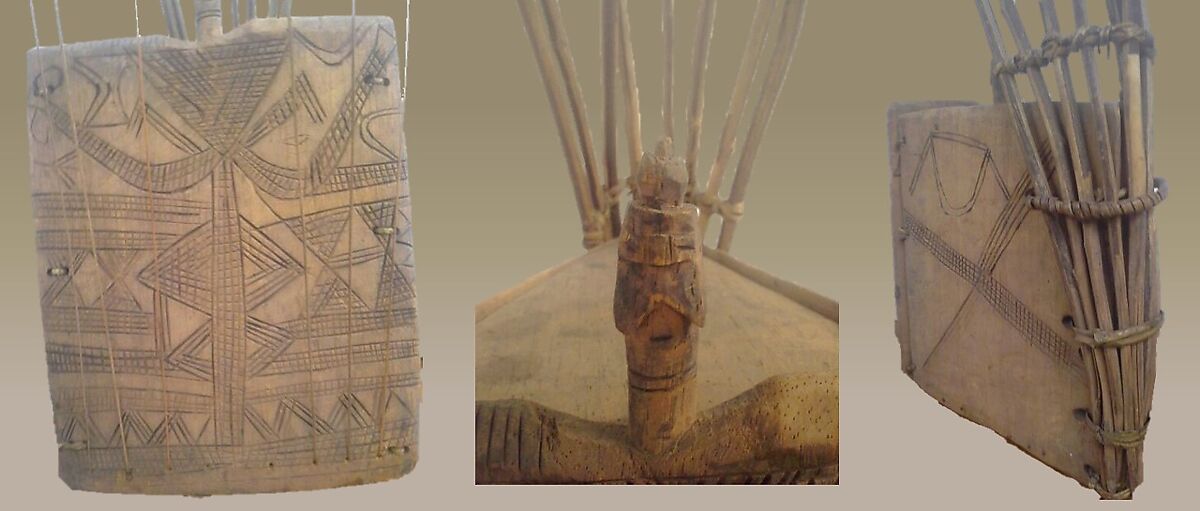
The ugbo akwara is a type of pluriarc, a multi-stringed lute found in several parts of central and southern Africa. The Igbo version is distinct for its arched strings, typically six to nine, mounted on a hollow wooden or gourd-covered resonator decorated with carved geometric motifs. According to the Metropolitan Museum of Art, which houses one of the most well-preserved specimens, the instrument consists of a wooden box resonator covered with skin, with several curved wooden bows inserted into one end and tied with fiber strings.
The strings were plucked individually using fingers, producing soft melodic lines similar to those of a harp or thumb piano. Because of its delicate tone, the ugbo akwara was typically played in intimate settings, not in large communal gatherings dominated by drums like the ikoro or ogene.
Historical and Cultural Context of the Ugbo Akwara
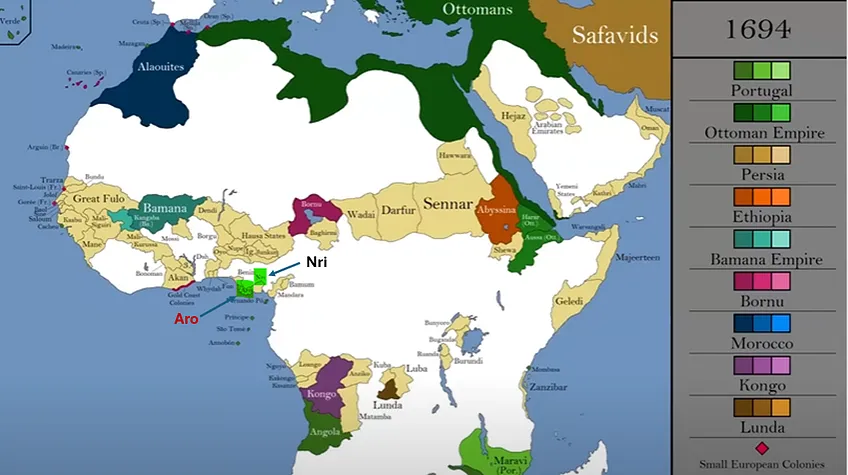
Historically, the instrument was used among certain Igbo subgroups in southeastern Nigeria especially in areas around Awka, Nri, and parts of Anambra and Imo, where musicians performed at royal courts, age-grade ceremonies, and storytelling sessions. Ethnomusicologists such as Simon Ottenberg note that the Igbo string family once included harps, lyres, and pluriarcs before colonial influence and modernization reduced their usage.
The ugbo akwara was particularly valued for:
- Praise-singing, especially for titled men
- Court entertainment for Eze (traditional rulers)
- Ritual and spiritual communication, often used by diviners
- Oral history transmission, accompanying folktales and genealogical recitations.
In many cases, the instrument was associated with specialized guilds of musicians, similar to griots in other West African cultures.
Symbolism and Aesthetics in Igbo Musical Philosophy
Igbo musical aesthetics emphasize duality, repetition, and call-and-response, reflecting broader Igbo cosmology. Instruments like the ugbo akwara played the role of the “voice of the ancestors,” providing a melodic counterpart to percussion instruments that represented communal energy. Because of the symbolic connection between string instruments and spirituality, players were often regarded as guardians of ancestral knowledge.
The visual motifs engraved on the instrument, triangles, zigzags, and interlocking lines symbolize protection, lineage, and cosmic order. This aligns with the broader symbolic language found in uli body and wall drawings, reinforcing the integration of music and visual art within Igbo culture.
Decline and Near Disappearance of the Ugbo Akwara
The decline of the ugbo akwara can be traced to several historical forces:
- Colonial Influence and Western Musical Instruments
British colonial presence introduced guitars, accordions, and organs, which quickly replaced local string instruments. Churches discouraged many indigenous musical forms, promoting hymns and Western notation systems.
- Urban Migration and Modern Entertainment
As Igbo society urbanized in the mid-20th century, entertainment shifted to highlife, radio music, and later Nollywood productions. Soft plucked instruments struggled to survive in louder, more modern performance settings.
- Loss of Apprenticeship Systems
Traditional musicians learned through long apprenticeships. As younger generations shifted toward Western education and formal employment, few were willing to inherit the craft.
- Limited Preservation Efforts
Institutions like the Metropolitan Museum of Art and the British Museum have preserved some pieces, but local preservation within Nigeria has been minimal.
As a result, the ugbo akwara is now considered a lost or near-extinct Igbo instrument, known mostly through museum collections and archival photographs.
Contemporary Revival Efforts
In recent years, African ethnomusicologists and cultural activists have begun documenting endangered instruments. Nigerian scholars such as Emeka Nwabueze and Ikenna Onwuegbuna have argued that reviving indigenous instruments is essential to retaining Igbo identity in a globalized world.
Some contemporary initiatives include:
- Museum exhibitions featuring Igbo musical instruments.
- Academic documentation of instrument construction techniques.
- Experimental fusion music, where modern musicians incorporate pluriarc-like sounds into contemporary genres.
- Cultural festivals showcasing reconstructed traditional instruments.
Although the ugbo akwara is still far from returning to everyday Igbo musical life, these initiatives signal a growing awareness of its cultural importance.
Why the Ugbo Akwara Matters Today
The near-extinction of the ugbo akwara reflects broader challenges in preserving African indigenous knowledge. Recovering and documenting such instruments is valuable not merely for nostalgia but for the following reasons:
- Cultural identity: It represents the complexity and creativity of Igbo musical heritage.
- Historical understanding: It provides insight into pre-colonial aesthetics, court life, and ritual practices.
- Artistic inspiration: Its structure and sound offer unique possibilities for modern African musicians.
Scholarly research: It contributes to global ethnomusicology as one of Africa’s rare multi-stringed instruments.
The ugbo akwara remains a profound symbol of the richness of Igbo musical culture. Though largely forgotten in modern Nigerian society, its presence in museum archives and scholarly documentation testifies to a sophisticated artistic heritage that predates colonial disruption. Reviving interest in this instrument through research, exhibitions, and cultural education offers an opportunity to reconnect with a lost art form and preserve an essential part of Igbo identity. As Nigeria continues to negotiate its cultural future, remembering instruments like the ugbo akwara is an important step toward honouring the artistic ingenuity of the past.
Sources and references
- The Metropolitan Museum of Art. (n.d.). Harpsichord. [Musical instrument].
Cite this article
Discussion
Sign in to join the discussion
Comments are checked by an editor before they appear. Leave a source or a correction and it is read first.
Continue reading
Related histories
 Anthropology and EthnographyThe Demography of Biafran Slave Exports (1650–1850)Read history →
 Anthropology and EthnographyMasquerade Traditions from Igboland to the Caribbean (Jonkonnu, Mocko Jumbie)Read history →
 Anthropology and EthnographyMapping Igbo Destinations in the Americas: A Comparative AnalysisRead history →
No comments yet
Nothing has been approved on this record yet. Comments are checked by an editor before they appear, so one written now shows on this page after that check.