 Ozikoro
Anthropology and Ethnography · Published history
Igbo-Ukwu: Revealing the Bronze Age of West Africa
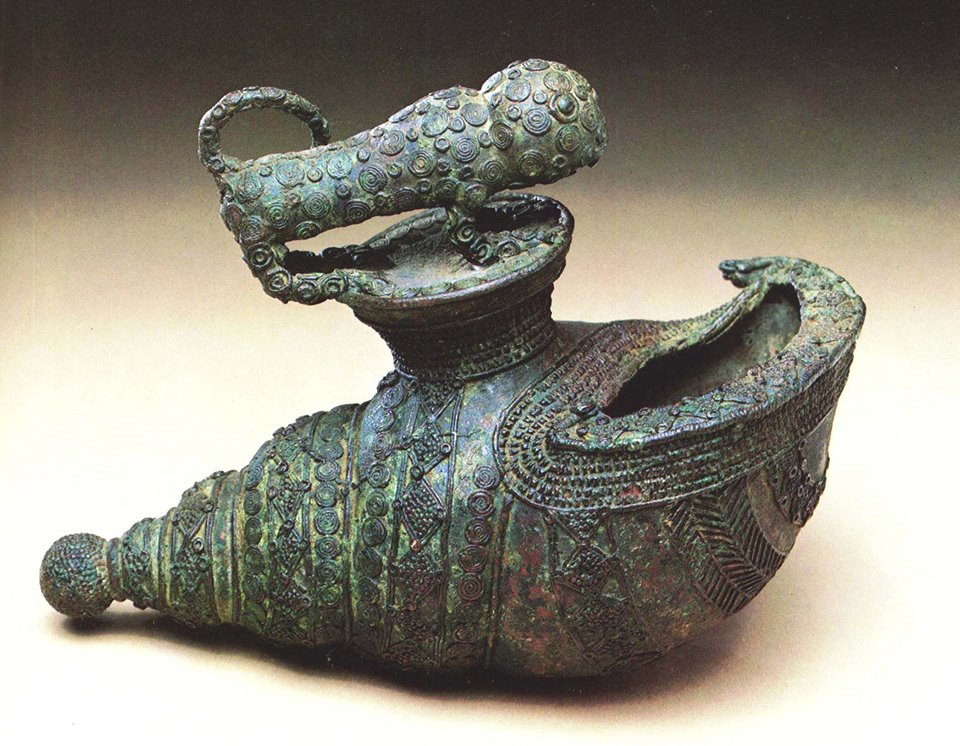
The Igbo-Ukwu discoveries are renowned for their sophisticated 9th-century bronze artifacts, which are the earliest known examples of cast bronze in West Africa. The artifacts showcase immense skill with the lost-wax casting technique and intricate designs.
The written record
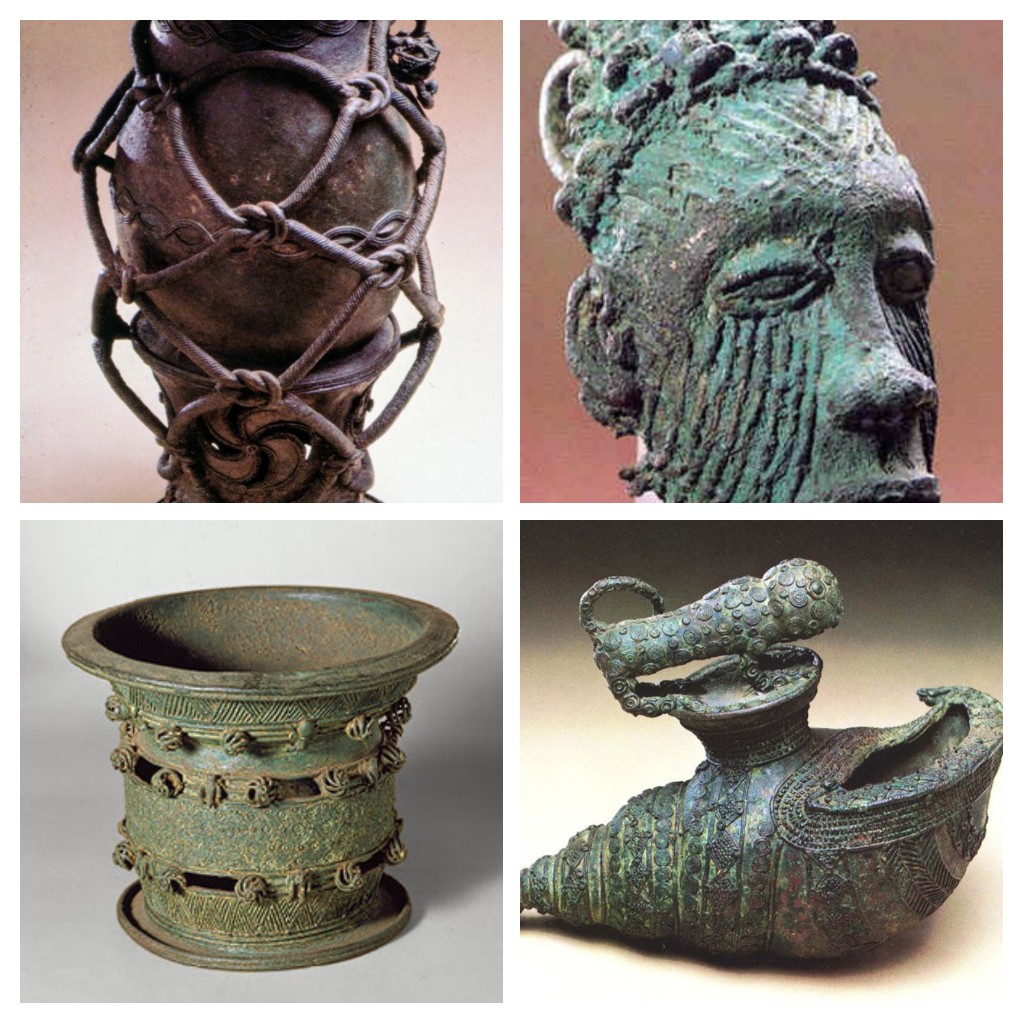
The archaeological discoveries at Igbo-Ukwu in southeastern Nigeria stand as one of the most critical landmarks in African history and art. Dating to the 9th century C.E., the finds predate the well-known bronzes of Ife and Benin by several centuries, proving that a highly sophisticated, wealthy, and politically complex society flourished among the ancestors of the modern-day Igbo people during what is arguably the Bronze Age of West Africa.
The site’s artifacts reveal a masterly command of metallurgy and extensive trade networks that reached beyond the Niger River.
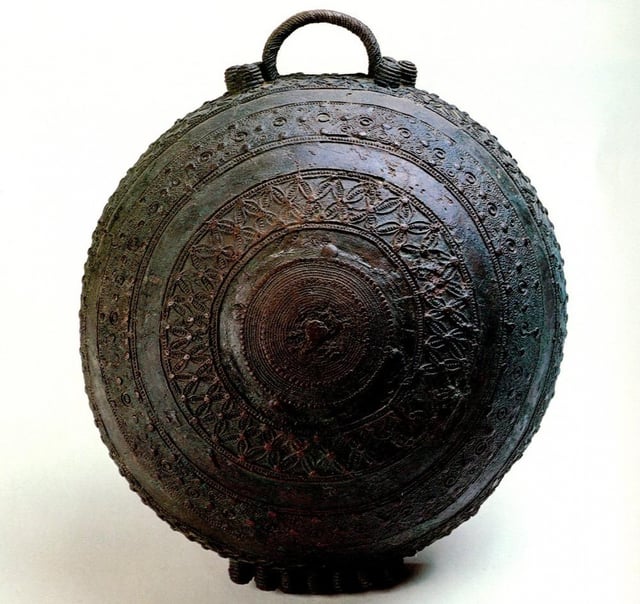
Historical context
Accidental Discovery and Formal Excavation
The Igbo-Ukwu findings were first brought to light not by professional archaeology, but by chance, in the Igbo town located in modern-day Anambra State.
The initial discovery occurred when Isaiah Anozie, a local villager, was digging a cistern in his compound. He unearthed a cache of intricate copper and bronze objects, though their true significance was not immediately recognized.
Decades later, between 1959 and 1964, the British archaeologist Charles Thurstan Shaw led formal excavations at the site. His work revealed three distinct locations within the village compounds:
Igbo Isaiah: Interpreted as a storehouse or shrine containing ceremonial vessels and regalia.
Igbo Richard: The elaborate burial chamber of an elite person, likely a titled leader or priest-king, buried in full regalia.
Igbo Jonah: A disposal pit containing broken pottery, bronzes, and other artifacts.
The radiocarbon dating of the organic materials found alongside the bronzes placed the Igbo-Ukwu culture firmly in the 9th century C.E., challenging previous notions about the timeline of metallurgical advancement in sub-Saharan Africa.
The artifacts are famous for their ornate details, including intricate patterns of twisted wires, concentric circles, and imitations of natural forms like insects and shells.
The Roped Pot (Leaded Bronze Ceremonial Pot): This is one of the most iconic artifacts. It is a highly ornate vessel cast to look like a ceramic pot enveloped in an intricate net of knotted rope. It demonstrates exceptional mastery of the lost-wax technique to capture fine textile details in metal.
The Shell Vessel with Leopard: A ceremonial vessel cast in the shape of a shell, surmounted by a small leopard figure. The surface is decorated with detailed castings of tiny insects and flies, highlighting the artists’ attention to naturalistic detail.
Human Head Pendants: Small bronze pendants in the form of human heads, featuring elaborate facial scarifications known as ichi, a practice associated with Igbo titled men.
Ram’s Head Pendant: A pendant in the shape of a ram’s head, also decorated with small insect figures on the forehead and nose.
Ornate Staff Heads: Various staff heads featuring complex designs, including coiled snakes or loops designed to hold colored beads.
Beaded Objects and Jewelry: Numerous items like bracelets,
anklets, and crowns, many adorned with thousands of imported glass and stone beads, indicating a long-distance trade network.
Ceremonial Bowls and Stands: Intricately decorated bronze bowls and stands, often incorporating figures of warriors and symbolic motifs.
Unparalleled Artistry and Technical Mastery
The artifacts unearthed at Igbo-Ukwu are renowned globally for their artistry and the astounding technical skill required for their creation. The collection includes hundreds of objects, such as ceremonial vessels, staffs, swords, crowns, and personal ornaments.
The Igbo-Ukwu smiths exhibited an unmatched mastery of the lost-wax casting technique for copper alloys (bronze and leaded bronze). The intricacy of their work, featuring elaborate filigree, detailed surface ornamentation (like tiny insects, spirals, and pellets), and precise skeuomorphic representation (bronze objects crafted to look exactly like rope, calabashes, or gourds), is considered technically superior to European bronze casting of the same period.
Art critics have lauded the style as having a “strange rococo” or “Faberge type virtuosity,” indicating a completely indigenous and unique artistic tradition that was fully developed, lacking any known local prototypes.
Also, analysis revealed that the bronze and copper used were likely sourced from local deposits, further supporting the theory of a wholly independent, indigenous technological development, contrary to early speculation that the advanced work must have been a result of European or Arab influence.
Evidence of Wealth and Far-Reaching Trade
The sheer quantity and quality of the objects recovered, especially those found in the Igbo Richard burial, point to a society with considerable material wealth, specialization, and stratification. The buried dignitary was adorned with rich regalia and thousands of artifacts, demonstrating a society governed by powerful spiritual or political figures.
Trade Connections: Alongside the locally crafted bronzes and copper artifacts, the sites yielded over 165,000 imported glass, carnelian, and stone beads. These beads, often manufactured in places as distant as India, the Middle East, and possibly Egypt, are evidence of sophisticated, long-distance trade networks. This trade was likely financed by local resources such as ivory, slaves, or agricultural products, highlighting the Igbo-Ukwu people’s pivotal role in pre-colonial West African commerce.
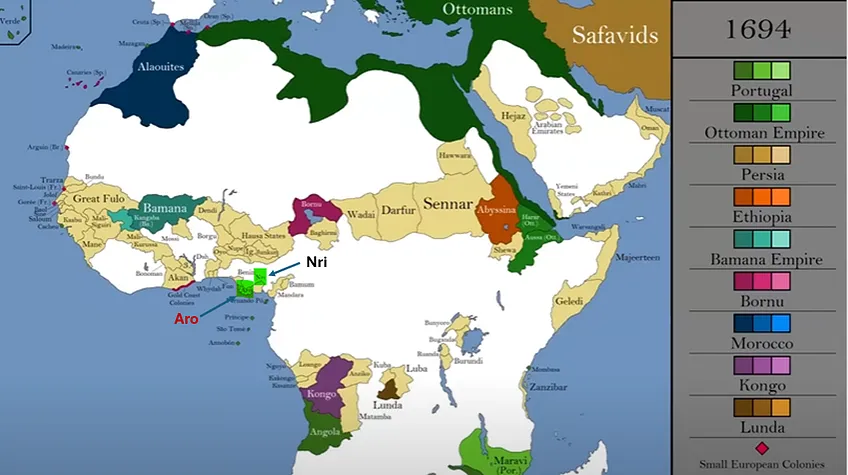
Cultural Significance: The iconography on the bronzes, featuring local flora, fauna, and scarification patterns (igbu ichi), ties the art directly to the Nri-Igbo culture, a society with a complex system of titled aristocracy centered on ritual purity, earth reverence, and priestly authority (Things Nigeria). Igbo-Ukwu thus serves as the earliest known archaeological evidence of the ancestors of the Igbo people establishing a highly centralized, sophisticated socio-political system centuries before the rise of other West African kingdoms.
Sources and references
- Britannica, The Editors of Encyclopaedia. “Igbo Ukwu.” Britannica, 23 Oct. 2025, www.britannica.com/place/Igbo-Ukwu.
- Metropolitan Museum of Art. “Igbo-Ukwu (ca. 9th Century).” The Metropolitan Museum of Art, 1 Oct. 2001, www.metmuseum.org/essays/igbo-ukwu-ca-9th-century
- Wikipedia contributors. “Archaeology of Igbo-Ukwu.” Wikipedia, The Free Encyclopedia, 25 May 2025, en.wikipedia.org/wiki/Archaeology_of_Igbo-Ukwu.
- Smart history. “Igbo-Ukwu.” Smarthistory, 7 Feb. 2022, smarthistory.org/igbo-ukwu/.
Cite this article
Discussion
Sign in to join the discussion
Comments are checked by an editor before they appear. Leave a source or a correction and it is read first.
Continue reading
Related histories
 Anthropology and EthnographyThe Demography of Biafran Slave Exports (1650–1850)Read history →
 Anthropology and EthnographyMasquerade Traditions from Igboland to the Caribbean (Jonkonnu, Mocko Jumbie)Read history →
 Anthropology and EthnographyMapping Igbo Destinations in the Americas: A Comparative AnalysisRead history →
No comments yet
Nothing has been approved on this record yet. Comments are checked by an editor before they appear, so one written now shows on this page after that check.