 Ozikoro
 Anthropology and Ethnography · Published history
Iron and Spirit: The Role of the “Ateiwya” (Blacksmith Workshop) as a Sacred Space for Weaponry and Moral Teaching among the Tiv
The written record
The Tiv people of central Nigeria possess a long-standing tradition of metalworking, spirituality, and artisan guild culture. Among the most significant institutions within Tiv indigenous technology is the “Ateiwya,” the blacksmith’s workshop. More than a site for producing tools and weapons, the Ateiwya holds a sacred dimension functioning as a space where moral codes, communal discipline, and spiritual knowledge are transmitted. Although scholarship has often focused on Yoruba, Igbo, and Hausa smithing traditions, emerging research highlights the Tiv blacksmiths’ unique fusion of metallurgy and moral instruction.
Historical context
Historical Background of Tiv Blacksmithing
- Origins of the Craft among the Tiv
Blacksmithing in West Africa is centuries old and appears across multiple ethnic groups. For the Tiv, oral histories suggest that smithing emerged alongside the migrations from the Cameroon borderlands into the Benue Valley. As recorded in social-anthropological surveys, Tiv clans relied heavily on iron implements for farming, hunting, and household duties. This necessity established the blacksmith as a central economic figure.
- Blacksmithing in Wider African Contexts
In many African societies the smith was considered both technologically gifted and spiritually significant, believed to work with forces that “transform” matter. The “African Metallurgy” entry highlights the ritual status of smiths who were often treated with respect and suspicion. Such themes resonate with Tiv traditions, where smiths occupy a liminal status respected craftsmen who also wield spiritual influence.
The Ateiwya as a Technical Centre
- Production of Tools and Weaponry
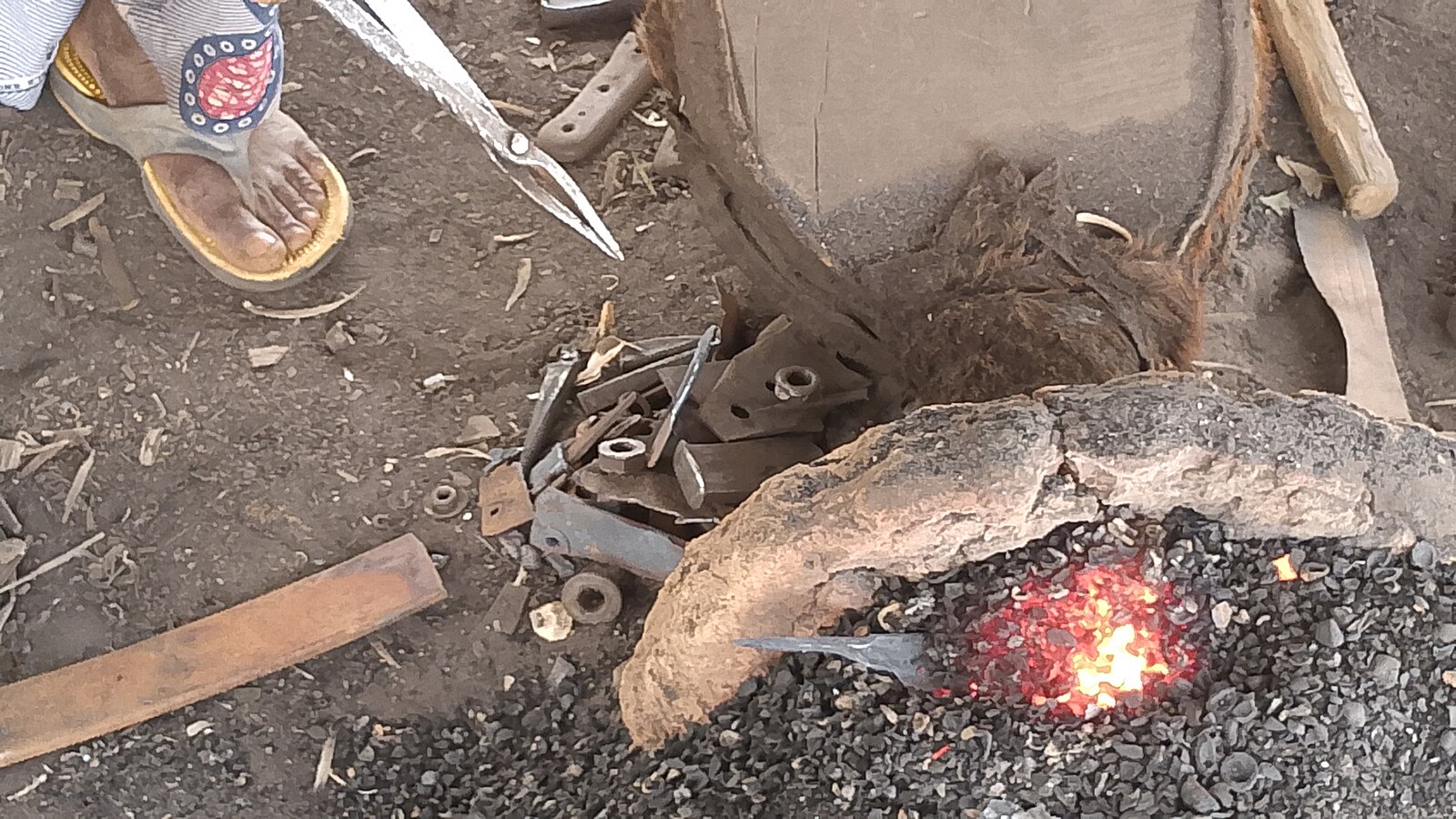
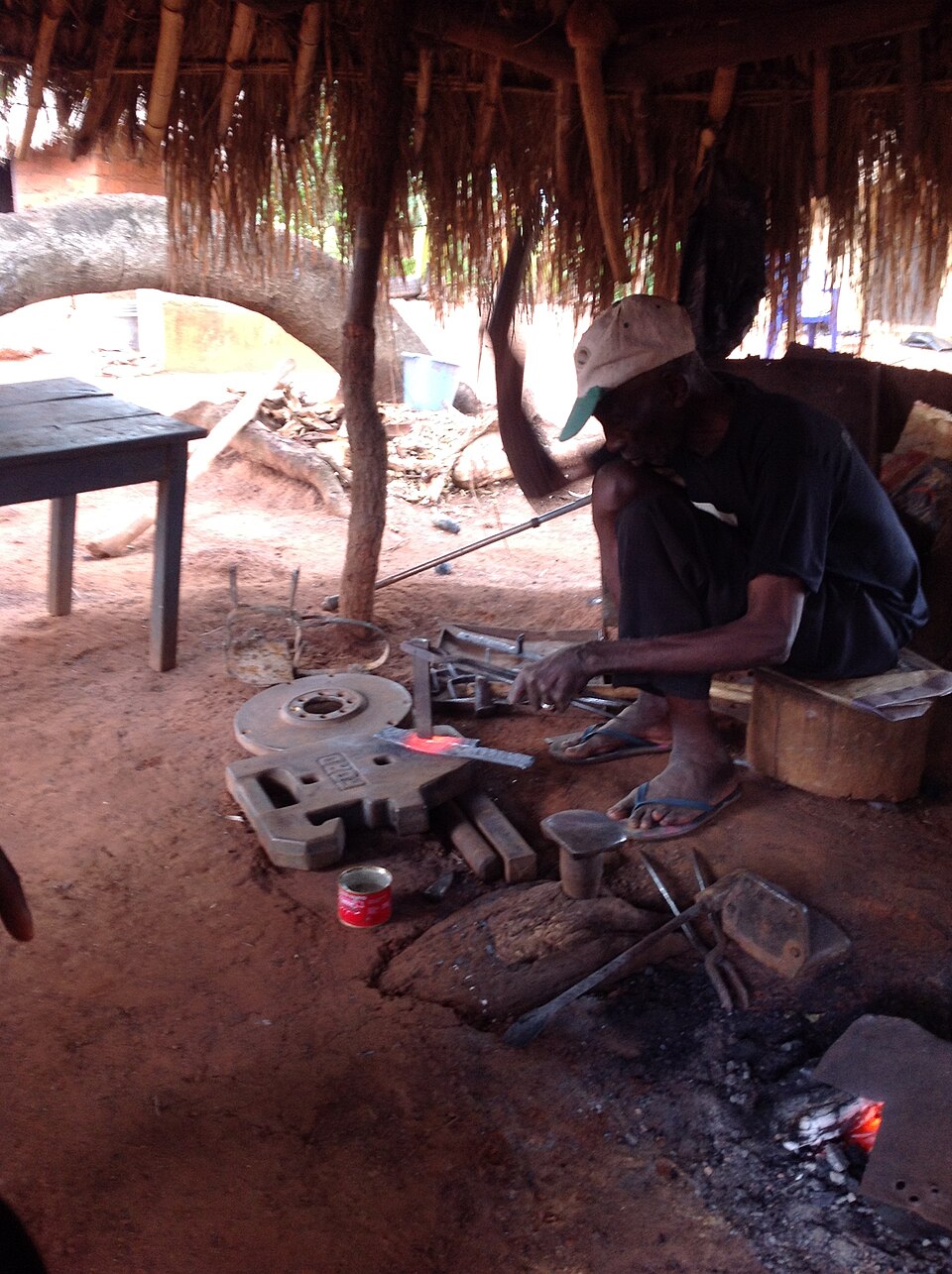
The Ateiwya is structurally modest, with a forge, bellows, anvils, and tool racks but functionally rich. Tiv blacksmiths produce:
Agricultural tools such as hoes (“kwase”), cutlasses, and axes,
Household items including knives, hinges, and cooking tripod stands,
Weapons such as spears, arrowheads, and traditional short swords used historically in community defense. Ethnographic works describe Tiv blacksmiths as integral to pre-colonial warfare systems. The Ateiwya thus served as a centre for the production of not just utilitarian items but objects tied to communal protection and authority.
- Knowledge Transmission and Apprenticeship
Within the Ateiwya, young apprentices (“ityo atei”) learn the craft through observation, repetition, and guided practice. Research on African apprenticeship models indicates that learning occurs through embodied, incremental stages (Herbert, 1993). The Ateiwya’s apprenticeship structure resembles that of other African groups—such as the Igbo Awka and the Yoruba Iworo smiths who pass down specialized knowledge through lineage-based instruction.
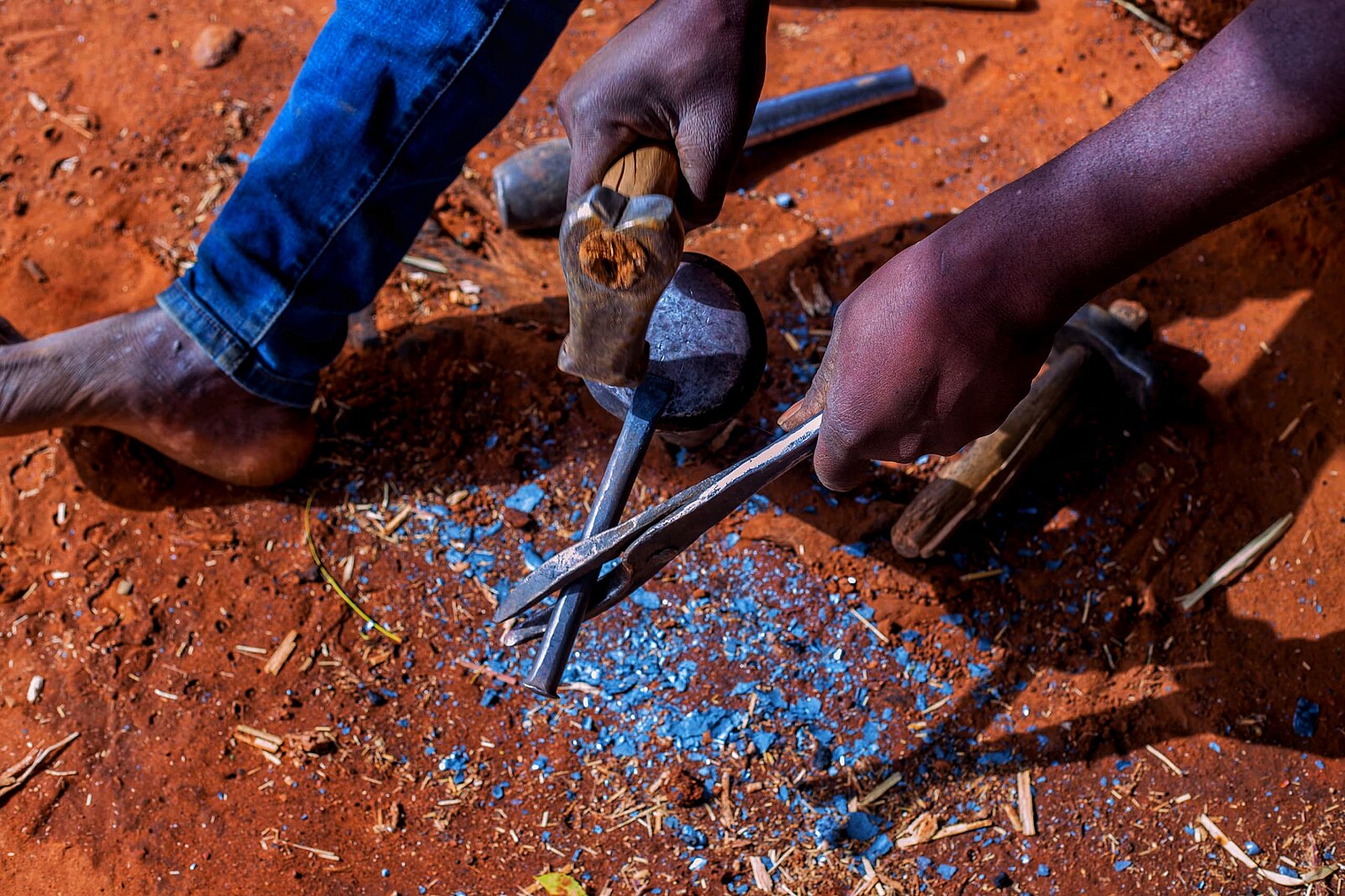
Photo credit: Hajjare via Wikimedia Commons, CC BY-SA 4.0.
Spiritual Dimensions of the Ateiwya
- Sacredness of Metal and Fire
Across Africa, metalworking is often associated with ritual power, as highlighted in an entry on “African traditional religion.” The transformative nature of fire and iron imbues the smith’s space with sacred imagery. Among the Tiv, the Ateiwya is traditionally understood as a place where physical materials and spiritual forces coexist. Oral traditions describe the smith’s forge as a site where “the earth’s strength meets human skill.”
- Ties to Ancestral Spirits and Protection
Tiv belief systems acknowledge akombo, spiritual forces that ensure balance and morality within society. Some aspects of smithing are linked to protective akombo, and smiths may perform minor rituals before major forging tasks. Scholars such as Bohannan and Bohannan observed that certain weapons and farm tools were consecrated to ensure their effectiveness and safety. Thus, the Ateiwya functions not only as an industrial space but also as a spiritual locus where the moral order of the community is reinforced.
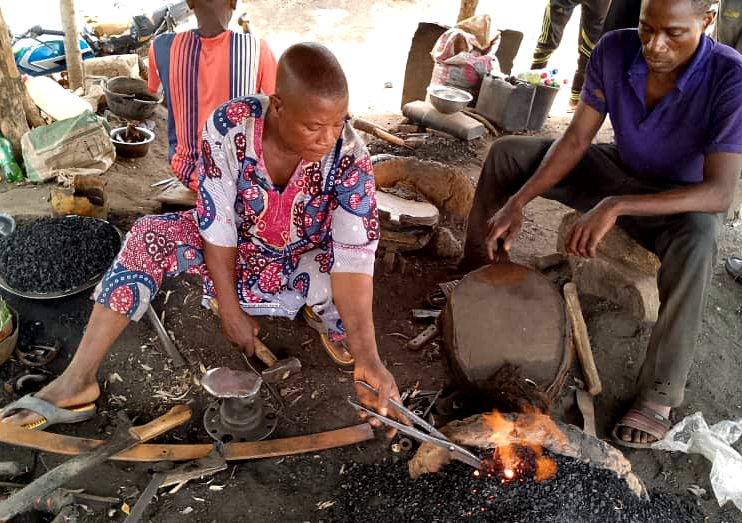
Photo credit:Hajjare via Wikimedia Commons, CC BY-SA 4.0.
Moral Teaching within the Ateiwya
- Discipline, Patience, and Respect for Craft
Apprenticeship in Tiv society is not merely technical training; it is a moral education. Time management, obedience to elders, discipline under pressure, and humility are emphasized daily. The repetitive nature of heating, hammering, and shaping iron becomes a metaphor for shaping character. As described in general literature on African guilds, apprentices who fail to adhere to moral codes may be expelled.
- Communal Values and Social Harmony
Within Tiv cosmology, communal harmony (“ya na angbian” brotherhood) is a core virtue. Blacksmiths reinforce these values by teaching cooperation, non-violence within the workshop, and the ethical use of weapons they produce. The mastery of iron is seen as requiring internal balance, and moral failings are believed to weaken a smith’s craftsmanship. This aligns with broader African philosophical notions that technological power must be anchored in moral restraint.
The Ateiwya in Contemporary Tiv Society
- Decline and Resilience of the Craft
Modern industrialization, imported tools, and urbanization have reduced dependence on traditional blacksmiths. However, the Ateiwya survives in many rural Tiv communities because:
Local tools are affordable,
The designs suit local farming needs,
Ritual and cultural elements remain valued. Some blacksmiths now craft ceremonial objects for festivals, tourist markets, and cultural displays.
- Cultural Revival and Heritage Recognition
Cultural institutions and heritage organizations increasingly advocate for the preservation of Tiv blacksmithing. Workshops, exhibitions, and documentation projects frame the Ateiwya as a symbol of indigenous knowledge worth preserving. Its dual role as a technical and moral institution makes it an important cultural legacy for future generations.
The Ateiwya represents more than the forging of iron; it is the forging of identity, morality, and spiritual connection within Tiv society. Its functions combine economic productivity, ritual significance, teaching, and cultural continuity. By examining the Ateiwya through historical, technological, and spiritual lenses and by drawing from both scholarly and Wikipedia-based insights we gain a richer understanding of how metal, fire, and community intertwine to produce not only tools and weapons but also disciplined and morally grounded individuals. As modernization continues to reshape Nigeria’s cultural landscapes, safeguarding the traditions embedded within the Ateiwya becomes essential for preserving Tiv heritage.
Sources and references
- Bohannan, P. (1953). The Tiv of Central Nigeria. International African Institute.
- Fardon, R. (1982). Ethnogenesis in Nigeria–Cameroon borderland. Cahiers d’Études Africaines, 22(88), 455–475.
- Herbert, E. W. (1993). Iron, Gender, and Power: Rituals of Transformation in African Societies. Indiana University Press.
- Shaw, T. (1970). Igbo-Ukwu: A n account of archaeological discoveries in Eastern Nigeria. Faber and Faber.
Cite this article
Discussion
Sign in to join the discussion
Comments are checked by an editor before they appear. Leave a source or a correction and it is read first.
Continue reading
Related histories
 Anthropology and EthnographyThe Demography of Biafran Slave Exports (1650–1850)Read history →
 Anthropology and EthnographyMasquerade Traditions from Igboland to the Caribbean (Jonkonnu, Mocko Jumbie)Read history →
 Anthropology and EthnographyMapping Igbo Destinations in the Americas: A Comparative AnalysisRead history →
No comments yet
Nothing has been approved on this record yet. Comments are checked by an editor before they appear, so one written now shows on this page after that check.