 Ozikoro
Anthropology and Ethnography · Published history
King Béhanzin: The Last Independent King of Dahomey
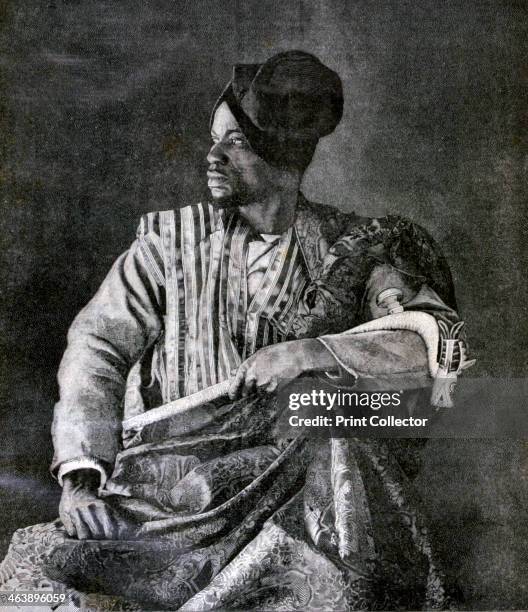
King Béhanzin, who reigned from 1889–1894, was born Prince Kondo, He was the eleventh and final independent ruler of the West African Kingdom of Dahomey (present-day Benin). Renowned for his courage, eloquence, and unwavering defence of Dahomean sovereignty. His brief reign was defined by an uncompromising resistance against French colonial expansion, earning him a legacy as a powerful nationalist figure who fought fiercely for his kingdom’s sovereignty. His refusal to yield to European demands culminated in the Franco-Dahomeyan Wars and the ultimate collapse of one of Africa’s most militarised states.
The written record
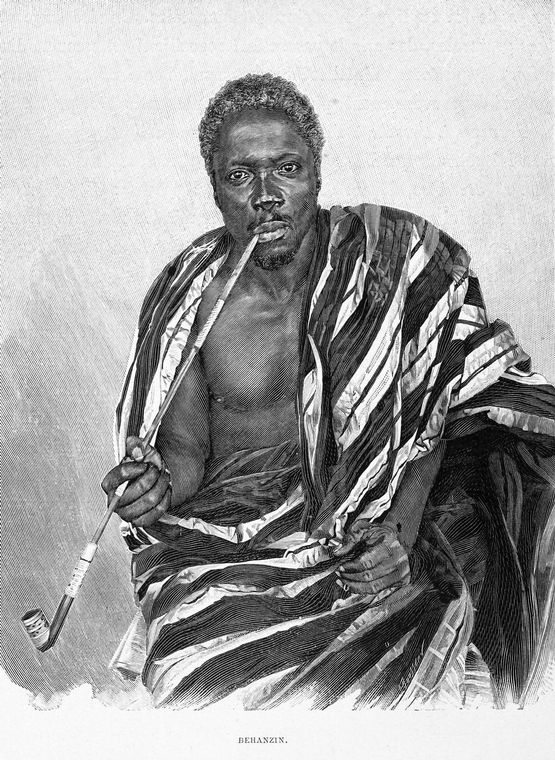
His reign, though marked by tragedy and defeat, became a symbol of African dignity, resistance, and pride.
Historical context
The Rise of Béhanzin
Born Prince Kondo, Béhanzin was the son of King Glélé, under whom Dahomey had expanded its military and political influence. Upon Glélé’s death in 1889, Béhanzin ascended the throne and adopted the royal name Béhanzin Hossu Bowelle, meaning “the egg of the world that nobody can break.” This name symbolised his belief in his divine right to rule and his determination to protect Dahomey’s sovereignty.
From the moment of his ascension, he faced an existential threat; the aggressive encroachment of the French, who sought control over Dahomey’s vital coastal trading ports, particularly Cotonou and Porto-Novo.
Béhanzin, renowned for his intelligence and pride, initially attempted to use diplomacy to preserve his kingdom, invoking treaties his predecessors had signed. However, he quickly realised the French were not interested in negotiation but in annexation and as such, he firmly rejected French demands to lease or claim Dahomeyan territory, viewing it as a direct violation of his kingdom’s sovereignty and an insult to the ancestors. His early actions included harassing French trade posts and resisting French incursions on the coast.
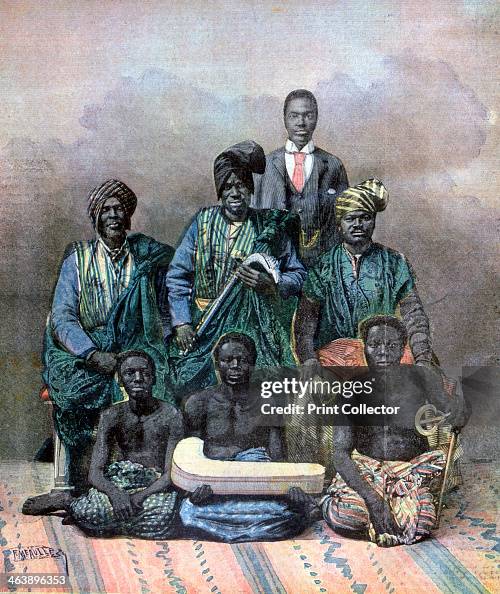
The Franco-Dahomeyan Wars (1890–1894)
Béhanzin inherited a powerful yet strained kingdom. European encroachment, particularly by the French, had intensified along the coast, threatening Dahomey’s control of its vital trade routes and vassal states.
First War (1890): The conflict was sparked when the French claimed the port of Cotonou. Dahomeyan forces launched a major attack but were repelled by superior French firepower, leading to an uneasy truce. Though temporarily subdued, Béhanzin regrouped and rebuilt his army, including the famed Amazons of Dahomey, an elite all-female regiment known for their discipline and fearlessness.
Second War (1892–1894): The decisive war began when the French, led by Colonel Alfred-Amédée Dodds, launched a major invasion aimed at the capital, Abomey. Béhanzin and his forces, including thousands of Amazons, fought with extraordinary courage and ferocity. Despite being outgunned by French artillery, Béhanzin’s forces fought valiantly, earning admiration even from their adversaries. However, the traditional Dahomeyan tactics and weaponry (machetes, spears, and older rifles) were no match for the French machine guns, artillery, and repeating rifles.
Despite several valiant defensive stands, the French captured Abomey in late 1892. Recognising the futility of continued, massive bloodshed, Béhanzin refused to be captured. He burned the city and retreated to the interior, where he led a determined guerrilla campaign for over a year. However, by 1894, Dahomey’s capital, Abomey, fell to French troops. Béhanzin burned the royal palace rather than allow it to be desecrated and eventually surrendered in January 1894 to prevent further suffering of his people.
Exile and Legacy
In January 1894, King Béhanzin made the difficult decision to surrender to the French in a final effort to save his people from starvation and perpetual war. After his surrender, the French deposed him, abolished the Dahomeyan monarchy, and exiled Béhanzin to Martinique, where he lived until he died in 1906. Even in exile, he maintained his royal dignity, composing songs and poems reflecting his longing for home and his resistance against foreign domination. His remains were later returned to Benin in 1928, where he was reburied with honours.
Though he lost the military campaign, Béhanzin’s resistance transformed him into a powerful symbol of African nationalism and the fierce, uncompromising struggle against European colonialism. He is remembered today as a powerful and tragic figure who made the ultimate sacrifice for the independence of his kingdom. Béhanzin’s defiance became a cornerstone of national pride in Benin’s modern history.
King Béhanzin’s reign marked the end of Dahomey’s independence but the beginning of its immortal legacy. His courage and refusal to compromise with colonial powers made him one of the most respected African leaders of the 19th century. Through his leadership and sacrifice, Béhanzin ensured that Dahomey’s spirit of sovereignty and resistance would never be forgotten. His name endures as a symbol of resilience, a reminder that dignity often lies not in victory but in the courage to fight against overwhelming odds.
Today, statues and monuments in Abomey celebrate him as a hero who chose resistance over submission. His story embodies the struggle of African kingdoms to maintain independence in the face of European imperialism.
Sources and references
- Britannica, The Editors of Encyclopaedia. (2025, November 1). Behanzin. In Encyclopaedia Britannica (2025 ed.).
- Alpern, S. B. (1998). Amazons of Black Sparta: The women warriors of Dahomey . New York University Press.
- Law, R. (1997). The kingdom of Allada . Brill.
Cite this article
Discussion
Sign in to join the discussion
Comments are checked by an editor before they appear. Leave a source or a correction and it is read first.
Continue reading
Related histories
 Anthropology and EthnographyThe Demography of Biafran Slave Exports (1650–1850)Read history →
 Anthropology and EthnographyMasquerade Traditions from Igboland to the Caribbean (Jonkonnu, Mocko Jumbie)Read history →
 Anthropology and EthnographyMapping Igbo Destinations in the Americas: A Comparative AnalysisRead history →
No comments yet
Nothing has been approved on this record yet. Comments are checked by an editor before they appear, so one written now shows on this page after that check.