 Ozikoro
 Anthropology and Ethnography · Published history
Nwagu Aneke: Syllabary Inventor, Diviner, and Anti-Colonial Writer of Umuleri
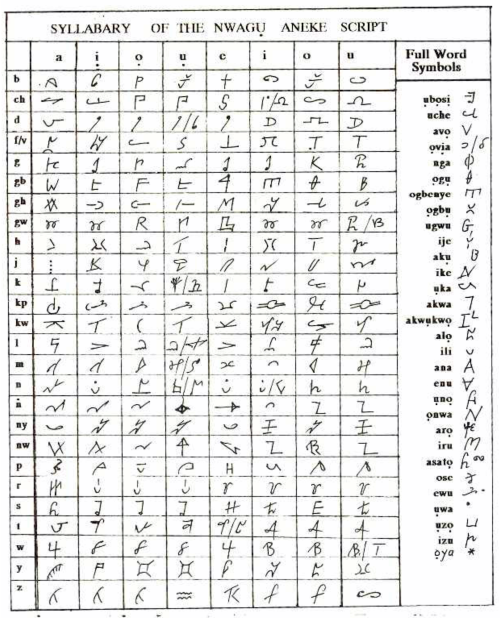
In the mid-20th century, a remarkable figure emerged from Umuleri, a town in present-day Anambra State, Nigeria Nwagu Aneke, a diviner, rural landowner, and prolific writer who developed a unique syllabary and morphographic script for the Umuleri dialect of Igbo. Over more than three decades from the late 1950s until his death in June 1991, Aneke used this script to compose journals, poems, ideological reflections, and rural commentaries that remain a rich record of anti-colonial sentiment and indigenous literary creativity.
The written record
Though largely absent from formal Nigerian curricula and mainstream historical narratives, Aneke’s work represents one of the most fascinating examples of indigenous script invention in 20th-century Africa and a powerful expression of cultural autonomy, spiritual belief, and literary agency in a period of rapid social change.
Historical context
Early Life and Cultural Context
Little formal biographical detail exists about Nwagu Aneke’s childhood and education, but oral and archival sources agree on several key features of his life:
Aneke was born into a landowning family in Umuleri, a community closely connected to Igbo cultural traditions, divination practices, and village governance structures.
Though the scholars claim he was “illiterate,” detailed analysis of his writings suggests that he was functionally literate in multiple languages (including English) and deeply grounded in Igbo epistemologies even if his script did not derive directly from English orthography. Importantly, Aneke’s world was one where local cosmologies mediated conceptions of knowledge, prophecy, and embodiment. His claim that the script was taught to him by divinities must be understood within this context: not as “magical,” but as part of a worldview where scribal and spiritual intelligences coexist in interpretive practice.
The Script: Innovation in Indigenous Writing
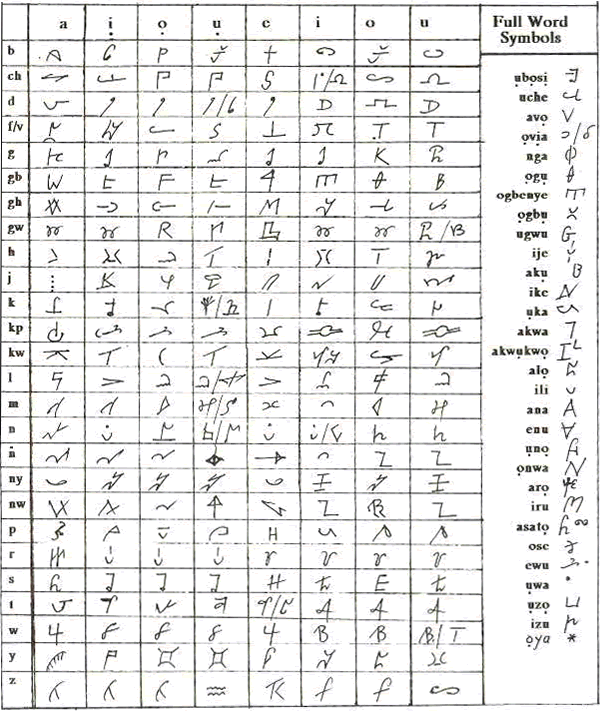
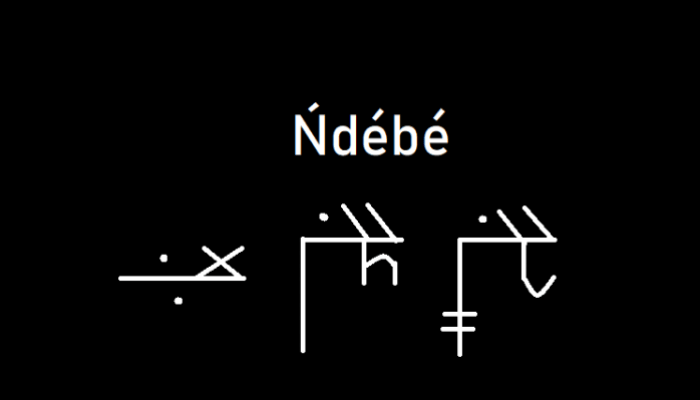
The core achievement of Aneke’s life was the creation of a unique syllabary and morphographic writing system tailored to the Umuleri dialect of Igbo. This script was neither a direct borrowing from the Latin alphabet nor a simple cipher; it blended syllabic symbols representing phonetic units, ideographic or pictorial signs that captured semantic concepts and hybrid logographic elements that functioned like “words as pictures”, each entry corresponds to a known Igbo phoneme or cluster similar to syllabaries elsewhere in the world, such as Japanese kana but adapted to indigenous idioms.
The script was not widely adopted as a “community writing system,” but Aneke used it consistently in his personal writings, including diaries, poems, and essays. Scholars describe his script as a “morphographic syllabary,” indicating that some signs represented entire morphemes or words rather than sounds alone.
Writing Practice: Over 100 Notebooks of Native Script
From the late 1950s to 1991, Nwagu Aneke inscribed over 100 exercise books in his invented script. These notebooks contain:
Diary entries, political commentary, rural life observations, reflections on colonial encounter and indigenous authority and spiritual and divinatory passages.
One transcription illustrates his use of the script for extended narrative, blending vocabulary from Umuleri Igbo with symbolic writing that only he and potentially a small circle of interpreters understood fully. Cultural anthropologists studying his texts note that Aneke’s writings functioned as living archives: they preserved forms of local expression that colonial education systems marginalized. His texts provide insight into lived experience, remembered indigenous knowledge, and culturally embedded epistemologies not captured in European orthographies.
Anti-Colonial Themes and Ideological Content
Far from being purely literary or mystical, much of Aneke’s writing addressed colonial encounters and political consciousness. In the 1960s and 1970s, a period when Nigeria was transitioning from colonial rule to independence Aneke’s texts critiqued local political elites aligned with Western models, affirmed indigenous knowledge systems, emphasized Igbo cosmology and governance and also suggested alternative visions of community autonomy.
Although his script limited immediate circulation, his ideas circulated in oral performance, divination sessions, and interpersonal networks. Scholars highlight that his tone was consistently anti-colonial in spirit, articulating a profound skepticism toward Western political models and asserting the intellectual autonomy of local communities.
Divination, Knowledge, and Claim to Literacy
Scholars claimed he was “illiterate”, but this is misleading in academic terms. Aneke’s script and writings demonstrate that:
- He developed a fully systematic writing system with phonetic and semantic coherence.
- He used the system to compose complex texts over decades.
- His script represents a cognitive alternative to Latin alphabets imposed during colonialism.
In other words, Aneke was a script inventor.. Citing only colonial orthography as literacy reflects a narrow definition that fails to appreciate indigenous literacy practices. His claim that the script was “taught to him by divinities” should be interpreted within Igbo spiritual frameworks, where divine inspiration and intellectual innovation were not separated.
Cultural Marginalization and Historical Obscurity
Despite the uniqueness of Aneke’s writings, his work has been largely ignored in Nigerian educational curricula and literary histories. There are several reasons:
- Oral and indigenous scripts were historically marginalized by colonial educational policies
- His work did not enter mainstream publishing in Latin orthography
- Academics did not widely study indigenous scripts until much later
This neglect reflects broader patterns in postcolonial societies where local knowledge systems struggle for recognition within dominant academic paradigms. However, projects like the Nwagu Aneke Project and independent scholars are working to digitize his notebooks, transcribe his writings into Roman orthography, and preserve his intellectual heritage.
Comparative Script Innovation in Africa
Nwagu Aneke’s work joins a small but significant group of African script innovators during the 20th century. Others include:
- N’Ko Script (Guinea, 1949); a writing system for Manding languages
- Vai Syllabary (Liberia, 1833); an indigenous script used for Vai
- Mende Kikakui Script (Sierra Leone, 1920s); created for the Mende language.
What distinguishes Aneke’s script is its morphographic and syllabic hybridity, tailored specifically to the Umuleri dialect of Igbo rather than to larger regional languages suggesting a deep localization of linguistic practice. This situates Aneke not simply as a “local curiosity” but as part of a global phenomenon of script invention, where communities seek literary expression independent of colonial orthographies.
Legacy and Contemporary Relevance
Nwagu Aneke’s life and work have become increasingly relevant to contemporary debates about linguistic decolonization, indigenous literacy practices, African epistemologies, historical agency and cultural sovereignty. Digitization efforts are underway to make his notebooks accessible to scholars and the Umuleri community. His writings are being transcribed and contextualized to help interpret not only the script but also the historical and political content embedded in his work.
His legacy is important for:
Writers seeking alternative media beyond Latin alphabets
Historians documenting anti-colonial intellectual history
Linguists studying indigenous script development
Cultural heritage advocates seek to recover marginalized historical voices.
Nwagu Aneke was much more than a rural landowner or an “illiterate” man taught a script by divinities. He was a script inventor, anti-colonial thinker, community intellectual, and literary innovator whose body of work offers an invaluable window into indigenous literate practices, cultural resilience, and political consciousness in twentieth-century Igboland. His life challenges narrow definitions of literacy and underscores the importance of respecting indigenous knowledge systems alongside colonial languages and literatures. Though his work remains under-studied, ongoing projects to preserve and interpret his writings are bringing overdue attention to his contributions and to the broader question of how local people in Africa have created their own systems of writing, thought, and expression outside the shadow of colonial scripts.
Sources and references
- Omniglot. (n.d.). Nwaguaneke script. Retrieved March 11, 2026, from https://www.omniglot.com/writing/nwaguaneke.htm
- Grokipedia. (n.d.). Nwagu Aneke s cript. Retrieved March 11, 2026, from https://grokipedia.com/page/nwagu_aneke_script
Cite this article
Discussion
Sign in to join the discussion
Comments are checked by an editor before they appear. Leave a source or a correction and it is read first.
Continue reading
Related histories
 Anthropology and EthnographyThe Demography of Biafran Slave Exports (1650–1850)Read history →
 Anthropology and EthnographyMasquerade Traditions from Igboland to the Caribbean (Jonkonnu, Mocko Jumbie)Read history →
 Anthropology and EthnographyMapping Igbo Destinations in the Americas: A Comparative AnalysisRead history →
No comments yet
Nothing has been approved on this record yet. Comments are checked by an editor before they appear, so one written now shows on this page after that check.