 Ozikoro
Anthropology and Ethnography · Published history
Odinani in the Delta: The Traditional Kalabari Worldview and Deities
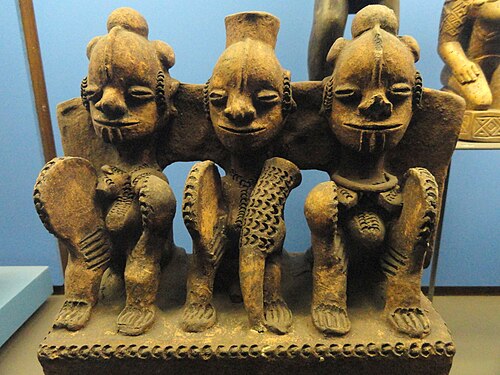
Although the Kalabari people are Ijo-speaking and culturally distinct from the Igbo, their spiritual worldview shares deep similarities with broader West African cosmologies including elements often associated with “Odinani,” the Igbo term for the traditional religious order. In the Niger Delta, the Kalabari developed their own sophisticated religious system rooted in water-based cosmology, ancestral reverence, and divine intermediaries who govern the moral and spiritual order.
The written record
Historical context
The Kalabari Cosmos: A Water-Centered Universe
The Primacy of Water
The Kalabari worldview is fundamentally shaped by the riverine environment of the Niger Delta. In Kalabari cosmology, the universe is divided into the visible world of humans (“Igbónu”) and the invisible spirit world (“Owu”). Water serves as the bridge between these realms, functioning not simply as a physical resource but as a sacred medium of life, memory, creativity, and spiritual presence.
This stands in contrast to Igbo Odinani, where the earth (Ala) is the primary moral and metaphysical foundation. For the Kalabari, water is the element of origin, purification, fertility, and revelation.
The Structure of the Universe
The Kalabari universe is imagined as a layered cosmos inhabited by:
Tamunọ (Supreme God)
Water spirits (Owu-Ogbulu, Owu-Water Deities)
Ancestral spirits (Fubara)
Masquerade spirits (Owu-Masquerades)
Each category interacts with humans through ritual, dreams, divination, and social memory.
Tamunọ: The Supreme Creator
Like the Igbo concept of “Chukwu,” the Kalabari recognize a distant Supreme Being known as Tamunọ, the creator of all things. Tamunọ embodies:
Universal justice
Cosmic order
Life-giving power
Moral authority. However, just as in many West African religious systems, Tamunọ is considered too vast and abstract for daily worship. Instead, spiritual mediation occurs through lesser deities, ancestors, and water spirits who maintain direct relationships with the community.
Water Deities: Masters of Tide, Morality, and Destiny
Owu Water Spirits
The most active and revered spiritual forces in Kalabari religion are the Owu water spirits, analogous to the Igbo “mmụọ” or Yoruba “orisa,” though shaped by the aquatic environment. These water spirits control:
Protection of the community
Fertility
Healing
Trade and navigation
Artistic inspiration
Social discipline
Water spirits appear to devotees in visions, dreams, and possession states, often during festivals or spiritual initiations.
Although each Kalabari settlement may have its own tutelary spirits, several deities are widely recognized:
1. Owameke (“Mother Water”): A nurturing, powerful feminine deity associated with fertility, childbirth, creativity, and river protection. She mirrors aspects of river goddesses across the Niger Delta.
2. Owu-Sekiapu Spirits: These govern law and order, manifested through the Sekiapu, a women’s dance society that polices moral behavior and maintains community justice. Though not deities in a strict sense, their authority derives from spiritual mandate.
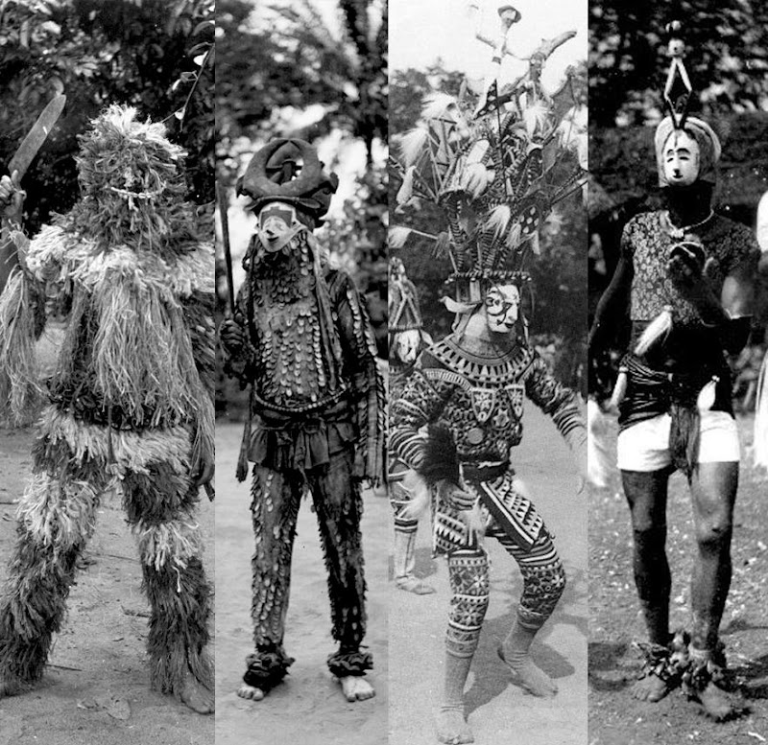
3. Owu-Masquerade Spirits: Often described as water spirits who “take human form to dance,” Owu masquerades are central to Kalabari festivals. They embody ancestral and aquatic powers simultaneously.
4. Woyin (“The Gentle Spirit”): A deity associated with peace, forgiveness, and the protection of children.
Ancestors (Fubara): Guardians of the Living: Ancestor worship (Fubara) is a key element of Kalabari spirituality. Dead relatives who lived morally upright lives become active spiritual agents who guide, protect, and discipline their descendants.
The living maintain relationships with ancestors through:
Libations
Offerings of food and drink
Ritual consultations
Appearance of ancestors in dreams
Masquerade performances
Duein Fubara: The Ancestral Screens
One of the most iconic Kalabari ancestral objects is the Duein Fubara, a carved wooden screen that visually represents the lineage. These screens serve as both domestic altars and artistic memorials, symbolizing the presence and influence of the ancestors in daily life.
Divination and Ritual: Communicating with the Invisible Realm
Divination Practices:Kalabari diviners, known as “Aseimọ”, interpret signs, dreams, and spiritual messages. Through ritual objects, chants, and water-based mediation, they diagnose:
Illness
Misfortune
Spiritual imbalance
Ancestral demands
Violations of moral law.
Divination maintains harmony between the visible and invisible worlds.
Ritual Specialists
Ritual life involves priests, priestesses, masqueraders, and dance societies who serve as intermediaries between humans and spirits. Women, in particular, play significant roles in spirit possession rites, water ceremonies, and cultural policing.
The Moral Framework: Harmony, Respect, and Communal Responsibility
Traditional Kalabari religion emphasizes moral codes similar to those in Igbo Odinani, though interpreted through maritime life. Core values include:
Respect for ancestors
Truthfulness and social harmony
Responsibility to one’s canoe house (wari)
Protection of communal resources, especially water
Ritual purity.
Misfortune, such as sickness or failed ventures is often interpreted as the spiritual consequence of violating these moral standards.
Interaction with Christianity and the Modern Era
Christianity arrived in Kalabari territory in the mid-19th century through missionary activities in Elem Kalabari (New Calabar). While conversion was widespread, traditional beliefs remain influential. Today, many Kalabari people combine Christian practices with:
Ancestral respect
Festival participation
Masquerade traditions
Water spirit rituals.
As in many African societies, continuity rather than abandonment defines the religious transformation.
Although not identical to Igbo Odinani, the Kalabari traditional worldview shares the same structural logic: a Supreme God, intermediary deities, a morally governed cosmos, and an active relationship between the living and the ancestral world. What distinguishes the Kalabari system is its deep aquatic orientation, its water-spirit pantheon, and its devotion to rituals that harmonize the human community with the tides and rhythms of the Niger Delta. As a living tradition, Kalabari spirituality continues to shape identity, morality, and cultural memory in both the homeland and the diaspora.
Sources and references
- Alagoa, E. J. (2005). A history of the Niger Delta: An historical interpretation of Ijo oral tradition. Port Harcourt: Onyoma Research Publications.
- Horton, R. (1998). “Spirits, ancestors, and moral order in the Eastern Delta.” Journal of African Religion, 22(3), 211–230.
- Nabofa, M. Y. (1994). Religion and the Niger Delta. Ibadan: Spectrum Books.
- Nzewi, M. (2001). The ritual imagination in Ijo and Kalabari culture. Lagos: National Institute for Cultural Orientation.
- Worgu, M. (2019). “Water, memory, and cosmology among the Kalabari.” Niger Delta Studies Review, 4(1), 43–67.
Cite this article
Discussion
Sign in to join the discussion
Comments are checked by an editor before they appear. Leave a source or a correction and it is read first.
Continue reading
Related histories
 Anthropology and EthnographyThe Demography of Biafran Slave Exports (1650–1850)Read history →
 Anthropology and EthnographyMasquerade Traditions from Igboland to the Caribbean (Jonkonnu, Mocko Jumbie)Read history →
 Anthropology and EthnographyMapping Igbo Destinations in the Americas: A Comparative AnalysisRead history →
No comments yet
Nothing has been approved on this record yet. Comments are checked by an editor before they appear, so one written now shows on this page after that check.