 Ozikoro
 Anthropology and Ethnography · Published history
Regional Styles: Cross River Igbo vs. Northern Igbo Carving
The written record
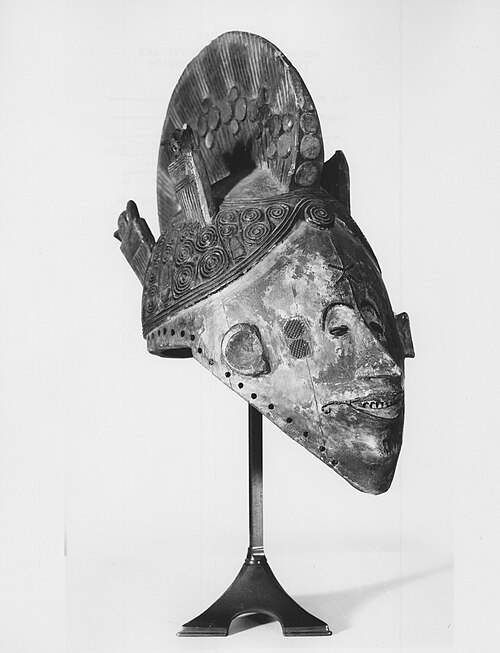
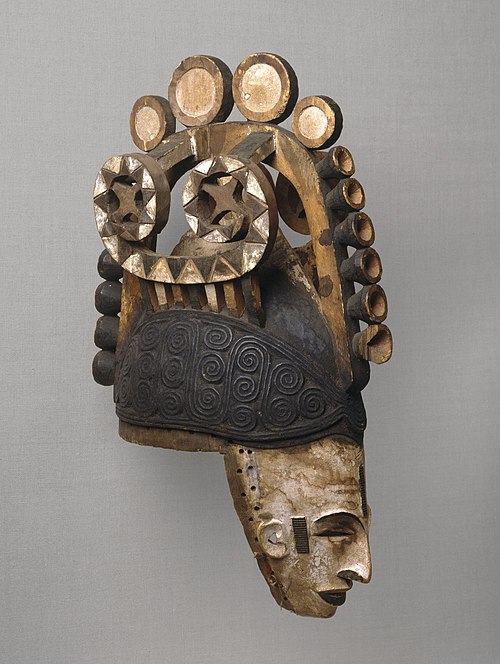
Woodcarving traditions among the Igbo of southeastern Nigeria are among the most diverse in West Africa. Although the Igbo share a broad cultural worldview, regional variations in geography, religion, trade, and history have produced distinctive artistic styles. Two of the most significant and contrasting schools of carving are the Cross River Igbo style strongly influenced by proximity to the Efik, Ibibio, and Ejagham and the Northern Igbo style, associated with the Awka area and the rich craft traditions of central Igboland. These carving traditions developed unique aesthetics, symbolic functions, and technical approaches.
Historical context
Geographic and Cultural Background
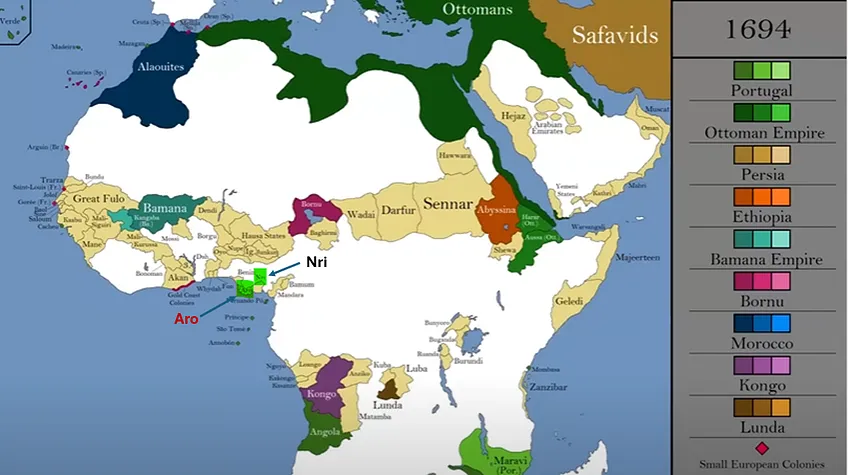
The Cross River Igbo live in the southeastern borderlands between Igboland and the Cross River Basin. This region includes communities such as Arochukwu, Ohafia, Abam, and parts of Eastern Nsukka affected by cultural interaction with Efik, Ibibio, and Ekoi peoples. Cross-cultural trade, especially during the era of the Aro Confederacy, exposed these communities to external artistic influences.
In contrast, the Northern or Central Igbo region centred around Awka, Nri, Orlu, Nsukka, and Aguata developed stronger internal artistic traditions. Awka in particular became famous for blacksmithing, tool-making, and the production of high-quality carving implements. These innovations supported a sophisticated carving tradition that influenced surrounding communities.
Historical Influences on Carving Styles
The Cross River Igbo experienced centuries of cultural exchange with Cross River societies, including the Ekpe (Leopard) society and the Nsibidi visual communication system. These interactions encouraged a preference for elongated forms, highly symbolic motifs, and anthropomorphic figures. Cross River Igbo carving is often described as “expressive, heavily stylized, and deeply spiritual,” shaped by masquerade traditions and ritual paraphernalia.
Northern Igbo carving developed under the influence of Nri priest-kingship, local guild systems, and community aesthetics that emphasized symmetry, proportion, and technical mastery. Northern Igbo sculptors produced many of the masks, doors, stools, and ceremonial staffs used across Igboland.
According to ethnographic documentation, Igbo art reflects “a concern for balance, abstraction, and symbolic clarity,” but how these elements manifest differs by region.
Aesthetic Characteristics of Cross River Igbo Carving
Cross River Igbo carving has several defining features:
- Elongated Figures
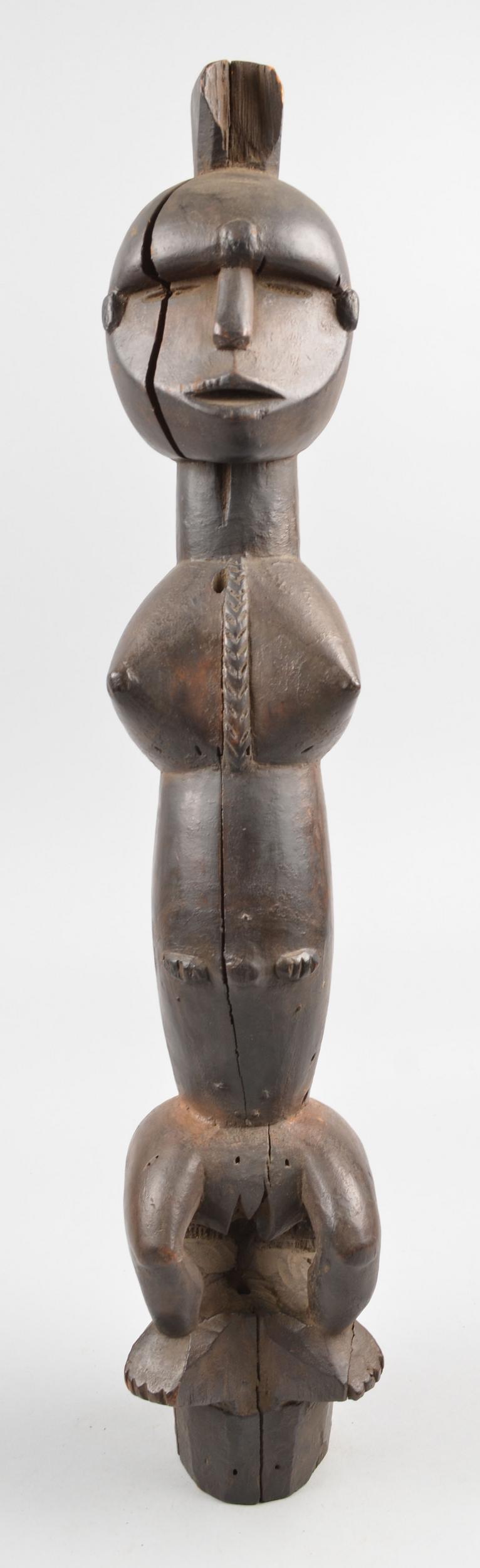
Cross River sculptures often feature tall, slim, elongated bodies with narrow faces. This is partly due to Ekpe and Ejagham influences, which favoured verticality and symbolic abstraction.
- Emphasis on Scarification and Facial Decoration
Carvers frequently depict facial scarification, known locally as ichi or ukara markings. These serve as identity markers, spiritual symbols, or indicators of status.
- Highly Stylized Eyes and Mouths
Cross River Igbo masks often have round, bulging eyes, expressive mouths, and pronounced cheekbones. These exaggerated features enhance their visibility during masquerade performances.
- Use of Nsibidi Motifs
Some carvings incorporate Nsibidi symbols, abstract signs representing love, authority, spirituality, and community. These motifs appear on masks, drums, and ritual objects.
- Masquerade Orientation
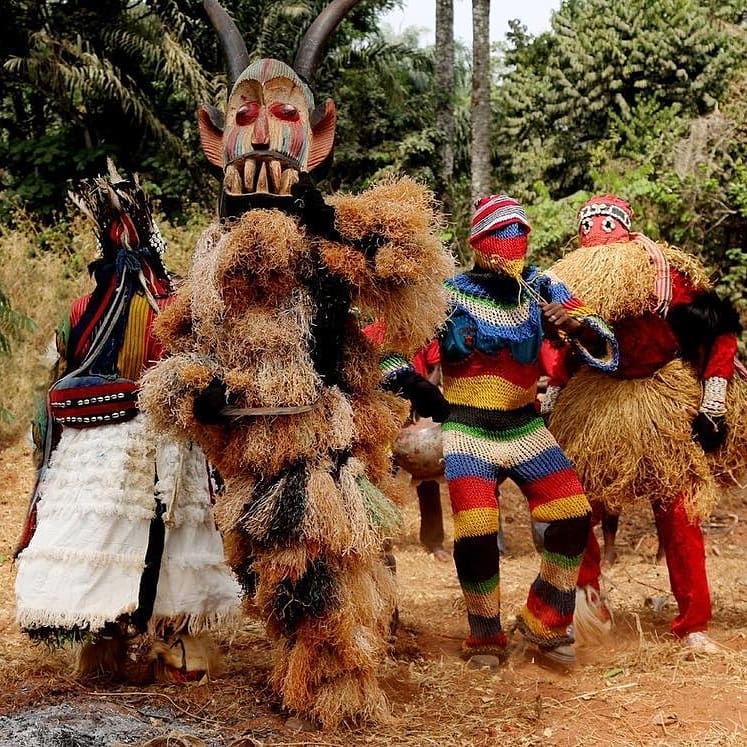
Most wood carvings in this region are tied to masquerade societies such as Ekpe, Okonko, and Odo. Their purpose is spiritual, not decorative, and their forms reflect ritual identity. The overall aesthetic is dynamic, spiritual, and boldly expressive.
Aesthetic Characteristics of Northern Igbo Carving
Northern Igbo carving shows a different aesthetic profile:
- Rounded, Naturalistic Forms
Figures tend to be more proportionate and fuller-bodied. This naturalism is common in masks such as the Agbogho Mmuo (maiden spirit) and the Okoroshi masks.
- Refined Carving Techniques
Thanks to Awka blacksmiths, northern Igbo carvers often used superior blades, enabling fine detailing, symmetrical lines, and polished surfaces.
- Geometric Precision
Northern Igbo art often features geometric design patterns on stools, doors, and ritual objects. These are carved with mathematical precision.
- Symbolism Rooted in Ancestral Worship
Objects such as Ofo staffs, Oche ancestral chairs, and Ikenga figures emphasize lineage, morality, and personal achievement. Northern carvers are renowned for Ikenga sculptures of power figures representing strength, authority, and success.
Ceremonial vs. Performance Contexts
Northern Igbo carvings occur in a wider range of social contexts: household rituals, title-taking, personal shrines, and community festivals. This contrasts with the performance-heavy approach of the Cross River region.
Northern Igbo art is thus more diverse in function and more refined in craftsmanship.
Comparison of Ritual Functions
Both carving traditions serve spiritual and social functions, but their focus differs.
Cross River Igbo traditions emphasize masquerade performance. Masks represent spirits, ancestors, or cosmic beings. A carved mask is not just an object it is a vessel for supernatural presence. Carvings accompany secret societies, initiation rites, and judicial functions.
Northern Igbo carvings relate more to personal identity and community order. Ikenga figures represent personal power. Ofo staff symbolize justice. Ancestral chairs honor lineage founders. While northern Igbo also have masquerades, their art incorporates a broader range of spiritual and social uses.
Tools and Techniques
Northern Igbo carving benefited from the famous Awka blacksmiths, who produced chisels, adzes, and knives of high quality. These tools enabled:
- Cleaner cuts,
- Detailed facial modeling,
- Complex geometric patterns,
- Smooth finishing techniques.
Cross River Igbo tools, while effective, reflected the functional needs of masquerade carving: bold forms, large masks, and expressive gestures. Carvers emphasized dramatic shapes over fine detail.
Shared Cultural Foundations
Despite regional differences, both traditions share foundational Igbo artistic values:
- Abstraction rather than strict realism,
- Symbolism tied to cosmology,
- Respect for ancestors and community,
- Integration of art into daily and ritual life,
Use of local hardwoods such as iroko and mahogany. This unity within diversity reflects the broader Igbo cultural principle of “otu obi” (one heart or shared essence).
Contemporary Relevance
Today, both carving styles continue to thrive, though modern pressures challenge traditional practices. Museums worldwide showcase these carvings as masterpieces of African art. Nigerian artists incorporate traditional forms into contemporary sculpture, while cultural festivals keep masquerade art alive.
Efforts by local governments, scholars, and cultural organizations aim to preserve carving guilds and train younger generations. For many, these carvings symbolize identity, history, and artistic achievement.
The regional carving styles of the Cross River Igbo and Northern Igbo reveal the richness and complexity of Igbo artistic heritage. While the Cross River tradition emphasizes dramatic, expressive forms tied to masquerade spirituality, the Northern Igbo tradition highlights refined craftsmanship, symbolic clarity, and broader ritual usage. Together, they represent two branches of a shared cultural tree distinct yet connected, evolving yet rooted in a long artistic history.
Sources and references
- Cole, H. M. (1965). Igbo art and aesthetics. African Arts, 1(2), 32–39.
- Ottenberg, S. (1975). Masked rituals among the Afikpo and Cross River Igbo. Seattle: University of Washington Press.
- Wikipedia. (2024). Igbo art.
- Wikipedia. (2024). Nsibidi.
- Wikipedia. (2024). Ekpe.
Cite this article
Discussion
Sign in to join the discussion
Comments are checked by an editor before they appear. Leave a source or a correction and it is read first.
Continue reading
Related histories
 Anthropology and EthnographyThe Demography of Biafran Slave Exports (1650–1850)Read history →
 Anthropology and EthnographyMasquerade Traditions from Igboland to the Caribbean (Jonkonnu, Mocko Jumbie)Read history →
 Anthropology and EthnographyMapping Igbo Destinations in the Americas: A Comparative AnalysisRead history →
No comments yet
Nothing has been approved on this record yet. Comments are checked by an editor before they appear, so one written now shows on this page after that check.