 Ozikoro
 Anthropology and Ethnography · Published history
Sacred groves( ibu ala) and their conservation of biodiversity in traditional igbo ecology.
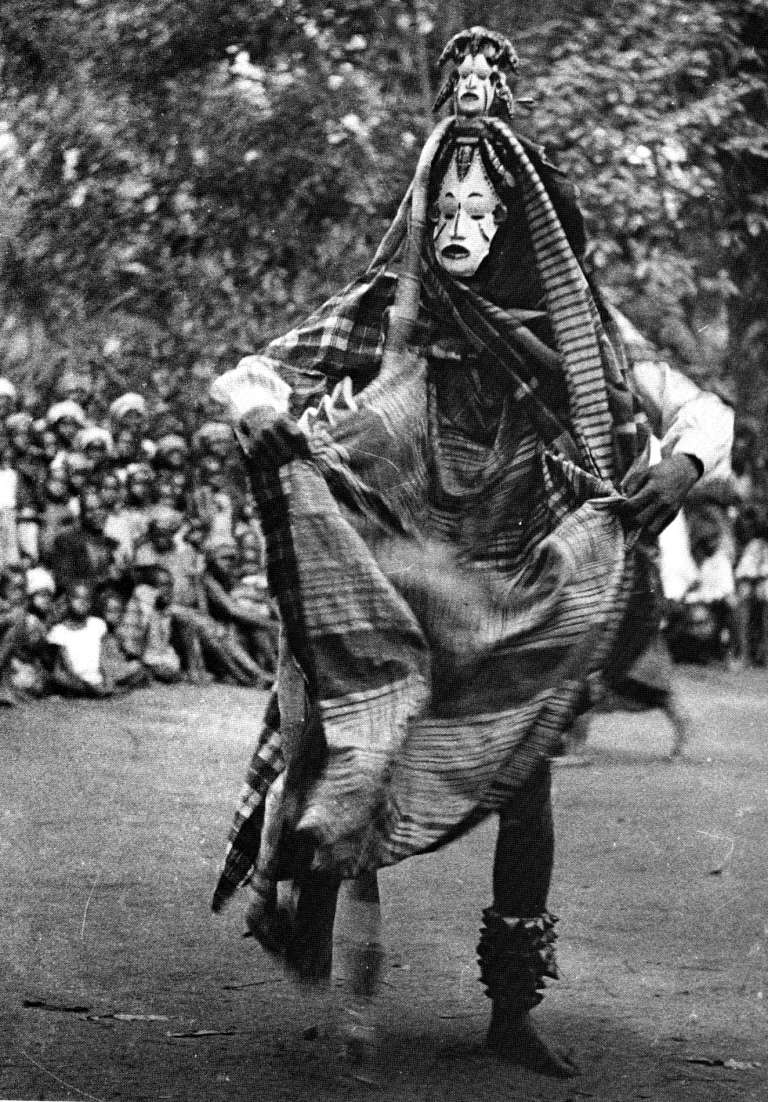
In the traditional worldview of the Igbo people of Southeastern Nigeria, the environment is not a mere collection of resources to be exploited, but a “sacred living entity” governed by spiritual laws. Central to this ecological philosophy is the concept of the Ihu Ala (often referred to as Ibu Ala or Ohia Nso in various dialects), which translates literally to the “Face of the Earth” or “Sacred Grove.” These are patches of primary forest or climax vegetation preserved for centuries as the physical dwelling places of the deities and the ancestors. While these groves were primarily established for spiritual reasons, they have inadvertently become the most effective “indigenous mechanism” for the conservation of biodiversity in the region. In a landscape increasingly dominated by monoculture and urbanization, the Ihu Ala stands as a “biological fortress,” preserving rare species and maintaining the ecological balance of the Igbo heartland. This article explores the cultural management of these groves and their scientific significance in contemporary conservation.
The written record
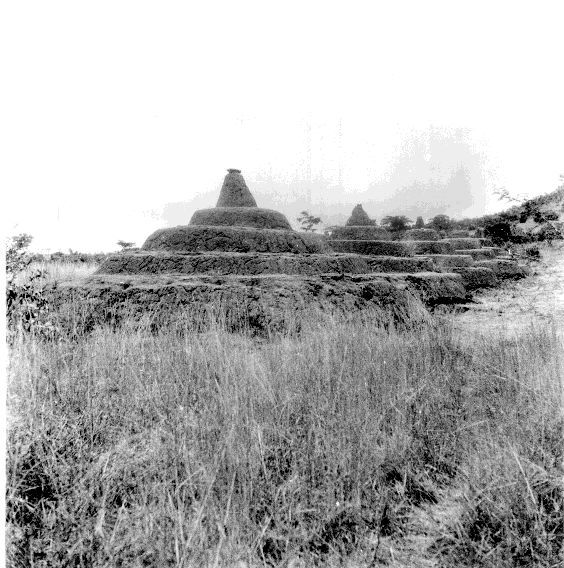
Ancient Igbo Pyramids: The Nsude Pyramids –
Historical context
The Theological Basis of the Ihu Ala
The conservation of sacred groves in Igboland is rooted in the “theocratic governance of the earth.” The Igbo believe that the land belongs to Ala, the Earth Goddess, and humans are merely “custodians”;
Divine Ownership: The Ihu Ala is considered the “inner sanctum” of the Earth Goddess. It is the portal through which the living communicate with the spiritual realm. Because the grove belongs to a deity, any unauthorized entry or “extraction of forest products” is viewed as a direct assault on the divine.
The Concept of Nso (Taboo): The preservation of these groves is enforced through the system of Nso (taboos). It is strictly forbidden to hunt animals, fell trees, or even pick up dry wood within the boundaries of the Ihu Ala. These prohibitions are not just social rules but “sacred laws” backed by the fear of spiritual retribution.
Spiritual Surveillance: The community believes that the ancestors act as “unseen rangers” of the grove. This belief creates a “psychological fence” that is more effective than any modern wire perimeter, as it relies on internal moral restraint rather than external policing.
Ihu Ala as In-Situ Conservation Centers
From a scientific perspective, the Ihu Ala serves as a “micro-reserve” for biodiversity, protecting species that have disappeared from the surrounding landscape;
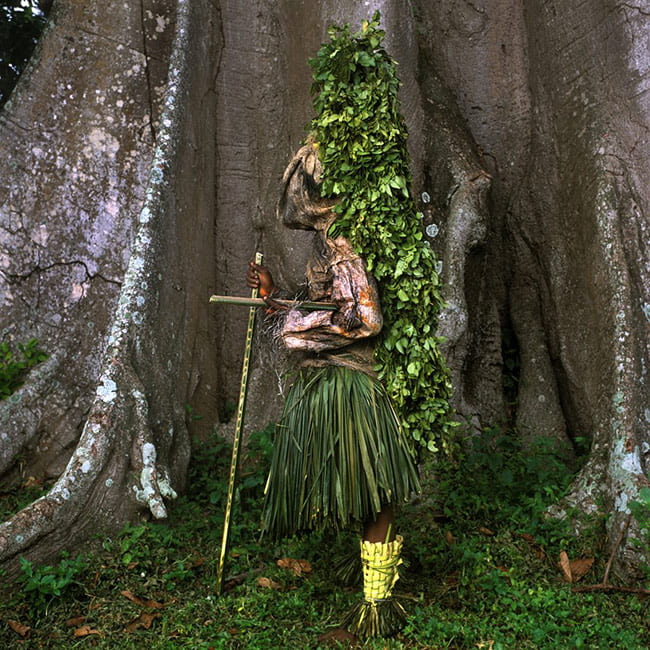
Genetic Archives: Because these forests have remained undisturbed for generations, they contain “climax vegetation” and ancient tree species such as the Iroko (Milicia excelsa) and the Silk Cotton tree (Ceiba pentandra). These trees serve as “mother plants,” providing seeds for the natural regeneration of surrounding forests.
Faunal Refugia: The dense canopy and lack of human presence make the Ihu Ala a sanctuary for rare fauna, including “endemic birds, reptiles, and primates.” Animals that are hunted in the communal forests flee to the sacred groves for safety, effectively creating a “source-sink” population dynamic that prevents local extinction.
Medicinal Reservoirs: Traditional healers (Dibia) rely on the Ihu Ala as a “living pharmacy.” Many rare medicinal plants used in Igbo ethnomedicine only thrive in the specific “micro-climate” of the sacred grove. The protection of the forest is, therefore, the protection of the community’s healthcare system.
Ecological Services and Climate Regulation
Beyond species preservation, the Ihu Ala provides “essential ecosystem services” that sustain the agricultural and social life of the Igbo people;
Watershed Protection: Most Ihu Ala are located around “headwaters or village springs.” By maintaining a thick layer of leaf litter and a deep root system, the groves act as “natural sponges,” filtering water into the aquifers and ensuring a constant supply of clean water during the dry season.
Micro-climate Mitigation: The dense vegetation of the Ihu Ala acts as a “heat sink,” significantly lowering the ambient temperature of the surrounding village. This “natural air conditioning” was vital in pre-colonial times and remains crucial in the face of modern global warming.
Soil Fertility and Erosion Control: In the hilly terrains of the Igbo heartland, sacred groves prevent “catastrophic gully erosion.” The groves act as windbreaks and soil stabilizers, protecting the adjacent yam and cassava farms from the “leaching effects” of heavy tropical rains.
Traditional Management Systems and Cultural Logic
The “sustainability” of the Ihu Ala is maintained through a decentralized but highly organized traditional administrative system;
The Role of the Chief Priest (Atama): The management of the grove is usually under the jurisdiction of a hereditary priest. He ensures that the “boundaries of the grove” are respected and performs the annual rituals that renew the grove’s sanctity.
Age-Grade Vigilance: Younger age-grades often serve as the “physical protectors” of the grove. They are tasked with ensuring that encroaching farmers do not shift the boundary markers, a crime that in ancient times could lead to “perpetual exile” from the community.
The Oracle’s Verdict: In cases of disputed encroachment, the community often resorts to “oath-taking” or consultation with an oracle. The belief that the deity of the grove will “claim the life” of a liar ensures that boundary disputes are resolved with absolute honesty.
Modern Threats: The Siege of Development and Faith
Despite their historical resilience, the Ihu Ala are currently facing “existential threats” from modern socio-economic shifts;
Religious Transformation: The rise of certain “Pentecostal movements” has led to the demonization of traditional sacred spaces. In some areas, groves have been cleared or burned under the guise of “spiritual deliverance,” leading to the total loss of centuries-old biodiversity.
Urbanization and Infrastructure: As Igbo towns expand, the “pressure for land” has led to the fragmentation of sacred groves. Roads, housing estates, and commercial centers are increasingly carved out of these “once-inviolable forests.”
The Erosion of Taboo: With the Westernization of the youth, the “fear of spiritual sanctions” has diminished. Without the deterrent of the Nso, the groves are vulnerable to illegal logging and “poaching of rare wildlife.”
Bridging Indigenous Knowledge and Modern Conservation
The future of biodiversity in Igboland may depend on the “formal recognition” and legal protection of the Ihu Ala;
UNESCO and Heritage Status: Following the model of the Osun-Osogbo grove in Yorubaland, significant Igbo groves could be nominated for “World Heritage” status. This would provide the international funding and legal protection needed to ward off developers.
Community-Based Management: Conservationists argue that rather than taking the groves away from the community, the government should “empower traditional rulers” to maintain them. Integrating “modern botanical science” with “traditional taboos” could create a robust model for African conservation.
Ecological Education: There is a need to teach the younger generation that protecting the Ihu Ala is not “idolatry” but “environmental stewardship.” Highlighting the “climatic and medicinal” benefits of the forest can help bridge the gap between traditional faith and modern science.
Sacred groves( ibu ala) and their conservation of biodiversity in traditional igbo ecology represent the “pinnacle of indigenous environmentalism.” These forests are not just remnants of the past; they are “living laboratories” of sustainable living. They prove that the Igbo people understood the “interdependence of life” long before the term “biodiversity” was coined. The Ihu Ala is where the “spirit meets the soil,” and its preservation is essential for the “biological and spiritual survival” of the Igbo nation. If these groves are allowed to vanish, the community loses not just a forest, but its “historical memory,” its “natural pharmacy,” and its “coolest sanctuary.” To protect the Ihu Ala is to protect the “Face of the Earth” for generations yet unborn.
Sources and references
- Aniakor, C. C. (1984). “Igbo Arts: Community and Cosmos”. Los Angeles: Museum of Cultural History, University of California. (Providing context on the spatial and spiritual role of the grove).
- Iwu, M. M. (1993). “Handbook of African Medicinal Plants”. CRC Press. (Discussing the pharmaceutical importance of forest reservoirs).
- Metuh, E. I. (1985). “African Religions in Western Conceptual Schemes: The Problem of Interpretation”. Pastoral Institute.
- Onyekwere, O. (2018). “Sacred Groves and Biodiversity Conservation in Southeastern Nigeria”. Journal of African Ecology.
- Umeh, J. A. (1999) . “After God is Dibia: Igbo Cosmology, Divination & Sacred Science”. Karnak House.
Cite this article
Discussion
Sign in to join the discussion
Comments are checked by an editor before they appear. Leave a source or a correction and it is read first.
Continue reading
Related histories
 Anthropology and EthnographyThe Demography of Biafran Slave Exports (1650–1850)Read history →
 Anthropology and EthnographyMasquerade Traditions from Igboland to the Caribbean (Jonkonnu, Mocko Jumbie)Read history →
 Anthropology and EthnographyMapping Igbo Destinations in the Americas: A Comparative AnalysisRead history →
No comments yet
Nothing has been approved on this record yet. Comments are checked by an editor before they appear, so one written now shows on this page after that check.