 Ozikoro
 Anthropology and Ethnography · Published history
Sovereignty and Subjugation: The 1884 Treaty of Protection and the British Colonization of Warri
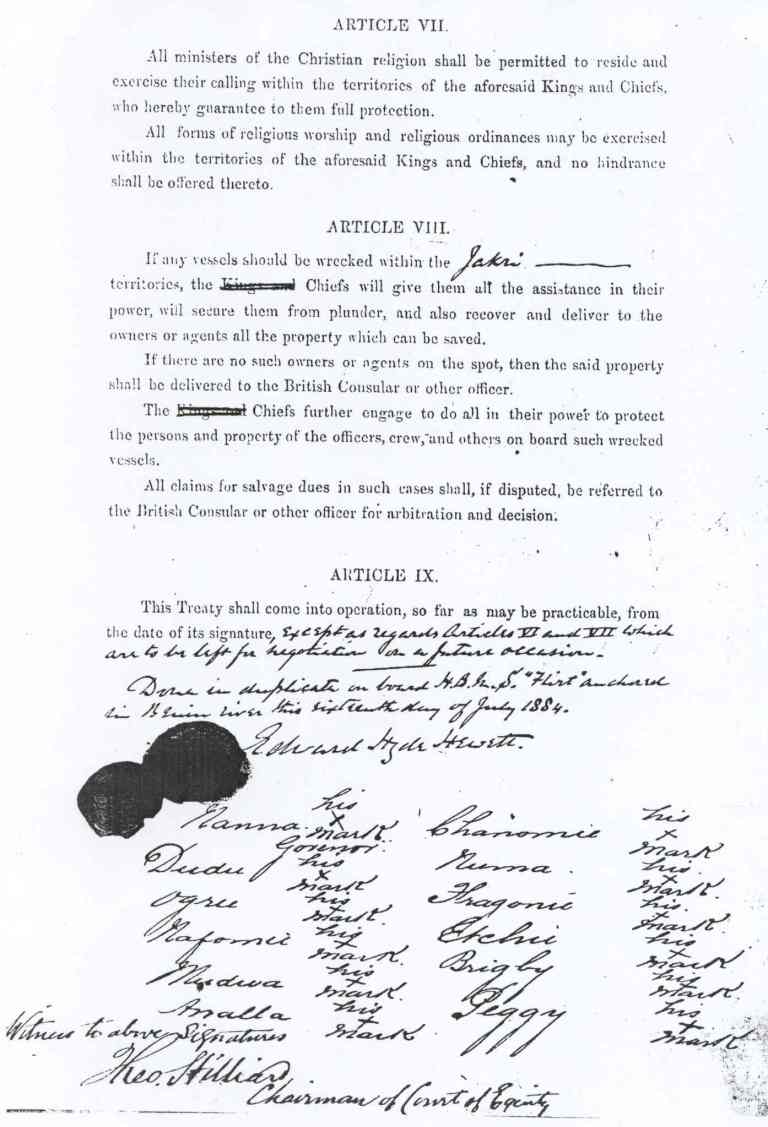
The year 1884 serves as a pivotal watershed in the history of West Africa, marking the transition from “informal influence” to “formal colonial administration” by European powers. For the people of the Benin River and the Warri region, this transition was codified in the “Treaty of Protection.” Signed between the British Consul, Edward Hyde Hewett (famously nicknamed “Too Low” by local chiefs), and the prominent Itsekiri leaders, this document laid the legal and political groundwork for what would eventually become the Southern Nigeria Protectorate. While ostensibly a pact for “mutual benefit and protection,” the treaty was a strategic instrument used by the British to secure a monopoly over the lucrative palm oil trade and to exclude rival European powers, specifically France and Germany from the Niger Delta.
The written record
Historical context
The Geopolitical Climate: The Scramble for the Niger Delta
The 1884 treaty did not emerge in a vacuum; it was a direct consequence of the “Scramble for Africa” and the looming Berlin Conference of 1884–1885.
The Shift from Slaves to Oil: By the mid-19th century, the Atlantic slave trade had been replaced by “legitimate commerce,” primarily in palm oil, which was essential for the industrial machinery and soap factories of Britain.
The Berlin Mandate: To claim a territory at the Berlin Conference, European nations had to prove “effective occupation.” Britain sought to achieve this through treaties of protection with local potentates, ensuring that the Niger Delta was recognized as a British “sphere of influence.”
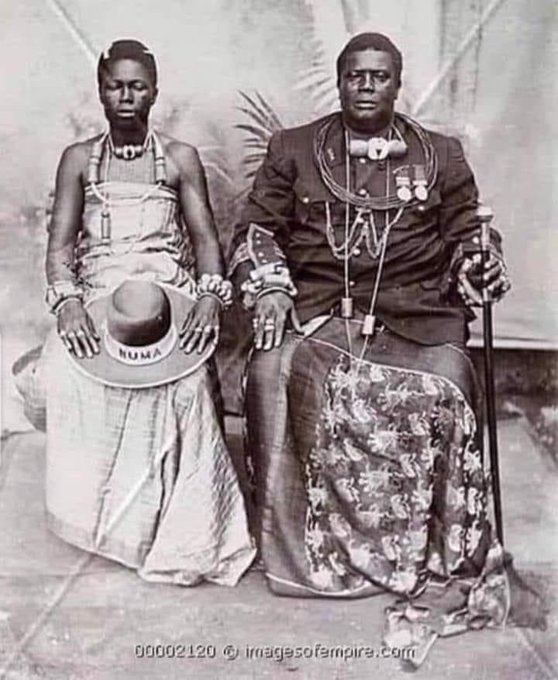
Local Rivalries: The Itsekiri middlemen, led by powerful families like the Olomu and the Dore Numa, occupied a strategic position. They controlled the transition point between the interior producers and the European ships anchored in the Benin River.
The Terms of the 1884 Treaty: Protection or Annexation?
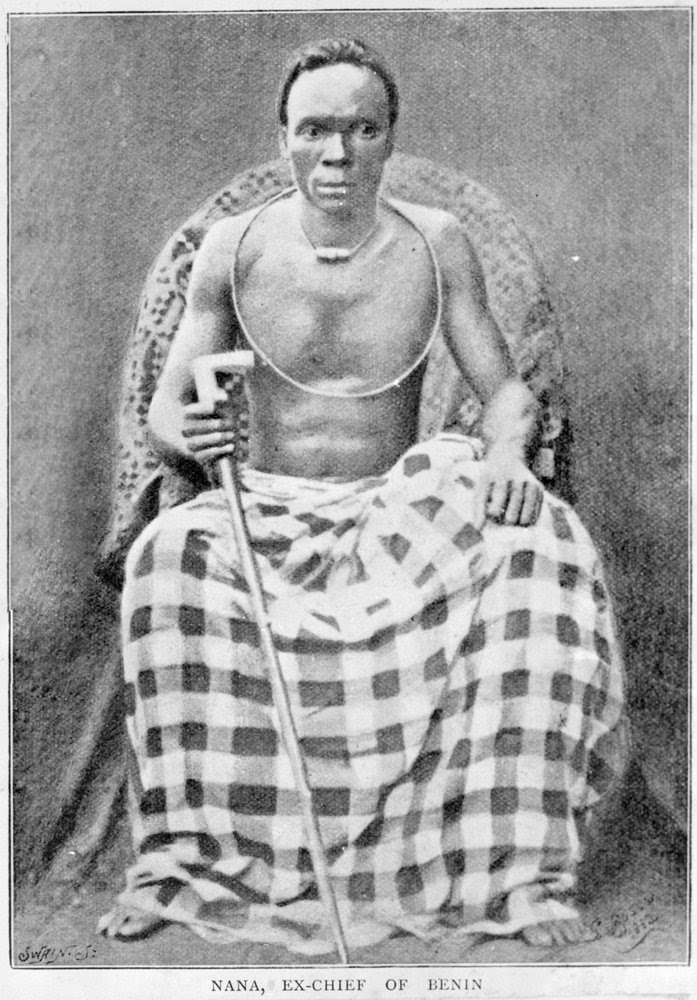
In July 1884, Consul Hewett arrived in the Benin River aboard a British man-of-war. The document presented to the Itsekiri chiefs, including the powerful Chief Nana Olomu, was a standardized “Protectorate Treaty” used across the Oil Rivers.
Article I and II (Sovereignty): These articles stipulated that the Queen of Great Britain would extend her “gracious favor and protection” to the chiefs. In return, the chiefs agreed not to enter into any correspondence or treaty with any other foreign power.
Article III and IV (Judicial Control): The British Consul was granted the power to settle disputes between British subjects and the local population, and even disputes between the chiefs themselves. This effectively stripped the local leaders of their supreme judicial authority.
The “Free Trade” Controversy (Article VI): This was the most contentious clause. It stated that “the subjects and citizens of all countries may freely trade in all parts of the territories.” Nana Olomu and other chiefs recognized that this would allow European firms to bypass them and trade directly with the hinterland producers, destroying their “commercial monopoly.”
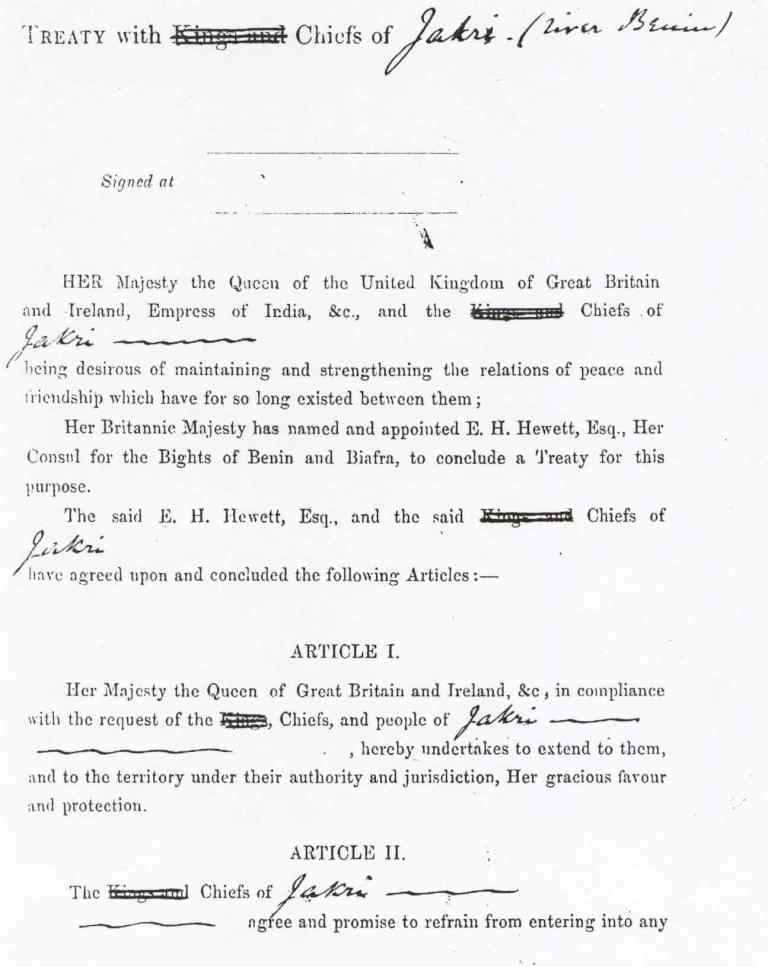
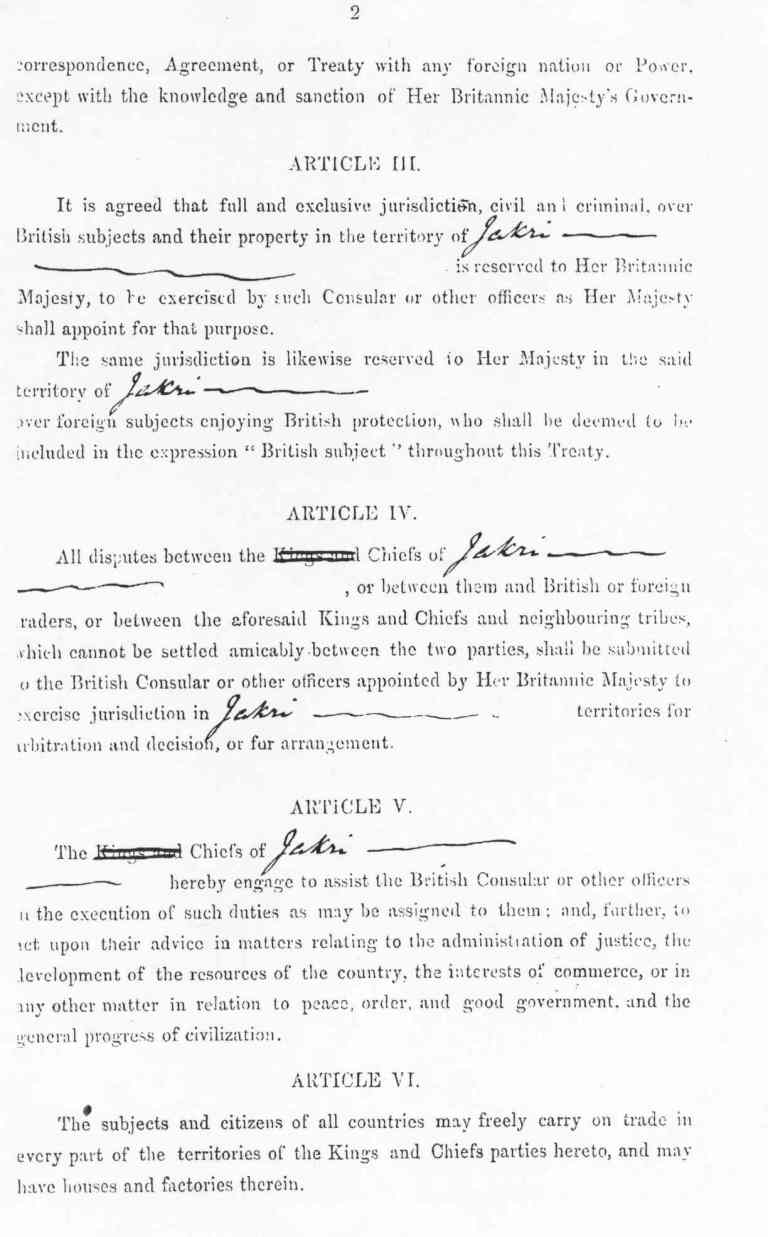
Photo Credit: The National Archives of the United Kingdom.
The Resistance of Chief Nana Olomu
The 1884 treaty is often remembered for what was not signed as much as what was. Chief Nana Olomu, acting as the “Governor of the Benin River,” displayed remarkable diplomatic foresight.
The Strike-Through: Nana famously refused to sign Article VI regarding “free trade.” He insisted that the Itsekiri must remain the sole intermediaries of the trade. The British, desperate to secure the treaty before the Germans arrived, allowed Nana to strike out this clause.
A Fragile Compromise: This refusal created a “legal loophole” that Nana used for the next decade to defend his commercial empire. However, the British viewed this concession as a temporary convenience rather than a permanent right.
Administrative Evolution: From Treaty to Colony
Following the signing of the treaty, the British began to systematically dismantle the autonomy of Warri and the surrounding districts.
The Oil Rivers Protectorate: In 1885, Britain officially proclaimed the “Oil Rivers Protectorate,” based largely on the treaties collected by Hewett. This administrative unit provided the framework for the “Consular Government.”
The Vice-Consulate at Warri: A British Vice-Consulate was established at Warri in 1891. This marked the physical presence of British authority, shifting the center of power from indigenous palaces to the “Government House.”
The Erosion of Traditional Authority: While the treaty promised “protection,” it was used to justify the deposition of any chief who hindered British economic interests. The “Governor of the Benin River” was no longer an independent sovereign but a British-recognized functionary.
Economic Impacts: The Breaking of the Middlemen
The primary goal of the British colonial relationship with Warri was economic extraction. The 1884 treaty was the “key” that opened the door to the interior.
Infrastructure Development: The British began to clear the waterways and establish “trading stations” in the hinterland, fulfilling the spirit of the “free trade” clause that Nana had originally rejected.
Currency Shift: The traditional system of “trade by barter” and the use of cowries or manillas were gradually replaced by the British pound, further integrating the Warri economy into the global capitalist system.
The Rise of Warri as a Port: Under British guidance, Warri evolved from a collection of small settlements into a major colonial port city, serving as a hub for the export of palm produce and later, rubber and timber. The 1884 Treaty of Protection was a “Trojan Horse” of imperialism. To the Itsekiri chiefs, it was a defensive alliance against other European powers and interior rivals; to the British, it was a deed of ownership.
The Precedent for 1894: The tensions created by the treaty’s “free trade” disputes eventually led to the British military expedition against Nana Olomu in 1894. The British used Nana’s alleged “violations” of the treaty as a pretext to destroy his capital at Ebrohimi.
The Legacy of Warri: The treaty transformed Warri from an independent coastal power into a central cog in the colonial machinery of Southern Nigeria. In summary, the 1884 treaty was the “beginning of the end” for the sovereign commercial empires of the Niger Delta. It successfully bound the fate of the Warri region to the British Crown, setting the stage for decades of colonial rule and the eventual birth of modern Nigeria.
Sources and references
- Dike, K. O. (1956). Trade and Politics in the Niger Delta, 1830-1885: An Introduction to the Economic and Political History of Nigeria. Oxford: Clarendon Press.
- Geary, W. N. (1927). Nigeria Under British Rule. London: Methuen & Co.
- Ikime, O. (1969). Niger Delta Rivalry: Itsekiri-Urhobo Relations and the European Presence 1884-1936. Humanities Press.
- Ikime, O. (1971). The Isoko People: A Historical Survey. Ibadan University Press.
- Tamuno, T. N. (1972). The Evolution of the Nigerian State: The Southern Phase, 1898-1914. Longman.
Cite this article
Discussion
Sign in to join the discussion
Comments are checked by an editor before they appear. Leave a source or a correction and it is read first.
Continue reading
Related histories
 Anthropology and EthnographyThe Demography of Biafran Slave Exports (1650–1850)Read history →
 Anthropology and EthnographyMasquerade Traditions from Igboland to the Caribbean (Jonkonnu, Mocko Jumbie)Read history →
 Anthropology and EthnographyMapping Igbo Destinations in the Americas: A Comparative AnalysisRead history →
No comments yet
Nothing has been approved on this record yet. Comments are checked by an editor before they appear, so one written now shows on this page after that check.