 Ozikoro
 Anthropology and Ethnography · Published history
The Architecture of Trust: Pre-colonial Igbo Communal Savings and Rotating Credit Systems
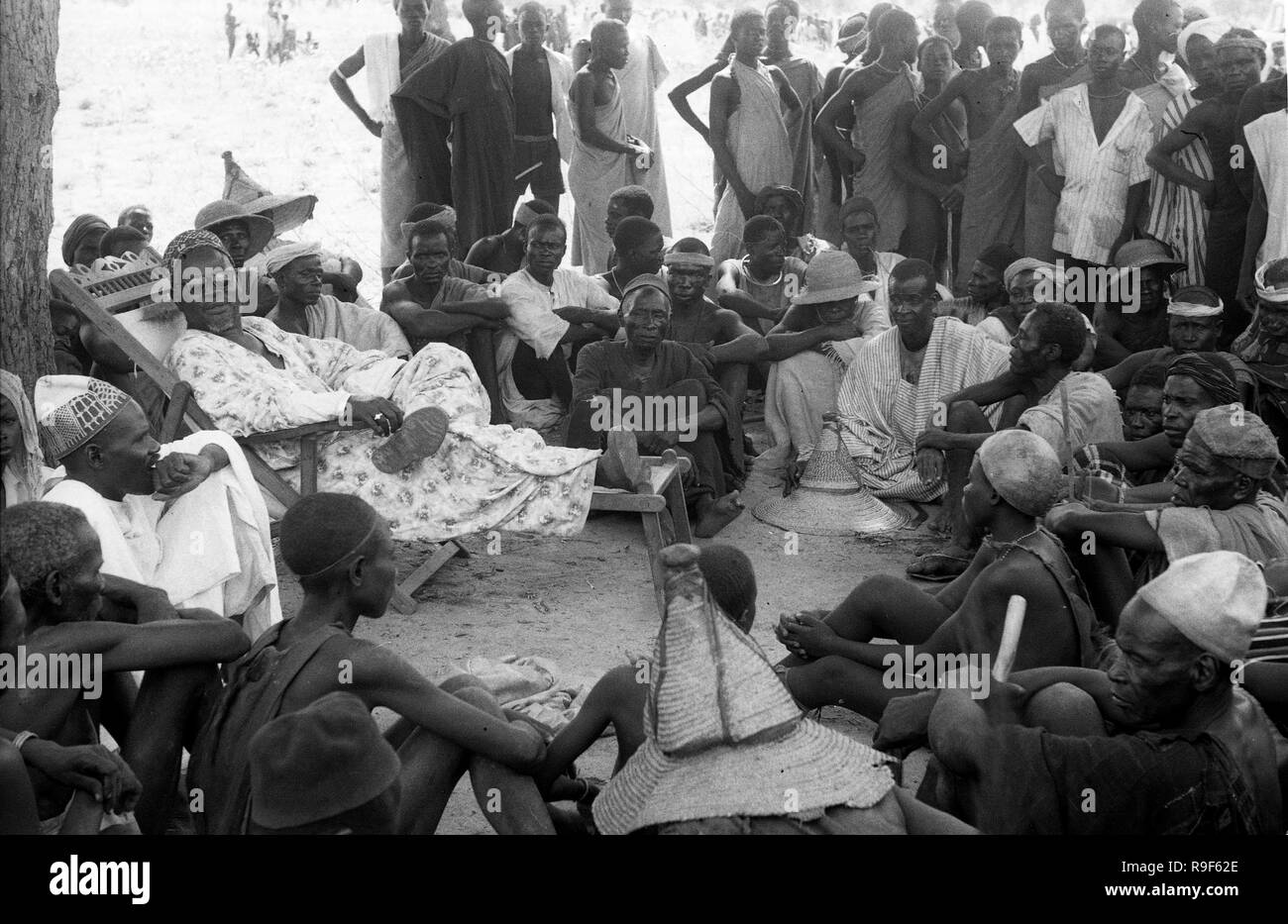
Long before the advent of Western “commercial banking” and formal financial institutions in Nigeria, the Igbo people of the Southeast had developed a sophisticated, community-based financial infrastructure. Known variously as Isusu, these “Rotating Savings and Credit Associations” (ROSCAs) served as the bedrock of the pre-colonial “commercial empire” of the Niger Delta hinterland. These systems were not merely about the accumulation of capital; they were deep expressions of “communal solidarity,” social accountability, and entrepreneurial foresight. In a society where wealth was often tied to land and labor, the Isusu provided a mechanism for “liquidating” communal effort into usable capital for trade, marriage, and title-taking. This article explores the historical evolution, structural mechanics, and enduring legacy of these indigenous financial systems.
The written record

Photo Credit: Pitt Rivers Museum, University of Oxford / Historical Photographic Collection.
Historical context
Structural Mechanics: How the Rotating System Functioned
The pre-colonial Isusu was a masterpiece of “informal social engineering.” It functioned without written contracts, relying instead on the “unbreakable bond” of communal trust:
The Formation of the Group: A group of trusted individuals often members of the same “age grade,” “lineage,” or “guild” would agree to contribute a fixed sum of cowries (and later manillas or colonial currency) at regular intervals.
The “Hand” or Rotation: At each meeting, the total sum collected (the “pool”) would be given to one member. This continued until every member had received the “hand.” The order of receipt was often determined by “seniority, lottery, or urgent need.”
The Role of the Collector (Onye Isusu): The system required a “coordinator” of high integrity. This individual was responsible for safekeeping the funds and ensuring that members did not “default” after receiving their share. The coordinator was often compensated with a small commission or the right to the first or last “hand.”
Economic Functions: Capital Formation and Title-Taking
The Isusu was the primary vehicle for “capital formation” in pre-colonial Igboland, enabling individuals to undertake projects that were beyond the scope of daily earnings:
Financing the “Merchant Class”: Small-scale traders used the Isusu “lump sum” to purchase large quantities of “hinterland produce” (yams, oil, textiles) to sell at the major riverine markets. It provided the “seed capital” necessary for the “middleman” economy to flourish.
Social Mobility and Titles: In Igbo society, status was earned through “title-taking” (such as the Ozo title). These ceremonies required immense expenditure. The Isusu allowed a candidate to “save over several years” to afford the feast and the ritual fees required for elevation.
Marriage and Bridewealth: Young men utilized these rotating pools to consolidate the “bridewealth” necessary for marriage, ensuring that the economic ties between families were backed by “liquid wealth.”
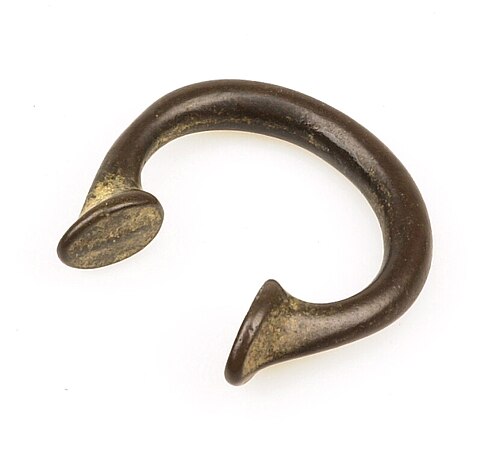
Photo Credit: The British Museum / African Ethnography Department.
Social Accountability and the “Collateral of Character”
The Isusu system was remarkably stable because it utilized “social collateral” rather than physical assets to secure loans;
The Penalty of Ostracism: Defaulting on an Isusu contribution was not just a financial failure; it was a “social death sentence.” An individual who “stole the communal hand” was ostracized from the age grade and the market, effectively losing their “identity” and ability to trade.
The “House” System Integration: In the Delta region, the “House System” of the Itsekiri and Ijaw often integrated Isusu-style logic to manage the “trust” given by European merchants. The “Head of House” acted as the ultimate guarantor for the collective debt.
Transparency and Ritual Oaths: In cases of dispute, members often resorted to “ritual oaths” before the community’s ancestors. The fear of “spiritual retribution” served as a powerful incentive for honesty in the pre-colonial financial market.
Transition and Persistence: Isusu in the Colonial Era
When the British colonial administration introduced “formal banks” (like the Bank of British West Africa), the Isusu did not disappear; it adapted:
Resistance to Formal Banking: Many Igbo and Delta traders found the “colonial banks” to be impersonal, rigid, and culturally alien. They preferred the “flexibility and intimacy” of the Isusu, which allowed for “negotiated repayments” during bad harvest seasons.
The “Ajo” Collector as a Professional: In towns like Sapele and Warri, the “Ajo” system became professionalized. Collectors would walk through the “timber mills” and “waterside markets,” collecting daily “pennies” from laborers and petty traders.
Seedbed for Co-operatives: The colonial government eventually recognized the power of these systems, using the Isusu model as the foundational logic for the “Co-operative Societies” that were established to manage the cocoa and palm oil exports in the 1940s and 50s.
Modern Legacy: From “Micro-finance” to the Digital Age
The principles of the Isusu remain alive in contemporary Nigeria, proving that “indigenous economic logic” is resilient:
The “Meeting” Culture: Today, millions of Nigerians still belong to “Meetings” or “Development Unions” that operate on Isusu principles. These groups provide “emergency loans” and “education funds” for members, filling the gap left by a modern banking sector that often neglects the poor.
Digital Evolution: Modern “fintech” apps in Nigeria are increasingly “digitizing the Esusu/Isusu.” They utilize the same logic of “rotating pools” and “social peer pressure” but move the transactions to mobile platforms.
A Model for Global Micro-finance: International economists have studied the Isusu as a prime example of a “peer-to-peer” banking system that works without a “centralized authority,” serving as an inspiration for micro-credit movements globally.
The pre-colonial Isusu and Ajo systems were far more than “primitive piggy banks.” They were sophisticated “engines of economic growth” that relied on the most valuable currency of all: “human integrity.” By enabling the “accumulation of capital” within a framework of “communal care,” these systems allowed the Igbo and their neighbors to build a “commercial empire” that was resilient, inclusive, and culturally grounded. While the world of “high finance” has changed, the underlying principle of the Isusu that “wealth is only meaningful when it moves through the community” remains a vital lesson for the modern economy. The “hand” that moves from member to member is not just money; it is the “extended hand” of brotherhood and mutual progress.
Sources and references
- Ardener, S. (1964). The Comparative Study of Rotating Credit Associations. Journal of the Royal Anthropological Institute of Great Britain and Ireland.
- Bascom, W. R. (1952). The Esusu: A Rotating Credit Institution of the Yoruba. Journal of the Royal Anthropological Institute. (Often cited in comparative studies of the Igbo Isusu).
- Dike, K. O. (1956). Trade and Politics in the Niger Delta, 1830-1885. Oxford: Clarendon Press.
- Falola, T. (1995). Development Planning and Decolonization in Nigeria. University Press of Florida.
- Nair, K. K. (1972). Politics and Society in South Eastern Nigeria, 1841-1906. Cass.
- Ottonberg, S. (1968). Double Descent in an African Society: The Afikpo Village-Group. Univers ity of Washington Press. (Discussing social organization and economic cooperation).
Cite this article
Discussion
Sign in to join the discussion
Comments are checked by an editor before they appear. Leave a source or a correction and it is read first.
Continue reading
Related histories
 Anthropology and EthnographyThe Demography of Biafran Slave Exports (1650–1850)Read history →
 Anthropology and EthnographyMasquerade Traditions from Igboland to the Caribbean (Jonkonnu, Mocko Jumbie)Read history →
 Anthropology and EthnographyMapping Igbo Destinations in the Americas: A Comparative AnalysisRead history →
No comments yet
Nothing has been approved on this record yet. Comments are checked by an editor before they appear, so one written now shows on this page after that check.