 Ozikoro
Anthropology and Ethnography · Published history
The Aro Confederacy and the Long-Distance Trade Network
The Aro Confederacy was one of the most influential pre-colonial political and economic systems in southeastern Nigeria. Established by the Aro people in the late 17th century, the confederacy became a dominant force in West Africa through its control of religion, trade, and diplomacy. Its success was largely tied to a vast long-distance trade network that connected regions from the Niger Delta to the Cross River basin and beyond.The Aro Confederacy was a remarkable political and economic entity. It wasn’t a traditional state with a centralized government, but rather a federation of Igbo and Ibibio communities united by shared religious authority and an unparalleled dominance over the long-distance trade networks of the interior. This network was arguably the most powerful economic system in the region before the consolidation of British colonial rule.
The written record
Historical context
Origins and Structure of the Aro Confederacy
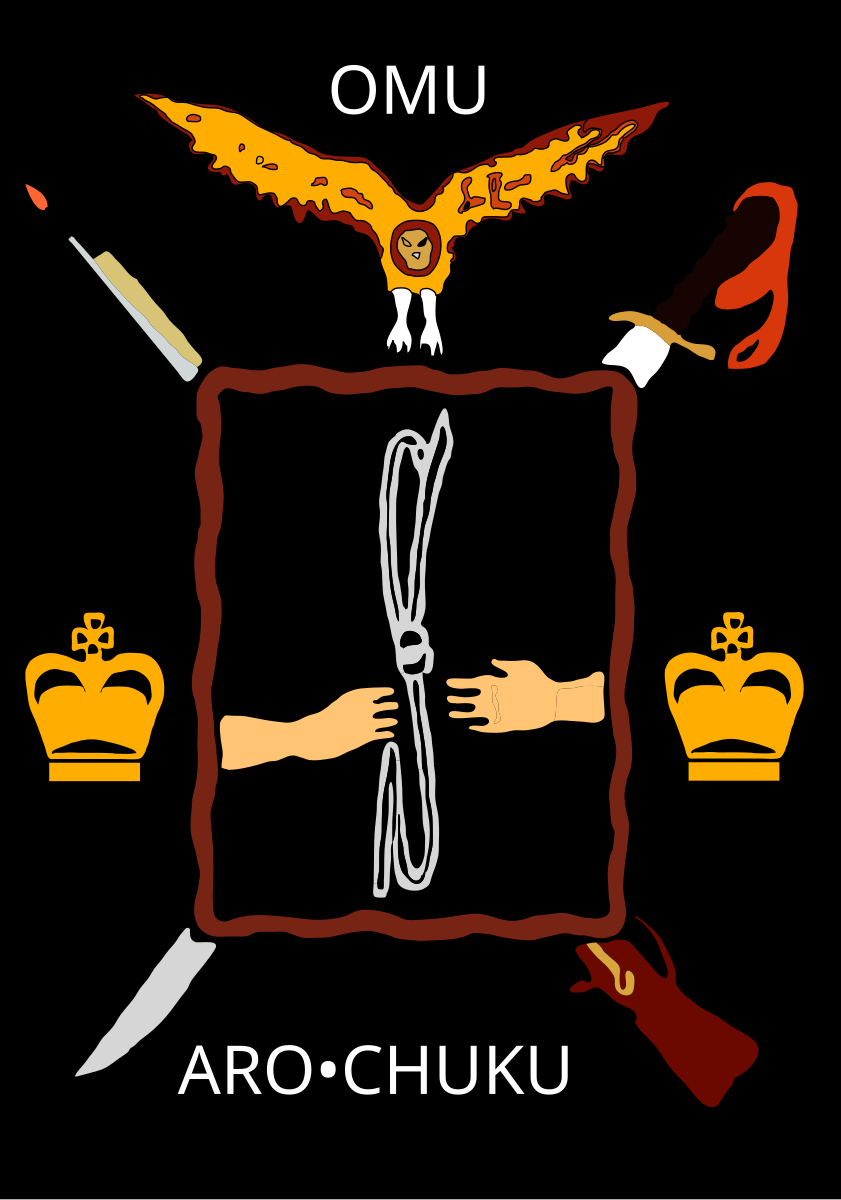
The Aro Confederacy emerged around the town of Arochukwu, which became its political and religious center. The confederacy was governed through a combination of traditional councils, kinship ties, and spiritual authority rooted in the Chukwu oracle (Ibini Ukpabi). The oracle served as both a religious and judicial institution, attracting pilgrims and traders from distant regions. This fusion of religion and politics gave the Aro elite significant control over intergroup relations. The oracle also brought about;
Judicial Authority: Disputes between communities and individuals across the vast trading network were brought before the Oracle. Its judgments were considered infallible and final, transcending local loyalties and laws.
Aro Agents: Aro agents and traders strategically promoted the Oracle’s reputation, convincing distant communities of its power. This spiritual awe ensured that people from hundreds of miles away respected Aro commercial interests and often submitted to their terms. And,
Consensus Governance: The Confederacy itself was governed by a council of elders drawn from the major Aro descent groups, providing a system of collective leadership that managed the trade routes and the Oracle’s operations.
The Aro and the Atlantic Slave Trade
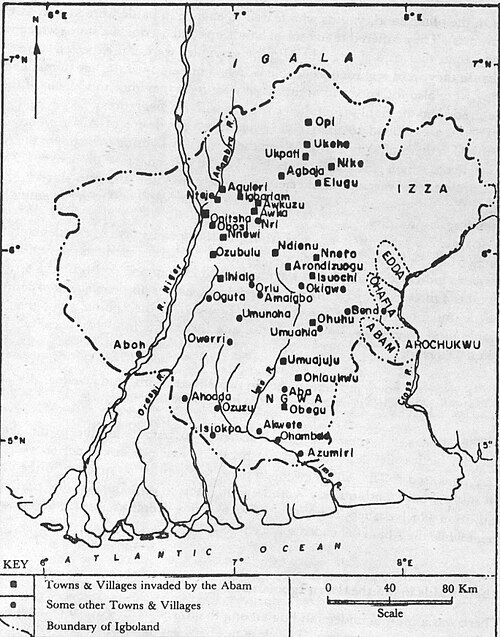
The Aro Confederacy was masterfully positioned to control the movement of goods between the coastal trading states (like Bonny and Calabar) and the resource-rich interior. Their influence extended over a massive territory covering large parts of Igboland, Ibibioland, and the surrounding areas.
Key Goods and Trade Routes
The Aro trade network was a multifaceted system dealing in numerous commodities:
Coastal Imports: European goods, particularly firearms, salt, textiles, and spirits, flowed inland through Aro agents.
Interior Exports (The ‘Palm Oil Revolution’): While the network initially focused heavily on the slave trade, it successfully pivoted in the 19th century to dominate the burgeoning trade in palm oil and palm kernels, responding to the rising British demand for industrial lubricants.
The Slave Trade: Crucially, the Aro Confederacy played a central role in supplying captives to the coastal ports for the transatlantic slave trade. The judicial pronouncements of the Ibini Ukpabi Oracle often resulted in the sale of the ‘guilty’ into servitude, justifying the trade on religious grounds.
Between the 17th and 19th centuries, the Aro Confederacy was deeply involved in the Atlantic slave trade. Aro traders established colonies across eastern Nigeria and neighboring regions to facilitate the movement of enslaved people to coastal markets. These routes linked the hinterland to European trading posts along the Bight of Biafra. The Aro acted as intermediaries, controlling supply chains and ensuring a steady flow of captives for trade.
The Ibini Ukpabi oracle reinforced this network by legitimizing the enslavement of individuals accused of crimes or spiritual offenses. As Nwauwa explains, “the oracle’s judgments often resulted in individuals being sold into slavery,” demonstrating the intersection of religion and commerce in Aro society.
To manage such a vast network, the Aro established a sophisticated system of decentralized control. Aro traders and agents settled in strategic locations along the routes, forming small Aro settlements, or trade diasporas, among non-Aro communities. These settlements served as:
Market Hubs: Places for the exchange of goods.
Intelligence Posts: Gathering information on market trends and political stability.
Ambassadors: Representing Aro interests and encouraging the use of the Ibini Ukpabi Oracle.
Trade Beyond Slavery
While the slave trade was central to Aro economic power, their trade network also encompassed other commodities such as palm oil, ivory, salt, and textiles. The decline of the slave trade in the 19th century pushed the Aro to diversify into legitimate commerce, thereby maintaining their regional influence. They utilized well-established routes and alliances to adapt to changing economic realities.
Cultural Influence and Expansion
Through their trading activities, the Aro spread their language, religion, and cultural practices across West Africa. Aro settlements (known as Aro colonies) were established in Igbo, Ibibio, Efik, and even Yoruba territories. These colonies acted as commercial hubs and spiritual outposts, where the influence of the Chukwu oracle was extended. This network fostered a shared cultural and economic identity across diverse ethnic groups.
The Fall of the Confederacy
The economic and spiritual power of the Aro Confederacy posed a direct threat to the ambitions of the British colonial government, who sought to consolidate their control over the hinterland and impose their own system of governance and trade.
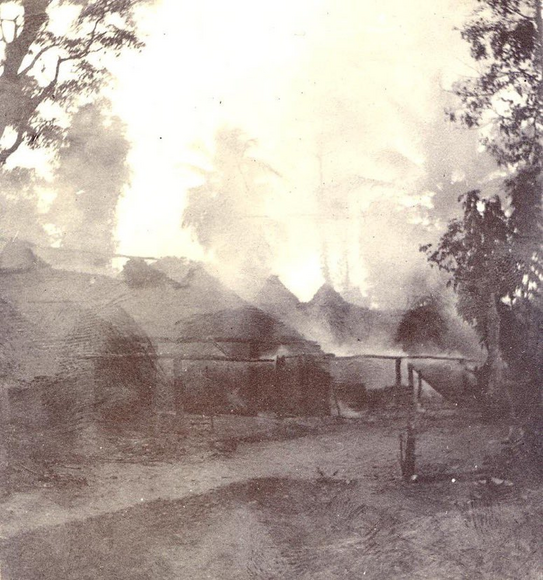
In 1901, the British launched the Arochukwu Expedition, a major military campaign aimed at destroying the Ibini Ukpabi Oracle and breaking Aro’s control over the trade routes. The campaign was successful, the Oracle was destroyed and Aro military resistance was defeated.
The destruction of the spiritual and economic center of the Confederacy marked the definitive end of its dominance. While Aro influence persisted locally for some time, their control over the vast long-distance trade network was irreparably broken, paving the way for full British administrative control of the region.
Legacy of the Aro Confederacy
The Aro Confederacy’s integration of religion, commerce, and diplomacy remains a significant chapter in African history. Its long-distance trade networks demonstrate the complexity of pre-colonial African economies, while its religious systems illustrate how belief and commerce could reinforce one another. Today, Arochukwu remains a site of historical and cultural importance in southeastern Nigeria, symbolizing the resilience and innovation of the Aro people.
The Aro Confederacy exemplified how indigenous systems of governance and religion could sustain extensive trade networks before colonial intervention. Its legacy offers valuable insight into the dynamics of African economic and political organization. Aro’s ability to blend faith, commerce, and diplomacy underscores their pivotal role in shaping pre-colonial West African history.
Sources and references
- Ekechi, F. K. (1989). “The Aro Expedition of 1901–1902: A Study in Colonial Conquest.” Journal of African History, 30(1), 65–78.
- Nwauwa, A. O. (1996). “Religion, Commerce, and Power in the Aro Confederacy.” African Studies Review, 39(2), 45–67.
- Ogbomo, O. (2007). “The Ibini Ukpabi Oracle and the Transatlantic Slave Trade: A Reconsideration of the Aro Confederacy’s Role”. African Economic History, 35, 1-28.
- Dike, K. O. (1956). “Trade and Politics in the Niger Delta, 1830–1885: An Introduction to the Economic and Political History of Nigeria”. Oxford: Clarendon Press.
Cite this article
Discussion
Sign in to join the discussion
Comments are checked by an editor before they appear. Leave a source or a correction and it is read first.
Continue reading
Related histories
 Anthropology and EthnographyThe Demography of Biafran Slave Exports (1650–1850)Read history →
 Anthropology and EthnographyMasquerade Traditions from Igboland to the Caribbean (Jonkonnu, Mocko Jumbie)Read history →
 Anthropology and EthnographyMapping Igbo Destinations in the Americas: A Comparative AnalysisRead history →
No comments yet
Nothing has been approved on this record yet. Comments are checked by an editor before they appear, so one written now shows on this page after that check.