 Ozikoro
 Anthropology and Ethnography · Published history
The Awka Blacksmiths and the Carvers’ Tools
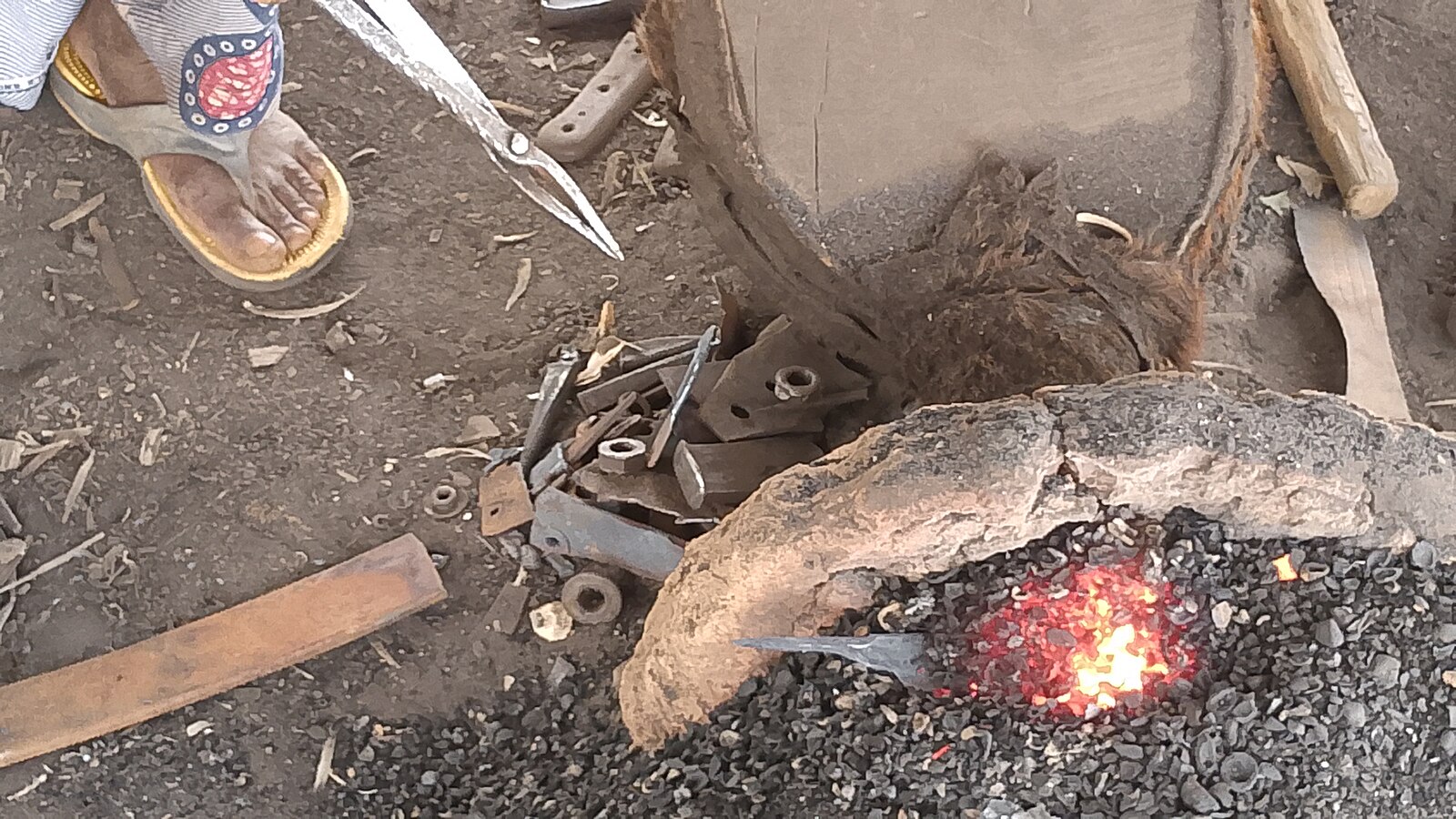
Among the Igbo of southeastern Nigeria, craftsmanship is highly specialized and deeply connected to the spiritual and economic life of the people. Two guilds, the blacksmiths of Awka and the woodcarvers found throughout Igboland formed an interdependent relationship that shaped the material culture of the region. Awka blacksmiths, renowned for their superior iron-working skills, produced the tools that made woodcarving possible. This relationship ensured the continuity of Igbo sculptural traditions, ritual objects, and domestic utensils.
The written record
Historical context
Awka as the Iron-Working Capital of Igboland
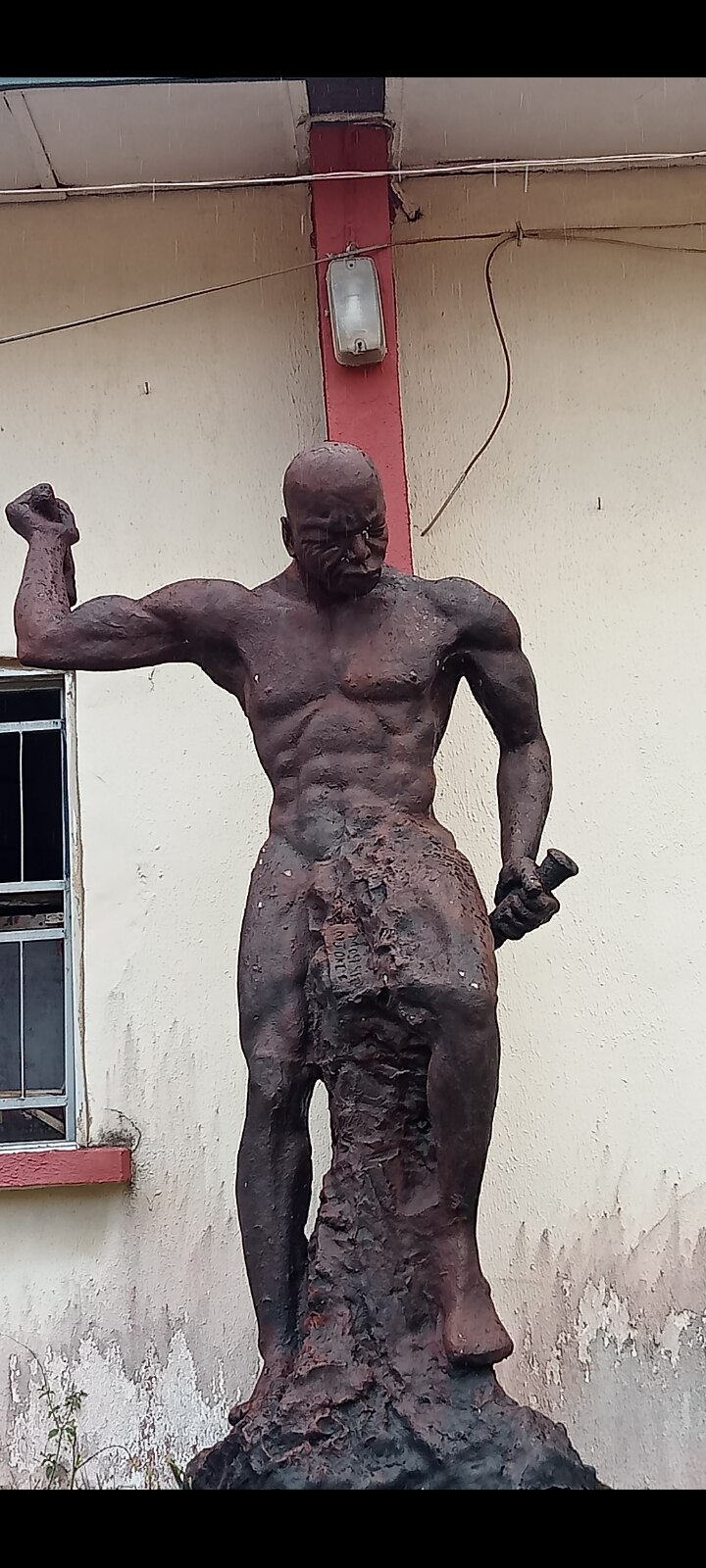
Awka, in present-day Anambra State, is historically recognized as the most prominent blacksmithing center in Igboland. The town’s guild of smiths, known for their sacred knowledge and highly specialized training, supplied metalwork across Eastern Nigeria. According to oral history and scholarly accounts, Awka smiths (ndi na-azu igwe) were believed to have a spiritual connection to Agbala and other deities who bestowed mastery over fire and metal.
Their prestige rested on three features:
Superior technology: Awka smiths mastered furnace construction, bellows operation, and iron smelting.
Mobility: Many smiths traveled to distant towns during the dry season to repair tools or produce new weapons and implements.
Ritual authority: Blacksmithing involved sacred taboos, including purification rites, abstinence from certain foods, and the invocation of deities associated with metal.
As a result, tools made in Awka were highly valued for strength, balance, and durability.
The Carver’s Toolkit and Its Dependence on Awka Ironwork
Woodcarvers (ndi okwà or ndi na-aku ọka) relied entirely on Awka tools to practice their craft. Without iron implements, the intricate wood traditions found in Igbo masks, stools, doors, drums, and ritual vessels could not exist.
The essential tools crafted by Awka blacksmiths included:
Adze (mma nkwu) – A curved-blade tool used for shaping, hollowing, and smoothing wood.
Chisels (ọkpụkpụ ọrụ) – Produced in multiple sizes for detailed carving.
Gouges – Used for scooping out rounded forms.
Knives (mma) – General-purpose carving knives for refining contours.
Mallet heads – Although often made from wood, metal variants were sometimes produced.
Saw blades – Introduced in later centuries as Igbo craftsmen adapted new technologies.
Each tool allowed the carver to progress from cutting down timber to achieving the fine details seen in ceremonial masks, okwa bowls, and ancestral figures.
Awka tools became so essential that many carvers refused to work with iron from other smiths, claiming that inferior tools “do not listen to the hand.”
Religious Significance of Blacksmithing and Carving
In Igbo cosmology, both professions were sacred.
Spiritual Power of Awka Blacksmiths
The Awka smith occupied a liminal position between human society and the spiritual world. Iron was seen as a substance that came from the earth’s womb, and transforming it required:
Ritual protection,
Knowledge passed only through hereditary guilds,
Seasonal rites such as itu oju igwe (appeasement of the fire deity). Because of their sacred status, blacksmiths often doubled as ritual specialists and mediators.
Spiritual Role of Carving
Carvers produced objects for:
Masquerade societies (e.g., Mmanwu),
Ancestors and shrine worship,
Title regalia such as ofo staffs and sacred stools,
Domestic ritual vessels (okwa, okpukpu). Since carved objects had spiritual potency, the quality of the tools mattered. Blades forged with ritual purity were believed to carve “truthful forms” that could house spirits properly.
Thus, the relationship between the Awka smith and the carver was not only economic but religious.
Guild Systems and Gendered Roles
Both blacksmithing and woodcarving practiced a guild-like system where:
Knowledge was inherited patrilineally.
Apprenticeship involved years of labor.
Secrets of the craft were closely guarded.
Blacksmiths formed highly structured guilds, with hierarchy and ritual responsibilities. Carvers were less formally organized but still maintained strong lineage-based systems.
Women did not become smiths, as the fire and iron deities were considered spiritually incompatible with female biology. However, women significantly influenced aesthetics, commissioning certain carved items, determining beauty standards, and overseeing domestic ritual spaces where carved objects were used.
Trade, Technology, and Regional Influence
Awka blacksmiths enjoyed economic prominence across the Cross River region, Igboland, and even into parts of Igala and Idoma territories. They produced:
Weapons (spears, swords, arrows)
Agricultural tools (hoes, machetes)
Ritual items (iron staffs, bells, anklets)
Tools for other guilds, including carvers, leather workers, and masons
Their ironwork shaped regional commerce, enabling the growth of:
Agriculture
Warfare
Sculpture
Domestic production.
Awka’s reputation even led Europeans during the colonial period to commission ironwork from Awka smiths, including repairs of imported machinery.
Changes Across the Colonial and Postcolonial Periods
By the early 1900s, imported steel tools began to reduce dependence on Awka-made implements. Yet Awka smiths adapted by:
Repairing foreign tools,
Producing hybrid implements,
Creating ritual ironworks used by masquerades and title societies.
Today, the craft continues, though diminished, preserved mainly for:
Cultural heritage,
Ceremonial objects,
Tourist art,
Academic study.
Carvers still seek Awka-forged tools when available because they remain unmatched in balance and craftsmanship. The history of Igbo woodcarving cannot be separated from the mastery of Awka blacksmiths. Their tools shaped every stage of artistic production from felling trees to detailing sacred masks. Beyond their economic role, Awka smiths held spiritual authority, forging implements believed to possess ritual purity. Together, blacksmiths and carvers formed a symbiotic system that sustained Igbo art, religion, and craftsmanship for centuries. Although modern technology has altered their practices, the legacy of Awka ironwork continues to define the aesthetics and cultural meaning of Igbo carved objects today.
Sources and references
- Cole, H. M. (1984). Igbo Arts: Community and Cosmos. Museum of Cultural History.
- Isichei, E. (1976). A History of the Igbo People. Macmillan Press.
- Ottenberg, S. (1968). Double Descent in an African Society: The Afikpo Village-Group. University of Washington Press.
- Uchendu, V. C. (1965). The Igbo of Southeast Nigeria. Holt, Rinehart & Winston.
- Wikipedia contributors. (2024). “Awka.” Wikipedia, The Free Encyclopedia.
- Wikipedia contributors. (2024). “Blacksmit h.” Wikipedia, The Free Encyclopedia.
- Wikipedia contributors. (2024). “Igbo art.” Wikipedia, The Free Encyclopedia.
Cite this article
Discussion
Sign in to join the discussion
Comments are checked by an editor before they appear. Leave a source or a correction and it is read first.
Continue reading
Related histories
 Anthropology and EthnographyThe Demography of Biafran Slave Exports (1650–1850)Read history →
 Anthropology and EthnographyMasquerade Traditions from Igboland to the Caribbean (Jonkonnu, Mocko Jumbie)Read history →
 Anthropology and EthnographyMapping Igbo Destinations in the Americas: A Comparative AnalysisRead history →
No comments yet
Nothing has been approved on this record yet. Comments are checked by an editor before they appear, so one written now shows on this page after that check.