 Ozikoro
 Anthropology and Ethnography · Published history
The Cradle of Western Education: Early 17th-Century Portuguese Palace Schools in Ode-Itsekiri
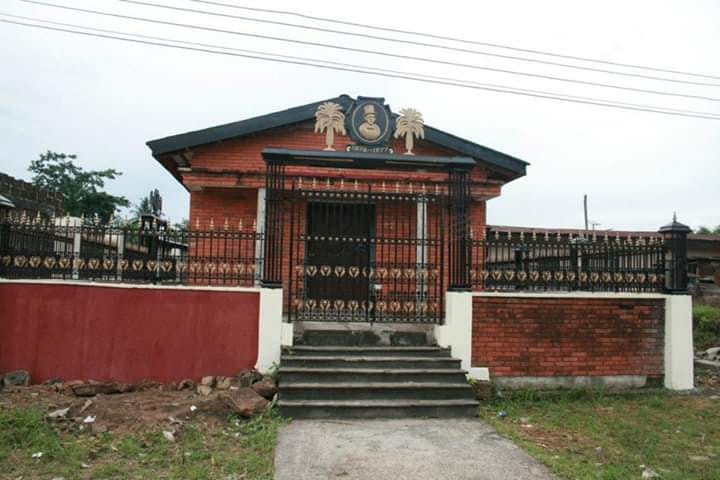
The history of formal Western education in Nigeria is frequently erroneously dated to the mid-19th century arrival of the Church Missionary Society (CMS) in Badagry. However, a much deeper and more profound educational history exists in the heart of the Niger Delta. As early as the late 16th and early 17th centuries, the kingdom of Warri, with its capital at Ode-Itsekiri (Big Warri), became the site of a revolutionary experiment in “trans-cultural education.” Through the influence of Portuguese Augustinian and Capuchin missionaries, “palace schools” were established to educate the Itsekiri nobility. These institutions were not merely religious centers; they were the “intellectual engines” of a burgeoning commercial empire, creating a literate, multilingual elite that could negotiate on equal footing with European powers. This article explores the rise of these Portuguese-run schools, their curriculum, and their enduring impact on the socio-political identity of the Itsekiri people.
The written record
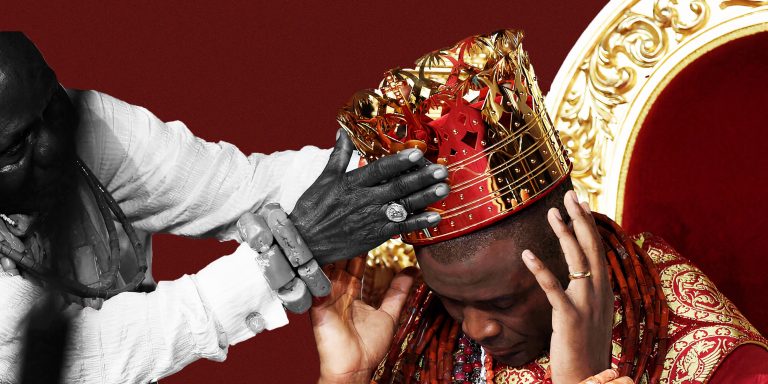
Photo Credit: National Commission for Museums and Monuments, Nigeria / Ethnographic Collection.
Historical context
The Diplomatic Catalyst: The Itsekiri-Portuguese Alliance
The establishment of schools in Ode-Itsekiri was a direct result of a strategic alliance between the Olu (King) of Warri and the Portuguese Crown. Unlike many other West African states, the Warri Kingdom sought a “bilateral relationship” based on mutual recognition and religious affinity.
The Quest for Legitimacy: In the late 1500s, the Olus of Warri recognized that Western literacy and Christianity were potent tools for diplomatic leverage. By inviting Portuguese missionaries, they secured not only “spiritual guidance” but also “military and commercial advisors;
The Augustinian Mission: In the early 1600s, Portuguese Augustinian monks arrived at Ode-Itsekiri. Their mission was unique; rather than focusing solely on the general populace, they focused on the “Olu’s palace,” believing that the conversion and education of the leadership would trickle down to the subjects.
The Royal Scholars: The most famous product of this early education was Dom Domingos, the son of the Olu, who was sent to Portugal for further studies after receiving his foundational education in the palace schools of Ode-Itsekiri.
The Architecture of the Palace Schools
The “palace schools” were not standalone buildings in the modern sense but were integrated into the royal court of the Olu at Ode-Itsekiri. They functioned as “seminaries of statecraft;
Instructional Setting: Classes were held within the inner courtyards of the palace. The Portuguese friars acted as both “tutors and chaplains,” providing a secluded environment where the children of the nobility were shielded from the broader “traditionalist” influences of the time.
Language of Instruction: The primary language of instruction was Portuguese. This created a “linguistic bridge,” allowing the Itsekiri elite to correspond directly with the Portuguese monarchs. Historical records indicate that some Olus were “fluent in written and spoken Portuguese,” a feat unmatched in most of Sub-Saharan Africa during that era.
Religious Integration: Education and Catholicism were inseparable. The schools were designed to produce “Christian Princes” who could serve as the “defenders of the faith” in the Niger Delta.
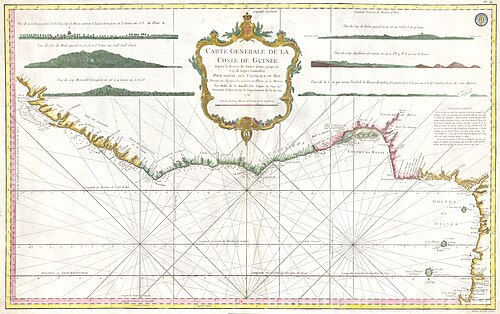
Photo Credit: National Library of Portugal / Cartographic Collection.
Curriculum and Intellectual Life: Beyond the Bible
While the primary focus of the schools was religious instruction, the “curriculum” was surprisingly broad, tailored to the needs of a maritime, trading nation;
Literacy and Numeracy: Students were taught to read and write in Portuguese and Latin. This literacy was immediately applied to “commercial accounting,” enabling the Itsekiri to keep detailed records of their “palm oil and slave trade” transactions with European ships.
European Court Etiquette: The schools functioned as “finishing schools,” teaching European diplomatic protocols, music, and “Western social norms.” This allowed Itsekiri royals to be received as “civilized peers” in the courts of Europe.
Theological Debate: The students engaged in complex theological studies. The legacy of this is seen in the “Christian titles” and rituals that became embedded in the Itsekiri monarchy, such as the use of the crucifix in royal regalia.
The “St. Augustine” of the Delta: The Impact of Education on the Monarchy
The most significant impact of these early schools was the transformation of the Itsekiri monarchy into a “Catholic Dynasty.”
The Reign of Olu Sebastian: Educated in the palace traditions, Olu Sebastian (Atuwatse I) was a staunch advocate for Western education. His reign saw the “institutionalization of the school system,” as he encouraged his chiefs to send their sons to the friars;
The Multi-Generational Legacy: For over 200 years, the Warri Kingdom maintained a tradition of “literate royalty.” This created a “documented history” of the kingdom through letters and treaties, much of which is still housed in the archives of the Vatican and Lisbon.
The “Portuguese” Dialect: The intensive contact through education led to the infusion of Portuguese words into the Itsekiri language. Terms related to “commerce, religion, and household items” in modern Itsekiri still reflect this 17th-century educational influence.
Challenges and the Decline of the Early Mission
Despite their early success, the palace schools faced significant challenges that led to their eventual decline by the late 18th century:
Ecological and Health Factors: The “mangrove swamps” of Ode-Itsekiri were harsh for the European friars. High mortality rates among the missionaries meant that the schools often suffered from “long periods of abandonment” when replacements failed to arrive from São Tomé or Portugal.
Traditionalist Resistance: Not all Itsekiri nobility were in favor of “Westernization.” A powerful faction of “traditional priests” viewed the palace schools as a threat to the “indigenous spiritual order,” leading to internal political friction.
The Shift in European Interests: As the 18th century progressed, Portuguese influence in the Bight of Benin waned, eclipsed by the British and Dutch who were less interested in “education and conversion” and more focused on raw “commercial extraction.”
The early 17th-century palace schools of Ode-Itsekiri represent a “pioneer chapter” in African intellectual history. They proved that the Itsekiri were not passive recipients of Western culture but “active participants” who used education to strengthen their commercial empire. The literacy and “diplomatic polish” gained in these early schools laid the groundwork for the Itsekiri’s later role as the primary “middlemen” of the Niger Delta during the British colonial era. Today, the high value placed on education within Itsekiri society is a direct “cultural inheritance” from those Augustinian friars who, four centuries ago, turned a palace in the mangroves into a “center of global learning.”
Sources and references
- Dike, K. O. (1956). Trade and Politics in the Niger Delta, 1830-1885. Oxford: Clarendon Press. (Discussing the long history of European contact).
- Fage, J. D., & Oliver, R. A. (1975). The Cambridge History of Africa: From c. 1600 to c. 1790 (Vol. 4). Cambridge University Press.
- Lloyd, P. C. (1963). The Itsekiri. International African Institute.
- Omer-Cooper, J. D. (1987). History of Southern Africa. James Currey Publishers. (Mentioning Portuguese educational missions in West Africa).
- Ryder, A. F. C. (1969). Benin and the Europeans, 1485-1897. Longmans. (A critical source for Portuguese activities in the Warri and Benin regions).
- Sagay, I. (1980). The Itsekiri: A History of the Warri Kingdom. Togbi Press.
Cite this article
Discussion
Sign in to join the discussion
Comments are checked by an editor before they appear. Leave a source or a correction and it is read first.
Continue reading
Related histories
 Anthropology and EthnographyThe Demography of Biafran Slave Exports (1650–1850)Read history →
 Anthropology and EthnographyMasquerade Traditions from Igboland to the Caribbean (Jonkonnu, Mocko Jumbie)Read history →
 Anthropology and EthnographyMapping Igbo Destinations in the Americas: A Comparative AnalysisRead history →
No comments yet
Nothing has been approved on this record yet. Comments are checked by an editor before they appear, so one written now shows on this page after that check.