 Ozikoro
 Anthropology and Ethnography · Published history
The Ikom Monoliths: A Window into Nigeria’s Ancient Heritage
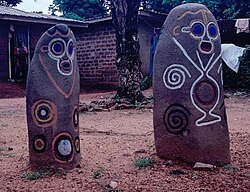
The Ikom Monoliths, locally known as “Akwanshi,” are among Nigeria’s most remarkable archaeological and cultural treasures. Located primarily in Ikom Local Government Area of Cross River State, these monoliths consist of hundreds of carved volcanic stones, each bearing intricate motifs and anthropomorphic features. They are widely believed to have been created between the 16th and 20th centuries, though some scholars argue for even earlier origins. The monoliths reflect the artistic, spiritual, and socio-political systems of ancient communities in southeastern Nigeria, and they remain a powerful link to the region’s precolonial past.
The written record
Historical context
Historical Background
The exact origins of the Ikom Monoliths remain debated among historians and archaeologists. The carvings are primarily associated with the Ejagham (Ekoi) people, who have lived in the Cross River region for centuries. Researchers note that the monoliths are distributed across more than 30 sites in Ikom, such as Alok, Nde, and Emaghabe.
The monoliths were first documented by European explorers in the early 20th century. However, local oral traditions state that the stones were created by ancestral carvers to record lineage histories, mark sacred spaces, or symbolize spiritual entities. According to some oral accounts, the monoliths served as “voices of the ancestors,” used to preserve traditions, enforce moral codes, and maintain social order.
Physical Description and Artistic Styles
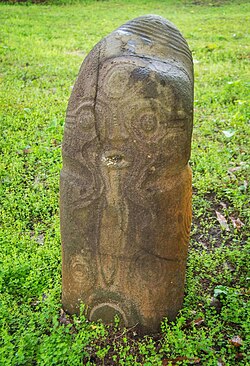
The Ikom Monoliths vary in size and form, ranging from about 1 to 3 meters in height. They were carved from basalt, a volcanic stone abundant in the region. Most stones are cylindrical or slightly conical, with human-like faces, geometric patterns, and inscriptions that resemble Nsibidi symbols, an ancient ideographic writing system indigenous to southeastern Nigeria.
Artistic features commonly found on the monoliths include:
Facial carvings showing eyes, noses, mouths, and sometimes scarification marks’
Geometric motifs, such as spirals, concentric circles, and linear patterns,
Symbolic inscriptions, possibly representing clan history, status, or cosmology.
The stylistic diversity suggests that the monoliths were created by different carvers or communities over several generations. Many scholars see them as evidence of a sophisticated artistic tradition comparable to other monumental African carvings, such as those at Great Zimbabwe or the Benin Kingdom.
Cultural and Spiritual Significance
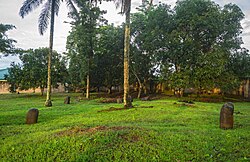
The monoliths had deep spiritual meaning for the ancient communities that carved them. Many were placed in sacred groves or village squares where rituals, oaths, and communal decisions were made.
Their purposes may have included:
1. Ancestor Veneration
The stones are widely believed to represent deified ancestors or lineage founders. Their presence in clan compounds suggests they were used to maintain spiritual connections between the living and the dead.
2. Political Authority
Some monoliths marked the graves or memorials of important leaders, symbolizing authority and continuity. They may have also functioned as “territorial markers” that defined clan boundaries.
3. Social and Legal Functions
Communities reportedly made oaths, resolved conflicts, and conducted initiations near the stones. The monoliths, therefore, served as physical embodiments of law, culture, and morality.
4. Sacred Communication
According to Ejagham oral traditions, some symbols carved on the stones conveyed spiritual messages or cosmological ideas. This is consistent with the theory that Nsibidi an indigenous symbol system, may have influenced the carvings.
Archaeological Studies and Scholarly Interpretations
The academic study of the Ikom Monoliths began in earnest during the 1960s and 1970s. Archaeologists and historians such as Ekpo Eyo and Philip Allison conducted extensive documentation and analysis of the stones.
Major interpretations include:
Chronological Dating
While radiocarbon dating of associated materials has been inconclusive, stylistic comparisons and oral histories suggest that the monoliths may have been created between 1500 and 1800 CE. Some scholars propose even earlier dates, though evidence remains limited.
Symbolic Meanings
Symbols on the monoliths may reflect:
Clan identity
Social hierarchy
Spiritual guardianship
Historical records.
The carvings show a high level of abstraction, indicating an advanced cultural system of communication.
Connections to Nsibidi
Wikipedia and several scholars note the possibility that Nsibidi symbols, a precolonial ideographic script used by the Ekpe society, are reflected in the carvings. This theory suggests that the monoliths may have been part of secret or semi-secret ritual systems.
Recognition and UNESCO Interest
In 2008, Nigeria submitted the Ikom Monoliths to the UNESCO World Heritage Tentative List. UNESCO highlighted their “outstanding universal value,” noting their importance in understanding the region’s social and artistic development (“UNESCO Tentative List,” 2008).
Although not yet fully inscribed as a World Heritage Site, international interest continues to grow, especially as the monoliths are considered one of Africa’s few surviving examples of large-scale ancient stone art.
Threats and Preservation Challenges
Despite their cultural value, the monoliths face several threats:
Weathering and erosion, due to rain, humidity, and vegetation,
Theft and illicit trafficking, as some stones have been stolen for private collections,
Neglect, due to lack of funding and awareness,
Agricultural activities, which sometimes disturb monolith sites,
Urbanization, which places pressure on heritage landscapes.
Efforts toward preservation include local sensitization, museum documentation, and advocacy by heritage organizations. Several monoliths have been relocated to the National Museum in Lagos and the National Commission for Museums and Monuments (NCMM) for protection.
The Ikom Monoliths are not only artistic masterpieces but also historical documents carved in stone. They represent the cultural identity, spiritual worldview, and social organisation of ancient communities in southeastern Nigeria. Their expressive faces, geometric patterns, and symbolic inscriptions offer insight into a sophisticated past that predates colonial records.
Preserving the monoliths is not merely a cultural obligation; it is essential to understanding Nigeria’s human history and Africa’s contributions to early monumental art. With greater preservation efforts and global recognition, the Ikom Monoliths will continue to stand as lasting witnesses to the ingenuity and spiritual depth of the Ejagham people.
Sources and references
- Allison, P. (1968). Cross River monoliths. Lagos: Federal Department of Antiquities.
- Eyo, E. (1986). Two thousand years of Nigerian art. Federal Department of Antiquities.
- National Commission for Museums and Monuments. (n.d.). The Ikom Monoliths. NCMM Publications.
- UNESCO World Heritage Centre. (2008). Ikom Monoliths. UNESCO Tentative List entry.
- Wikipedia. (2024 ). Ikom monoliths.
Cite this article
Discussion
Sign in to join the discussion
Comments are checked by an editor before they appear. Leave a source or a correction and it is read first.
Continue reading
Related histories
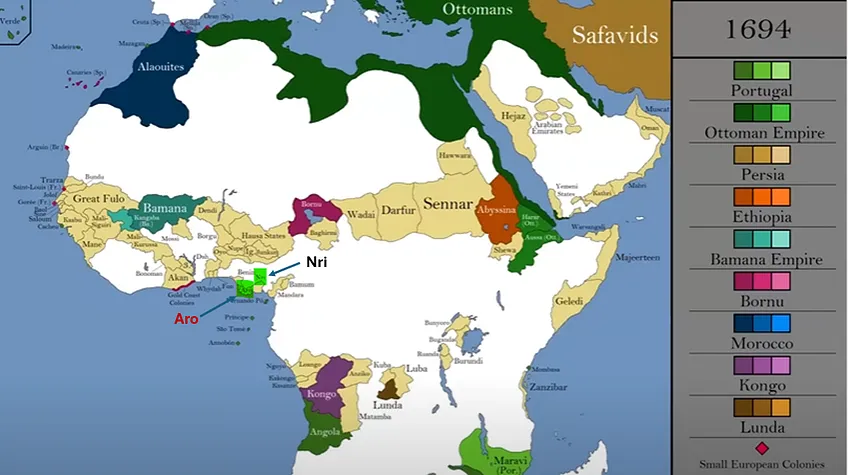 Anthropology and EthnographyThe Demography of Biafran Slave Exports (1650–1850)Read history →
 Anthropology and EthnographyMasquerade Traditions from Igboland to the Caribbean (Jonkonnu, Mocko Jumbie)Read history →
 Anthropology and EthnographyMapping Igbo Destinations in the Americas: A Comparative AnalysisRead history →
No comments yet
Nothing has been approved on this record yet. Comments are checked by an editor before they appear, so one written now shows on this page after that check.