 Ozikoro
 Anthropology and Ethnography · Published history
The Impact on the “Yam Revolution”


Photo credit; Wikipedia
The written record
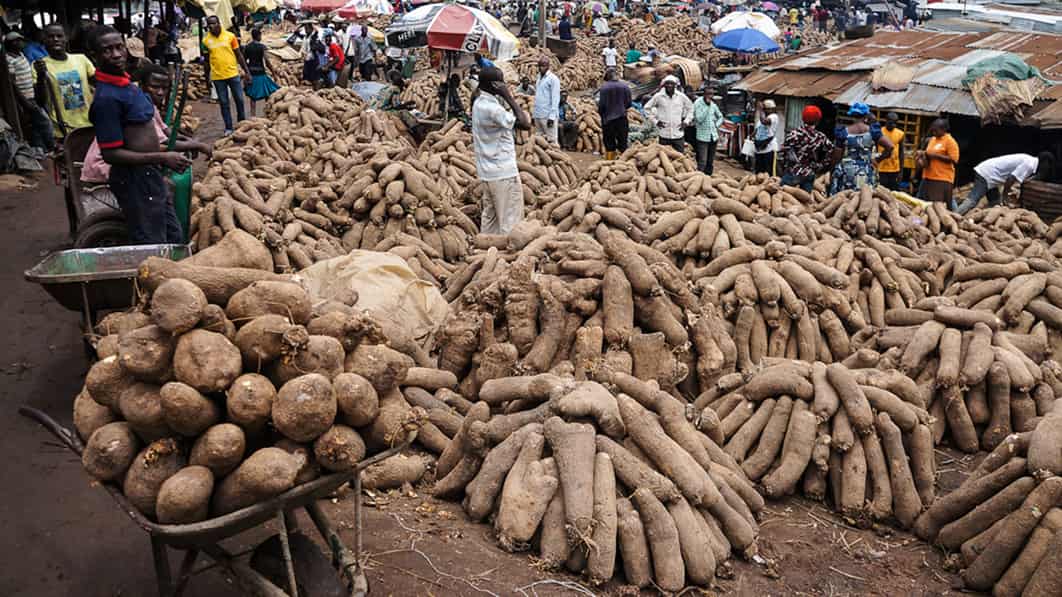
Yam (Dioscorea rotundata and Dioscorea cayenensis) has long been one of the most important food crops in West Africa, especially among the Igbo, Yoruba, Tiv, Idoma, and other ethnic groups in Nigeria. Often referred to as the “king of crops,” yam became not just a source of food, but a symbol of wealth, identity, and social order. What historians describe as the “Yam Revolution” refers to the transformative period in which yam cultivation expanded dramatically due to technological innovations, social organization, and cultural emphasis on yam-based agriculture. In particular, improvements in iron technology especially the bloomery and blacksmithing traditions enabled farmers to produce yam on an unprecedented scale.
Historical context
Origins of Yam Domestication
Yam cultivation in West Africa dates back thousands of years, with archaeological and botanical studies suggesting early domestication in the forest-zone of Nigeria and Cameroon. As a staple crop that required intensive land preparation, yam played a crucial role in shaping early agricultural communities. Traditional yam species such as “white yam” and “yellow yam” became central to local diets, ritual practices, and seasonal festivals. Early domestication laid the foundation for a more dramatic expansion of yam cultivation when iron tools became widely available.
Iron Technology and the Transformation of Yam Agriculture
The Role of Iron Tools:
The introduction and widespread mastery of ironworking through bloomery furnaces and blacksmith guilds directly fueled the “Yam Revolution.” Before iron, farmers relied on wooden or stone tools that were inadequate for clearing dense tropical forests or cultivating large yam fields. With the arrival of iron:
- Clearing new farmlands became easier, especially in forested areas.
- Iron hoes and machetes allowed deeper digging, essential for yam mounds.
- Improved durability of tools made large-scale yam farming sustainable.
- Communities could expand agricultural frontiers, supporting population growth.
As iron smelting centers such as Awka, Opi, Lejja, and other settlements in eastern Nigeria developed, high-quality iron hoes (oku) and digging tools became more accessible. This technological synergy produced a gradual but powerful agricultural transformation.
Yam Mounding and Labor Efficiency:
Yam cultivation requires the construction of large mounds, sometimes as high as a meter. These mounds improve drainage, deepen the soil, and create space for yam tubers to expand. Iron hoes enabled farmers to build far more mounds in a shorter time, making yam farming both productive and profitable. This increase in labor efficiency is a core characteristic of the “Yam Revolution.”
Social Organization and the Expansion of Yam Farming
- Age Grades and Communal Labor
Among the Igbo and many other Nigerian peoples, communal labor systems helped accelerate yam production. Age-grade groups, extended families, and seasonal work units (e.g., otondụ, ụmụada, or men’s farming groups) organized large-scale mound making and clearing exercises. These collective approaches ensured that yam farming became a community-wide activity.
- Gender Dynamics
While men typically carried out mound-making and staking the physically demanding aspects, women played crucial roles in planting, weeding, harvesting smaller tubers, processing and storing yams. Thus, the “Yam Revolution” was made possible by cooperative gender labor systems.
Cultural Meaning: Yam as a Symbol of Wealth and Identity
The growth of yam-based agriculture shaped cultural practices across West Africa.
New Yam Festivals:
The rise of yam cultivation strengthened the ritual importance of the annual New Yam Festival (e.g., Igbo “Ịwa Ji,” Yoruba “Odún Ìjẹ̀ṣìn”). These festivals marked the renewal of agricultural cycle, thanksgiving to deities and ancestors, public display of prosperity
Performance of dances and masquerades.
The prominence of these festivals increased as yam became more central to economic life.
- Yam as a Social Marker
- Yam fields became indicators of a man’s wealth, his strength, his ability to support a family.
- Prospective grooms were judged by the size of their yam barns, reinforcing the crop’s socio-economic value.
Economic Impact: Trade and Surplus
- Local and Regional Trade
As cultivation expanded, yam became an important commodity in regional markets. Surplus production allowed communities to trade yams for iron tools, cloth, salt, and livestock, engage in long-distance trade networks, and develop stable market towns.
- Food Security and Population Growth
The carbohydrate-rich nature of yam supported population booms. Better nutrition meant stronger labor forces and healthier communities, enabling villages to expand into towns.
Environmental Impact
- Forest Clearing
The “Yam Revolution” led to extensive clearing of forest land. While this allowed agricultural expansion, it also altered local ecosystems. Some areas experienced soil depletion when fallow cycles shortened due to increased production pressure.
- Sustainable Practices
To maintain productivity, some societies adopted methods such as shifting cultivation, intercropping, long fallow periods, selective forest preservation.
These methods ensured the longevity of yam-based agriculture.
Legacy of the Yam Revolution
The influence of the “Yam Revolution” continues today. Nigeria remains the world’s largest producer of yam, contributing more than two-thirds of global output. In Igboland especially, yam still symbolizes wealth, status, and community identity.
New Yam festivals are celebrated worldwide by diasporic communities, preserving cultural heritage.
Modern yam farming now incorporates mechanization and scientific breeding, but its cultural roots remain deeply tied to the historical transformation triggered by iron technology.
The “Yam Revolution” was not merely an increase in agricultural production; it was a sweeping cultural and technological shift. Iron tools enabled farmers to expand cultivation dramatically, while communal labor, gender cooperation, and ritual traditions reinforced yam’s central role in society. The economic benefits led to population growth, long-distance trade, and stronger social institutions.
By understanding the roots and impact of the “Yam Revolution,” we gain insight into how technology, culture, and agriculture intertwine to shape civilization.
Sources and references
- Alagoa, E. J. (2020). A history of agriculture in West Africa. University of Port Harcourt Press.
- Okafor, S. O. (2019). Iron technology and agrarian change in Igboland. Journal of African History, 45(2), 187–204.
- Wikipedia contributors. (2024). “Yam.” Wikipedia, The Free Encyclopedia.
- Wikipedia contributors. (2024). “Agriculture in Nigeria.” Wikipedia, The Free Encyclopedia.
- Wikipedia contributors. (2024). “Igbo culture.” Wikipedia, The Free Encyclopedia.
Cite this article
Discussion
Sign in to join the discussion
Comments are checked by an editor before they appear. Leave a source or a correction and it is read first.
Continue reading
Related histories
 Anthropology and EthnographyThe Demography of Biafran Slave Exports (1650–1850)Read history →
 Anthropology and EthnographyMasquerade Traditions from Igboland to the Caribbean (Jonkonnu, Mocko Jumbie)Read history →
 Anthropology and EthnographyMapping Igbo Destinations in the Americas: A Comparative AnalysisRead history →
No comments yet
Nothing has been approved on this record yet. Comments are checked by an editor before they appear, so one written now shows on this page after that check.