 Ozikoro
 Anthropology and Ethnography · Published history
The Iwebo Palace Society: Administrative Similarities Between the Benin and Warri Royal Courts
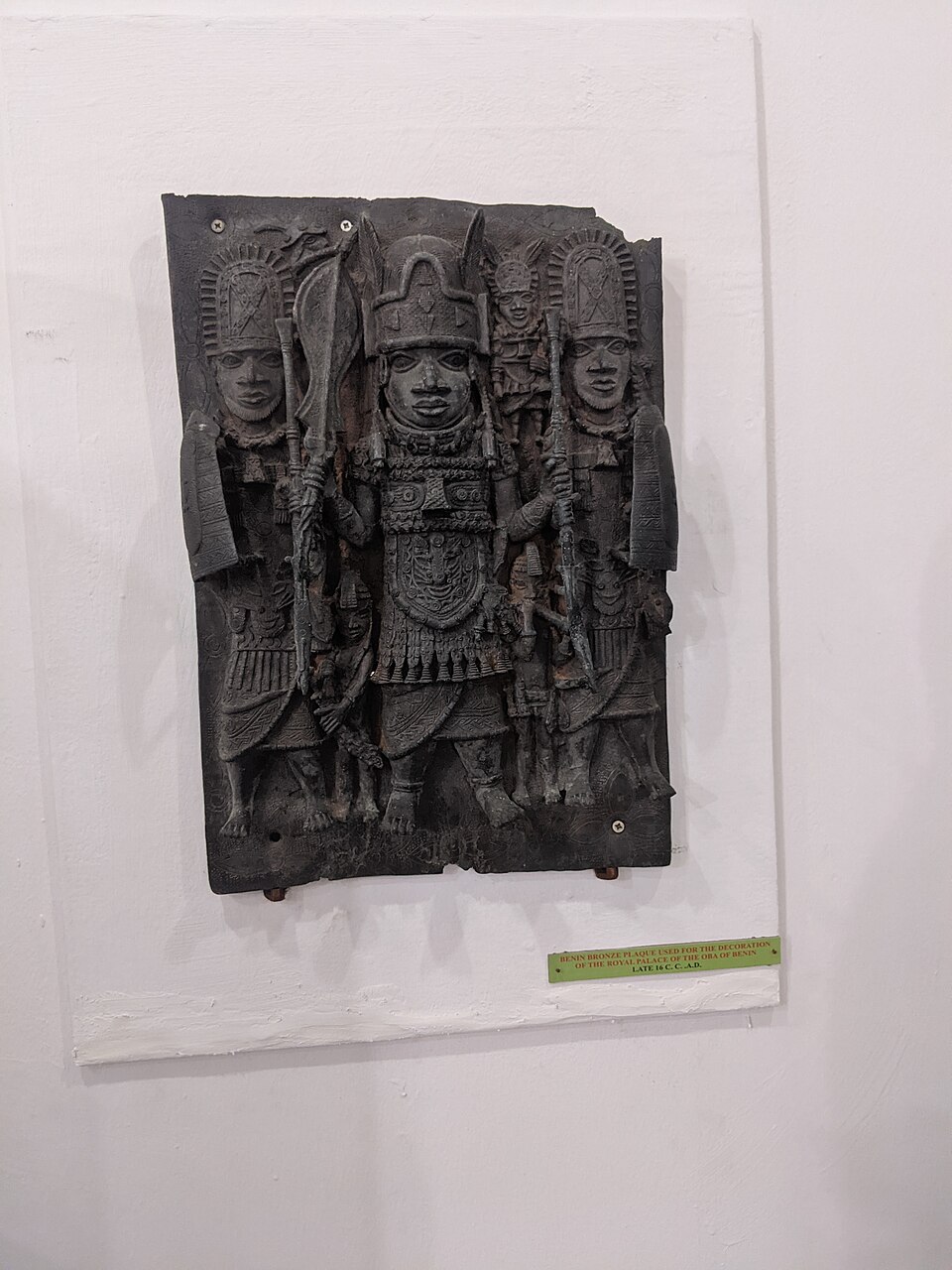
The Kingdoms of Benin and Warri share deep cultural, political, and historical linkages that date back to the late 15th and early 16th centuries, particularly through the migration of Prince Ginuwa from the Benin royal court to establish the Itsekiri monarchy. One of the strongest indicators of this historical relationship is the similarity in palace administrative structures between both kingdoms. Central to this connection is the Iwebo Palace Society, one of the most influential guilds within the Benin royal administrative system responsible for regalia, protocols, crafts, and royal communication.
The written record
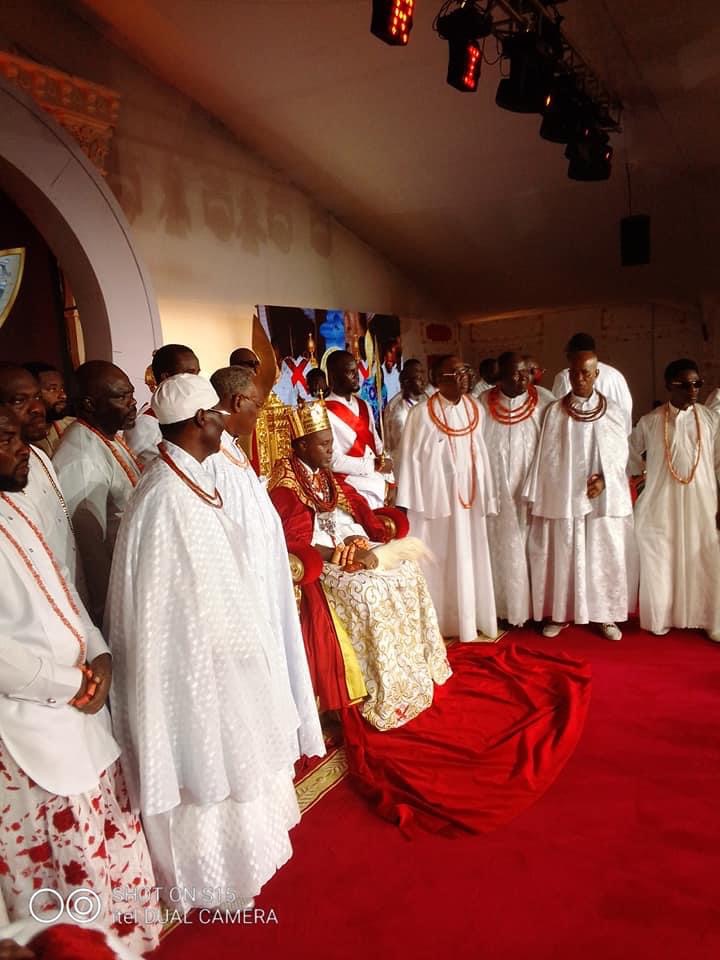
Photo credit; LordSnow242 via Wikimedia Commons
Historical context
The Origins and Structure of the Iwebo Society in Benin
- Historical Background of the Iwebo
The Iwebo Palace Society is part of the broader tripartite palace division in ancient Benin, which also includes the Iweguae and Ibiwe societies. According to historical accounts, the structure of palace guilds matured during the reigns of Oba Ewuare and his successors. Each guild had specific administrative, ceremonial, and artisanal roles, ensuring the smooth functioning of the Oba’s palace.
The Iwebo, one of the oldest and most prestigious, served as custodians of royal regalia and overseers of visual and material culture within the court.
- Administrative Roles of the Iwebo
The Iwebo Society consisted of chiefs, craftsmen, and palace officials who handled the following responsibilities:
Custodianship of the Oba’s royal ornaments, coral beads, crowns, and textiles.
Regulation of palace protocol, including how chiefs must appear before the Oba.
Supervision of royal artists and bronze casters. Management of certain court records and ceremonial communications. Scholars such as Nevadomsky emphasize that the Iwebo played crucial roles in reinforcing royal authority by controlling symbols of kingship.
The Warri Royal Court and Its Administrative Evolution
- Formation of the Warri Monarchy
The Warri Kingdom (Iwere Kingdom) was founded by Prince Ginuwa, the son of Oba Olua of Benin, around the late 1400s. As noted in Wikipedia, “Olu of Warri”, and supported by historians like Alagoa, Ginuwa migrated with a retinue that included priests, palace attendants, and administrators from Benin. Many of these palace functionaries became the foundation of the Itsekiri court’s administrative culture.
- Palace Structure in Warri
While the Itsekiri monarchy developed its own indigenous systems influenced by interactions with Portuguese traders, local Itsekiri clans, and later Christianity, its palace governance retained notable Benin elements. These included:
The creation of palace guilds with regulated ranks.
Strict ceremonial protocols.
A strong emphasis on regalia, coral beads, swords, and royal insignias similar to those of the Benin court.
The adaptation of Benin palace culture served to legitimize the Olu’s authority, especially among early Itsekiri groups who recognized the prestige of Benin royalty.
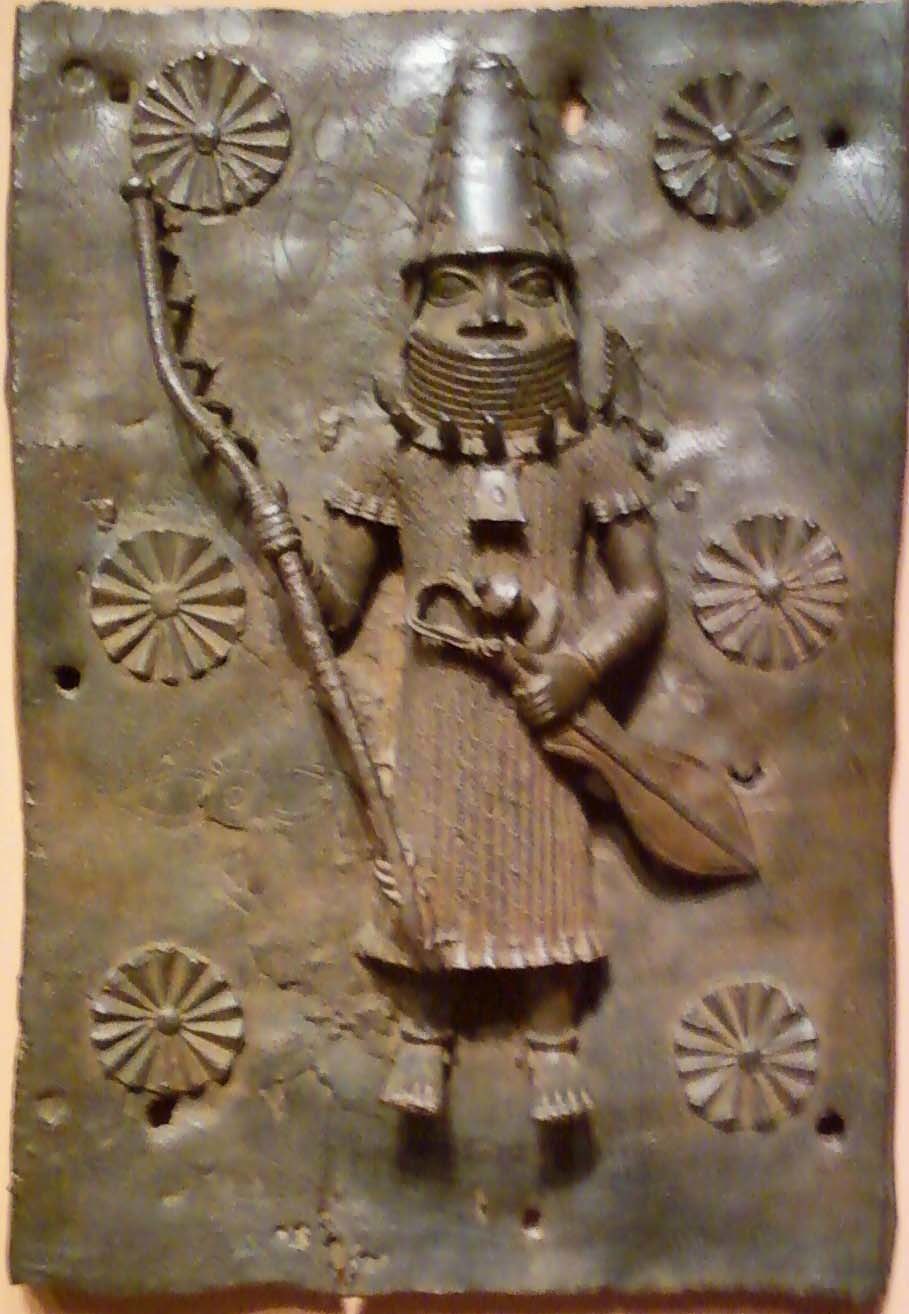
Photo credit; Wikimedia Commons / Public Domain
Administrative Similarities Between the Benin Iwebo and the Warri Court
- Custodianship of Royal Regalia
One of the most striking parallels is the management of royal regalia. In Warri, the palace appointed officials responsible for maintaining the Olu’s coral beads, royal staffs, ceremonial swords, and traditional garments. This mirrors the Iwebo role in Benin, where regalia was not just property but a sacred symbol of kingship.
- Guild-Based Palace Labor
Both courts developed a system of palace guilds or units organized around specialized roles: Artisans and craftsmen, carvers and metalworkers, ceremonial attendants and messengers and ritual specialists.
Although Warri did not replicate Benin guild structure exactly, the functional parallels particularly the emphasis on specialized service groups are widely acknowledged by scholars such as Egharevba.
- Ceremonial Protocol and Hierarchy
In both kingdoms; Chiefs must appear before the monarch in specific ceremonial attire, movements inside the palace are governed by rank, royal greetings and prostration forms follow strict rules. These protocols reflect the Benin philosophy that order in the palace symbolizes order in the kingdom.
- Administrative Advisory Roles
The Iwebo chiefs in Benin acted as advisers to the Oba on matters relating to regalia, arts, and palace protocol. Similarly, in Warri, senior palace officers (such as the Ologbotsere in certain historical periods) combined political, ceremonial, and administrative responsibilities. Though rooted in local culture, their position reflects a Benin-derived tradition of council-based monarchy.
- Preservation of History and Court Memory
The Iwebo’s role in maintaining items of historical significance has parallels in Warri, where palace historians, singers, and chroniclers preserved genealogies of the Olu, songs of migration, and ceremonial records. This system reflects the Benin belief that palace societies serve as custodians of collective memory.
Cultural Diffusion and Local Adaptation
- Benin Influence and Itsekiri Identity
While the Itsekiri court borrowed heavily from Benin administrative structures, it also blended Itsekiri clan traditions, Ijaw influences, Yoruba contacts, later Portuguese and Christian elements. This produced a hybrid royal culture Benin in foundation but uniquely Itsekiri in expression.
- Divergences From Benin Practices
Despite similarities, key differences exist; Warri palace officials did not always belong to hereditary guilds as strictly as in Benin, Christianity introduced additional protocols absent in Benin and European trade influenced Warri regalia and ceremonies differently.
Thus, Warri’s adoption of Iwebo-like features was selective rather than wholesale.
The Iwebo Palace Society offers a compelling lens through which to understand the shared administrative heritage of the Benin and Warri royal courts. The migration of Prince Ginuwa from Benin brought with it not only political legitimacy but also palace structures, regalia traditions, and ceremonial systems that shaped the early Itsekiri monarchy. Although Warri adapted these structures to fit local realities and external influences, the parallels especially regarding regalia management, ceremonial protocol, and guild-like organization demonstrate enduring Benin influence. Understanding these connections enriches our appreciation of Niger Delta history and highlights the dynamic processes of cultural exchange in precolonial West Africa.
Sources and references
- Alagoa, E. J. (1980). A history of the Niger Delta. Port Harcourt: Onyoma Research Publications.
- Egharevba, J. (1960). A short history of Benin (4th ed.). Ibadan University Press.
- Nevadomsky, J. (1993). Art and the politics of art in Benin. African Arts, 26(3), 44–55.
- Ogbobine, R. E. (1978). The Itsekiri and the Kingdom of Warri. Bendel Newspapers Corpora tion.
- Ryder, A. F. C. (1969). Benin and the Europeans, 1485–1897. Longman.
Cite this article
Discussion
Sign in to join the discussion
Comments are checked by an editor before they appear. Leave a source or a correction and it is read first.
Continue reading
Related histories
 Anthropology and EthnographyThe Demography of Biafran Slave Exports (1650–1850)Read history →
 Anthropology and EthnographyMasquerade Traditions from Igboland to the Caribbean (Jonkonnu, Mocko Jumbie)Read history →
 Anthropology and EthnographyMapping Igbo Destinations in the Americas: A Comparative AnalysisRead history →
No comments yet
Nothing has been approved on this record yet. Comments are checked by an editor before they appear, so one written now shows on this page after that check.