 Ozikoro
Anthropology and Ethnography · Published history
The Kings of the Delta: The Role and Power of the Amanyanabo of Kalabari
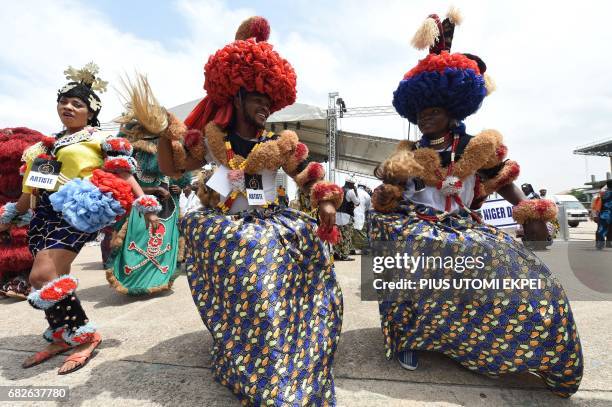
The Kalabari kingdom, one of the most prominent Ijaw-speaking polities in the Niger Delta, developed a sophisticated socio-political structure shaped by centuries of commerce, migration, and cultural evolution. Central to this system is the Amanyanabo, literally translated as the “owner of the land” or “king.” The Amanyanabo stands not only as the political head of the Kalabari people but also as a custodian of tradition, a mediator in disputes, and a symbolic embodiment of Kalabari identity. This article examines the historical development, authority, and influence of the Amanyanabo institution, highlighting its central role in governance, commerce, diplomacy, and cultural preservation.
The written record

Photo credit; TVC news.
Historical context
Historical Origins of the Amanyanabo Institution
The origins of the Kalabari monarchy can be traced to early Ijaw migrations and the emergence of coastal settlements that evolved into powerful trading city-states. According to Kalabari oral traditions, the earliest rulers were spiritual leaders who guided dispersed clans dwelling along the coastal creeks. Over time, the rise of Elem Kalabari as a commercial hub during the Atlantic trade era demanded a more structured leadership system.
The title “Amanyanabo” was institutionalized during the height of Kalabari political consolidation, when the kingdom interacted actively with European traders and neighboring Ijaw and Igbo communities. The monarch became both a diplomatic representative and central authority capable of coordinating the activities of powerful houses, especially as the War Canoe House system expanded.
The Structure of Kalabari Governance
Kalabari governance traditionally blends monarchy and republicanism. Although Amanyanabo is the highest authority, he does not rule alone. Governance is shared with the Council of Owuogbo, composed of chiefs who represent their various War Canoe Houses (wari). These chiefs exercise administrative and judicial powers within their houses, while the king provides overarching leadership.
This balance of power ensures that authority is decentralized, reflecting Kalabari society’s house-based organization. The Amanyanabo therefore functions as first among equals, symbolizing unity rather than absolute rule.
War Canoe Houses and Their Influence
Each War Canoe House controlled trade, maintained military strength, and governed its members. Amanyanabo’s influence was strengthened by his relationship with these houses, which provided manpower, wealth, and political backing. Thus, the king’s authority often depended on maintaining strong alliances and demonstrating wisdom in conflict resolution.
Political and Judicial Powers of the Amanyanabo
The Amanyanabo holds significant political authority, serving as the apex of the Kalabari administrative hierarchy. His political functions include:
1. Arbitration and Conflict Resolution
The king acts as the final court of appeal in disputes arising from families, houses, or communities. His judgments carry strong moral and cultural legitimacy, symbolizing fairness and ancestral wisdom.
2. Legislative Oversight
While laws and regulations often originate from chiefs or elders, the Amanyanabo provides approval and ensures alignment with Kalabari tradition (“owu-ari”). His endorsement legitimizes decisions affecting trade, land use, and community relations.
3. Safeguarding Land and Territory
As the “owner of the land,” the king oversees territorial issues, including settlement rights and inter-community negotiations. Historically, he represented the Kalabari in diplomatic engagements with rival Delta states such as Bonny and Okrika.
Commercial Influence and Economic Leadership
The Amanyanabo played a central role in shaping Kalabari commerce, especially during the era of the Atlantic trade when Elem Kalabari became a major trading state. His economic influence can be examined in several ways:
1. Regulation of Trade
The king oversaw trade agreements with European merchants and ensured that Kalabari traders operated within established guidelines. His authority helped to protect local economic interests and mediate disputes arising from trade.
2. Coordination of Canoe-House Merchants
War Canoe Houses, which operated like maritime corporations, relied on the king to:
Approve trade missions,
Sanction foreign alliances,
Uphold safety and stability within trading zones. This made Amanyanabo a key figure in the economic prosperity of the kingdom.
3. Protecting Commercial Routes
Through diplomatic and military efforts, the king ensured safe waterways for Kalabari traders. His leadership helped the kingdom maintain dominance over parts of the Niger Delta trade routes.
Spiritual and Cultural Significance of the Amanyanabo
Beyond governance and commerce, the king embodies the spiritual heart of the Kalabari people. His cultural roles include:
1. Custodian of Tradition
The Amanyanabo ensures the preservation of Kalabari customs, festivals, and sacred rituals, including ancestral worship and spirit-medium ceremonies. His palace often serves as a repository of historical objects, oral traditions, and sacred symbols.
2. Ritual Leadership
Major cultural events such as coronations, masquerade festivals, and land purification rites, require the king’s presence and blessing. These rituals affirm communal unity and continuity.
3. Symbol of Identity
In periods of migration, conflict, and colonial intervention, the Amanyanabo served as a symbolic anchor, representing the resilience and continuity of the Kalabari people.
The Amanyanabo in the Colonial and Post-Colonial Periods
Colonialism reshaped Niger Delta politics, and the Kalabari monarchy was no exception. While British administrators attempted to limit traditional rulers’ autonomy through indirect rule, the Amanyanabo retained cultural authority and acted as a mediator between colonial officers and local chiefs.
In modern Nigeria, the role of the Amanyanabo has evolved but remains influential. Contemporary Amanyanabo rulers continue to:
Advocate for resource control and environmental justice,
Mediate inter-communal disputes,
Represent Kalabari interests in state and national politics,
Promote cultural revival and heritage protection.
Today, Amanyanabo stands as both a traditional monarch and a modern cultural diplomat.
The Amanyanabo of Kalabari occupies a central and enduring place in Niger Delta history. As political leader, economic coordinator, spiritual custodian, and cultural symbol, the king embodies the strength and identity of the Kalabari people. The institution has survived centuries of change from pre-colonial commerce to colonial disruption and contemporary political realities, continuing to provide leadership, stability, and cultural continuity. Understanding the Amanyanabo is essential for appreciating not only Kalabari history but also the broader heritage of the Niger Delta.
Sources and references
- Alagoa, E. J. (2005). A history of the Niger Delta: An historical interpretation of Ijo oral tradition. Port Harcourt: Onyoma Research Publications.
- Dike, K. O. (1956). Trade and politics in the Niger Delta 1830–1885. Oxford University Press.
- Horton, R. (1969). “From fishing village to city-state: A social history of Nembe.” Journal of the Historical Society of Nigeria, 5(4), 515–541.
- Jones, G. I. (1963). The trading states of the Oil Rivers. Oxford University Press.
- Nabo Graha m-Douglas, A. (1994). The Ijo of the Niger Delta. Port Harcourt: Riverside Communications.
Cite this article
Discussion
Sign in to join the discussion
Comments are checked by an editor before they appear. Leave a source or a correction and it is read first.
Continue reading
Related histories
 Anthropology and EthnographyThe Demography of Biafran Slave Exports (1650–1850)Read history →
 Anthropology and EthnographyMasquerade Traditions from Igboland to the Caribbean (Jonkonnu, Mocko Jumbie)Read history →
 Anthropology and EthnographyMapping Igbo Destinations in the Americas: A Comparative AnalysisRead history →
No comments yet
Nothing has been approved on this record yet. Comments are checked by an editor before they appear, so one written now shows on this page after that check.