 Ozikoro
 Anthropology and Ethnography · Published history
The Middleman Advantage: How the Efik Controlled the Cross River Estuary and Dominated Trade with European Vessels
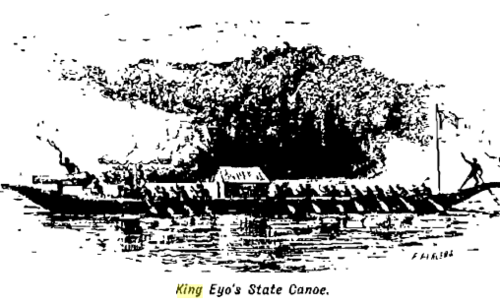
The Efik people of southeastern Nigeria developed a remarkable position of economic power and influence by controlling access to the Cross River estuary and managing trade between inland producers and European vessels anchored offshore. From the seventeenth through the nineteenth centuries, Efik traders established Old Calabar as one of the most important ports in the Bight of Biafra, acting as indispensable middlemen in the Atlantic economy. Their geographical advantage, political organization, and negotiating skills enabled them to shape the course of regional commerce and derive significant wealth and authority from European contact.
The written record
Historical context
Strategic Location and the Emergence of Efik Maritime Power
The Efik migrated to the lower reaches of the Cross River and established settlements such as Creek Town and Duke Town, which would become key centers of trade with European ships. Their settlements were strategically situated along the estuary, providing access to both inland rivers and the Atlantic Ocean. Because European vessels often anchored offshore due to shallow coastal waters, they relied on Efik canoes and brokers to transport goods and passengers between ship and shore. This natural advantage positioned the Efik as intermediaries in every major commercial transaction between Europeans and interior trading networks. Efik territories on the Calabar River became known to Europeans as “Old Calabar,” a designation that reflected their role as primary trading partners.
Efik Middlemen in the Slave Trade
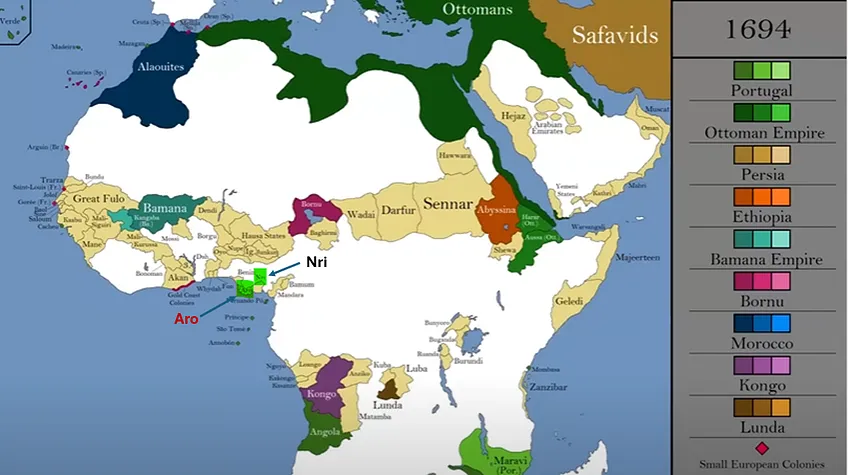
In the late seventeenth and eighteenth centuries, the Atlantic slave trade generated intense demand for captives from the interior of West Africa. The Efik were uniquely placed to act as brokers in this trade, procuring captives from inland suppliers, including Aro middlemen and Ibibio and Igbo networks, and presenting them to European traders at Old Calabar. European ships relied on Efik merchants to navigate local kinship obligations and enforcement systems, as direct penetration inland was hindered by disease and logistical barriers. As a result, Efik merchant houses quickly established a monopolistic role in the trade, negotiating prices, imposing port duties known as comey, and regulating the flow of captives and goods. By the eighteenth century, Efik traders had consolidated this role, controlling trade networks that extended deep into the hinterlands and effectively mediating between European demand and local supply.
Efik merchant houses exercised considerable authority in setting terms of exchange, often using credit and barter systems in place of direct cash payment. They also exacted duties from European vessels for the privilege of trading in Calabar waters, reinforcing Efik sovereignty over the estuary and access to maritime commerce. These duties provided the Efik with significant revenue and affirmed their role as gatekeepers of trade.
Transition to Legitimate Commerce
After Britain abolished the trans-Atlantic slave trade in 1807, the dynamics of coastal commerce shifted. The Efik adapted by pivoting toward “legitimate” exports such as palm oil, palm kernels, ivory, rubber, and dyewood. These commodities became essential to the Industrial Revolution in Europe, where they were used for lubricants, soap, and manufacturing. The Efik’s established position as maritime intermediaries allowed them to maintain commercial preeminence. Their merchant houses continued to dominate trade because European vessels remained dependent on Efik networks to transport goods and negotiate inland supply lines. The merchant houses also absorbed and extended European credit, enabling them to sustain trade relationships even as economic patterns shifted.
Organizational Strength: Merchant Houses and Middleman Networks
Efik trade was organized through lineage-based merchant houses, which functioned as commercial corporations and social institutions. These houses, often named after prominent trading families, controlled access to European goods and maintained relationships with suppliers inland. Merchant houses coordinated canoe fleets that carried goods and captives up and down the Cross River and negotiated trade terms with European captains. Their control over transport, credit, and local alliances made them powerful intermediaries in both the Atlantic and interior economies.
This organizational system also enabled the Efik to enforce trade standards and protect resident interests. Through secret societies such as the Ekpe, which combined social, judicial, and political authority, Efik elites regulated trade conduct, administered sanctions, and ensured compliance with agreed terms. The combination of merchant house networks and Ekpe governance created a stable environment that facilitated long-distance commerce and provided predictability to European partners.
Cultural and Linguistic Advantages
Continuous contact with Europeans allowed Efik traders and their families to learn European languages, business customs, and negotiation techniques. Many Efik were among the first West Africans to acquire literacy in English and engage with Christian missionaries, further enhancing their ability to communicate and conduct business with Europeans. This linguistic and cultural fluency improved trust and made them preferred partners in trade negotiations. Efik became a lingua franca throughout the Cross River basin, extending their influence even further into inland trading networks.
The Middleman Advantage in Regional Politics
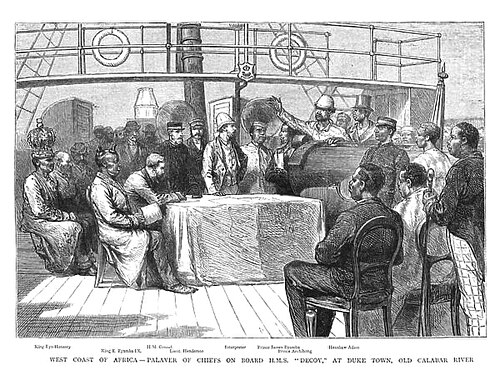
Efik dominance over trade also translated into political power. Merchant success enabled Efik chiefs to assert authority over neighboring groups, setting tributary arrangements and controlling exchange routes. Their wealth and connections also made them indispensable interlocutors for European colonial officials as British influence increased in the late nineteenth century. Efik leaders negotiated treaties with British authorities that formalized protection and trade privileges, securing territorial and economic rights in the emerging colonial order. These diplomatic engagements, rooted in commercial cooperation, helped preserve some elements of local autonomy even as colonial annexation advanced.
Legacy of Efik Trade Middlemen
The Efik’s middleman role left lasting legacies in the Cross River region’s economic and social structures. Their networks integrated diverse interior communities into coastal trade routes and facilitated the spread of new commodities, ideas, and political alliances. Though colonial rule eventually imposed new economic hierarchies and infrastructure patterns, the historical prominence of Efik mercantile power shaped regional identities and established Calabar as a foundational node in Nigeria’s commercial history.
The Efik’s control of the Cross River estuary and their dominance in trade with European vessels were rooted in strategic location, commercial organization, and political ingenuity. Acting as indispensable middlemen, Efik traders mediated between inland producers and European demand, controlled riverine access, and defined terms of exchange that enriched their merchant houses and political elites. Their adaptability shifting from the Atlantic slave trade to “legitimate” commerce ensured their influence across centuries of economic transformation. The Efik middleman advantage not only built a powerful local polity but also shaped broader patterns of trade, diplomacy, and colonial engagement in West Africa.
Sources and references
- Efik people. (2025). In Britannica.
- Historical Nigeria. (2025). Old Calabar: Efik merchant houses, Ekpe authority, and the shift from slaves to palm oil.
- Cross River Heritage African Diaspora. (2018). Efik Traders and language networks.
Cite this article
Discussion
Sign in to join the discussion
Comments are checked by an editor before they appear. Leave a source or a correction and it is read first.
Continue reading
Related histories
 Anthropology and EthnographyThe Demography of Biafran Slave Exports (1650–1850)Read history →
 Anthropology and EthnographyMasquerade Traditions from Igboland to the Caribbean (Jonkonnu, Mocko Jumbie)Read history →
 Anthropology and EthnographyMapping Igbo Destinations in the Americas: A Comparative AnalysisRead history →
No comments yet
Nothing has been approved on this record yet. Comments are checked by an editor before they appear, so one written now shows on this page after that check.