 Ozikoro
 Anthropology and Ethnography · Published history
The Restoration of 1936: Ending the 88-Year Interregnum After the Death of Olu Akengbuwa
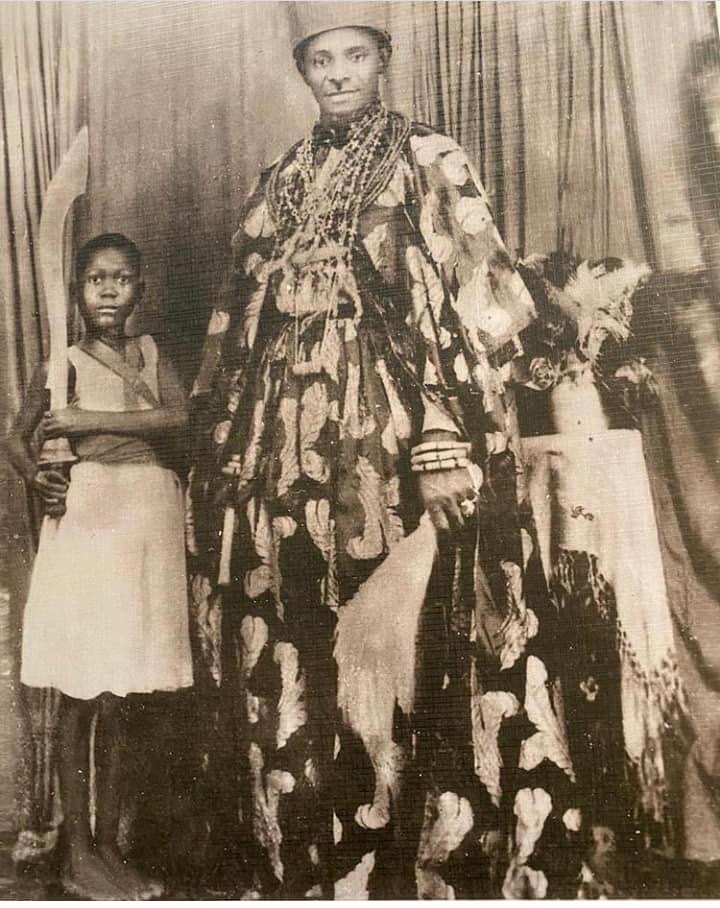
The history of the Warri (Iwere) Kingdom is marked by several key political transitions, but none is as significant as the 88-year interregnum that followed the death of Olu Akengbuwa in 1848. This period characterized by fragmentation, leadership uncertainty, and socio-political tension came to an end only in 1936 with the restoration of the monarchy under Olu Ginuwa II. The restoration was not simply a political event; it represented the reawakening of Itsekiri identity, a consolidation of traditional authority, and a strategic adaptation to colonial realities.
The written record
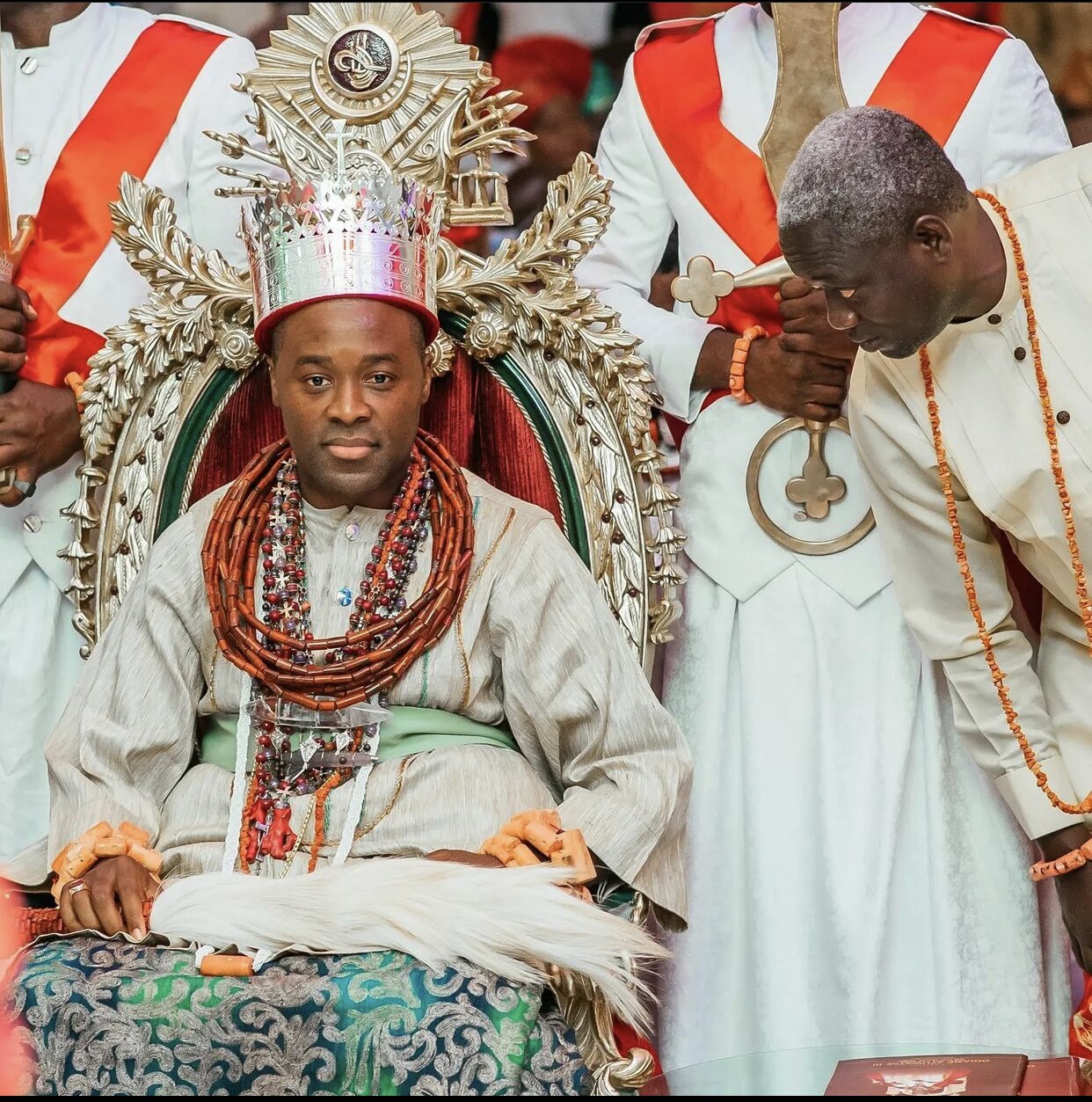
Photo credit; LordSnow242 via Wikimedia Commons
Historical context
Background to the Interregnum
- The Reign and Death of Olu Akengbuwa
Olu Akengbuwa, the 16th Olu of Warri, ruled during a period marked by intensifying European trade and internal political competition. According to Wikipedia (“Olu of Warri”), his reign lasted until 1848. His death created a power vacuum because several of his potential successors died shortly after him, producing uncertainty within the royal lineage. Without a clear heir, the kingdom faced succession disputes that contributed to the abandonment of the throne.
- Rise of Factional Influence
During the interregnum, noble families, merchant clans, and influential chiefs expanded their political and economic influence. Scholars such as Ogbobine note that the Ologbotsere institution became particularly powerful during this period, filling administrative gaps normally reserved for the Olu. The absence of a central monarch thus shifted authority toward decentralized elites, complicating the possibility of a swift enthronement.
- Colonial Pressure and Changing Political Structures
By the late 19th century, British colonial structures deeply influenced Niger Delta politics. The colonial administration adopted indirect rule in many regions, but the absence of an Olu in Warri hindered their preferred governance model. Ryder observes that British officials recognized the strategic value of reinstating a central authority to stabilize local administration and facilitate economic activities. This colonial interest would later play a major role in the push for restoration.
Conditions Leading Toward Restoration
- Itsekiri Elite Advocacy
Prominent Itsekiri families and chiefs increasingly viewed the absence of an Olu as detrimental to their cultural cohesion. The emergence of Western-educated Itsekiri elites in the early 20th century, many of whom were involved in trade and missionary activity advocated for restoring traditional leadership. They recognized that a monarchy could serve both political and cultural purposes, preserving traditions while negotiating modern realities.
- Missionary Influence and Social Change
Christian missionaries, especially the Roman Catholic and Anglican missions, contributed unintentionally to the debate by promoting literacy and community organization among the Itsekiri. As Nevadomsky notes, religious institutions often strengthened ethnic identity even when challenging traditional authority. By the 1930s, Itsekiri society had become more unified through education and trade networks, making the conditions favorable for a revived kingship.
- British Colonial Interest
The colonial government saw advantages to having an Olu who could serve as a recognized Native Authority. According to scholars (“Olu of Warri”), British officials believed that reinstating the monarchy would simplify governance and police matters in the Warri Division. This alignment of colonial and indigenous interests created the political environment necessary for restoration.
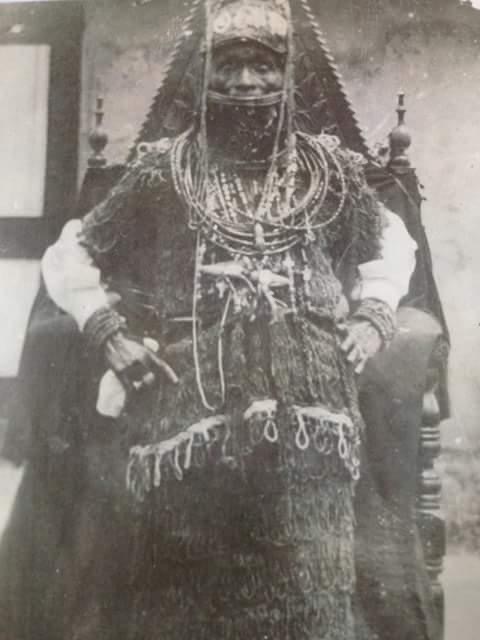
Photo credit; credit; LordSnow242 via Wikimedia Commons
The Restoration of 1936
- Selection of the Candidate
After extensive consultation among ruling houses, chiefs, and family elders, Prince Ginuwa (originally known as Ikenwoli Nanna) was chosen as the rightful heir. He was a descendant of Olu Akengbuwa, fulfilling the hereditary requirement. His selection also represented a compromise among competing families and affirmed the legitimacy of the traditional lineage.
- Installation as Olu Ginuwa II
In 1936, Prince Ginuwa was formally crowned as Olu Ginuwa II, bringing the interregnum to an end. His coronation revived ancient ceremonies, including those involving royal regalia, genealogical proclamations, and rites associated with the founding ancestors of the Iwere Kingdom. These ceremonies, as described by Egharevba, served not merely as cultural performances but as symbolic restorations of continuity and authority.
- Recognition by the Colonial Government
Immediately after enthronement, the British administration granted Ginuwa II formal recognition as the Native Authority for the Warri Division. This recognition enhanced his political legitimacy and integrated the monarchy into the colonial administrative framework. According to Alagoa, this marked a turning point because the Olu now functioned both as a cultural leader and as an intermediary between the Itsekiri people and the colonial state.
Impacts of the Restoration
- Cultural Revival and Unity
The restoration helped rebuild Itsekiri collective identity. Traditional ceremonies, titles, and court structures revived, reinforcing a sense of continuity after nearly nine decades. The monarchy became a unifying symbol, especially in a period of rapid cultural change influenced by colonialism and Christianity.
- Political Stabilization
Reinstitution of the monarchy helped reduce factional disputes within the kingdom. Chiefs and families who had previously competed for influence now operated under a recognized hierarchy. This political stabilization improved governance under the colonial indirect rule system.
- Economic Influence
With a central authority restored, trade relations particularly with British firms operating in Warri became more organized. The Olu’s role in mediating disputes, regulating community affairs, and overseeing land matters enhanced economic stability in the region.
- Legacy and Modern Relevance
The 1936 restoration laid the foundation for the modern Warri monarchy. Subsequent Olus, including the recently enthroned Ogiame Atuwatse III, trace their authority through the legitimacy restored in 1936. The institution continues to play major roles in cultural preservation, community leadership, and regional identity.
The restoration of the Warri monarchy in 1936 marked one of the most crucial events in Itsekiri history. Ending an 88-year interregnum, the enthronement of Olu Ginuwa II reconnected the kingdom with its ancestral past, strengthened political stability, and aligned traditional authority with colonial administrative structures. More than a historical turning point, the restoration represented the resilience of the Itsekiri people in sustaining their identity through changing political landscapes. Today, the legacy of that restoration continues to shape the cultural and political life of the Warri Kingdom.
Sources and references
- Alagoa, E. J. (1980). A history of the Niger Delta. Port Harcourt: Onyoma Research Publications.
- Egharevba, J. (1960). A short history of Benin. Ibadan University Press.
- Nevadomsky, J. (1993). Art, kingship, and cultural renewal in Nigeria. African Arts, 26(3), 44–55.
- Ogbobine, R. E. (1978). The Itsekiri and the Kingdom of Warri. Bendel Newspapers Corporati on.
- Ryder, A. F. C. (1969). Benin and the Europeans, 1485–1897. Longman.
Cite this article
Discussion
Sign in to join the discussion
Comments are checked by an editor before they appear. Leave a source or a correction and it is read first.
Continue reading
Related histories
 Anthropology and EthnographyThe Demography of Biafran Slave Exports (1650–1850)Read history →
 Anthropology and EthnographyMasquerade Traditions from Igboland to the Caribbean (Jonkonnu, Mocko Jumbie)Read history →
 Anthropology and EthnographyMapping Igbo Destinations in the Americas: A Comparative AnalysisRead history →
No comments yet
Nothing has been approved on this record yet. Comments are checked by an editor before they appear, so one written now shows on this page after that check.