 Ozikoro
Anthropology and Ethnography · Published history
The Rise of Elem Kalabari: From Fishing Village to Delta City-State
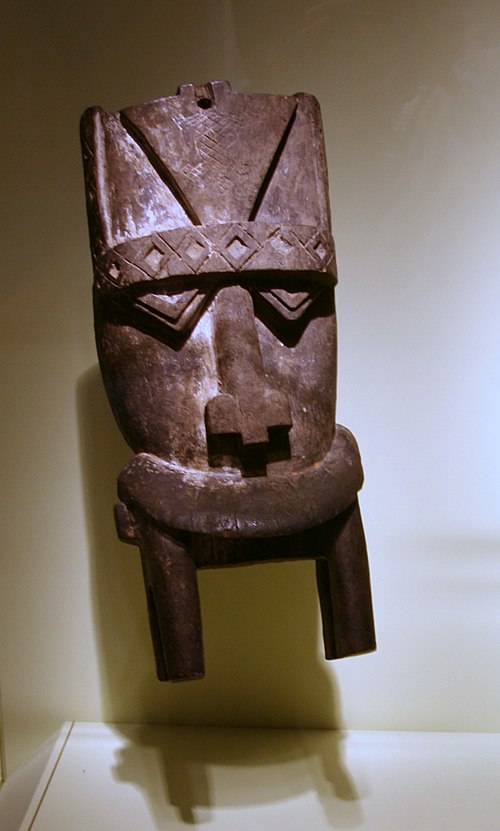
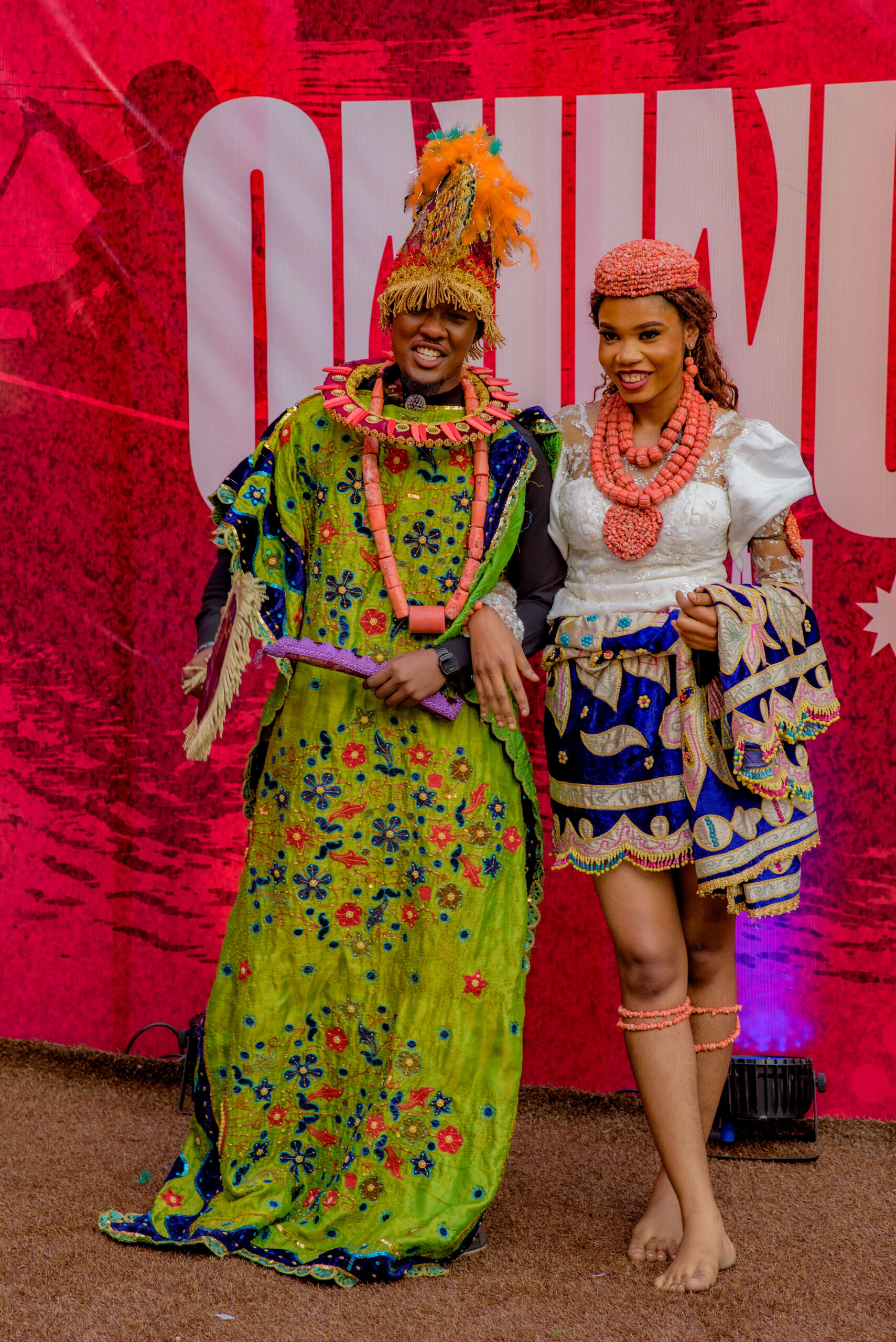
Elem Kalabari, often called the Kalabari Kingdom or New Shipping Port, is a traditional polity in the Niger Delta whose story is one of transformation: from humble fishing roots to a powerful delta city-state. Situated on islands, creeks, and mangroves in modern Rivers State, the Kalabari people have long leveraged their riverine environment, trade networks, and political institutions to become a distinctive and resilient community.
The written record
Historical context
Origins and Early Settlement
Kalabari (IJaw-speaking) people occupy a series of mangrove islands in the Niger Delta. The kingdom’s traditional name, Elem Kalabari, means “New Shipping Port,” underscoring the centrality of waterways to its identity.
Historical and oral traditions suggest that the Kalabari originally formed as a small fishing village among the creeks. Over time, several clans settled there, notably the Endeme, Korome, Akialame, and other groups.
Their early economy was deeply tied to the river: fishing, canoeing, trading forest and marine products, and traversing river channels to trade with inland peoples. As the delta’s waterways became avenues for commerce, Kalabari settlers began trading with neighboring peoples and later with European merchants.
Emergence as a City-State
Over centuries, the Kalabari people evolved from a fishing community into a city-state, a polity with organized governance, trade, and regional influence. Scholars note that they developed canoe-based “houses” (large kinship-based corporations) that not only fished but also traded, conducted diplomacy, and fought wars.
Their strategic location along key river routes enabled them to become adept middlemen. They exchanged forest products, marine goods, and ivory inland, while trading European commodities like textiles, metal wares, and firearms. The maritime economy was central to their rise.
King Amachree I is often credited with founding the ruling dynasty of Kalabari. Under his leadership and those of his successors, the Kalabari expanded their political reach and consolidated their power through trade, diplomacy, and a system of traditional governance.
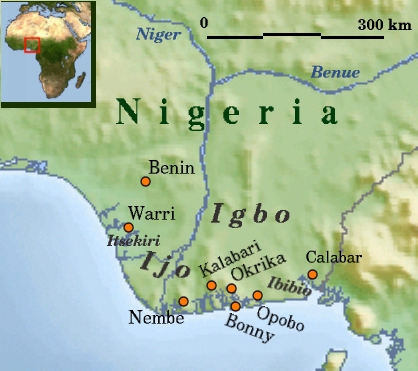
Photo credit; Wikipedia
Political Structure and Traditional Authority
Elem Kalabari developed a well-organized monarchy with a Council of Chiefs (houses) and a royal lineage. The king (Amanyanabo) heads the polity, supported by powerful “houses” which represent extended kin groups.
These houses played multiple roles: economic (trading), social (governing family matters), and political (wielding influence in leadership). The Oruwari-Briggs House, for example, has been especially significant in modern Kalabari history.
The houses also managed canoe fleets, water-based trade, and even defense through watercraft highlighting the deeply maritime nature of their political organization.
Trade defined Kalabari’s power. Their riverine geography, darkness of the mangrove creeks, and canoe mobility made them natural intermediaries between European traders on the coast and hinterland communities.
Key elements of their economy included:
1. Palm oil exports — a major commodity during the 19th century.
2. Ivory and forest products — exchanged upstream for goods like cloth and firearms.
3. Slave trade — in earlier centuries, with Kalabari participating in trans-Atlantic networks.
4. Maritime trade infrastructure — canoe fleets allowed them to control commerce along rivers, negotiate treaties, and mediate between foreign traders and local communities.
Through trade, Kalabari grew in influence and became a regional rival to other delta states such as Nembe, Bonny, and Okrika.
Culture, Religion, and Festivals
Kalabari cultural life is rich and spiritual. One key tradition is their New Year Festival, celebrated on November 16, which marks spiritual renewal. This festival is not just social; it is believed to purge pollution from their waters, symbolizing both ecological and spiritual cleanse.
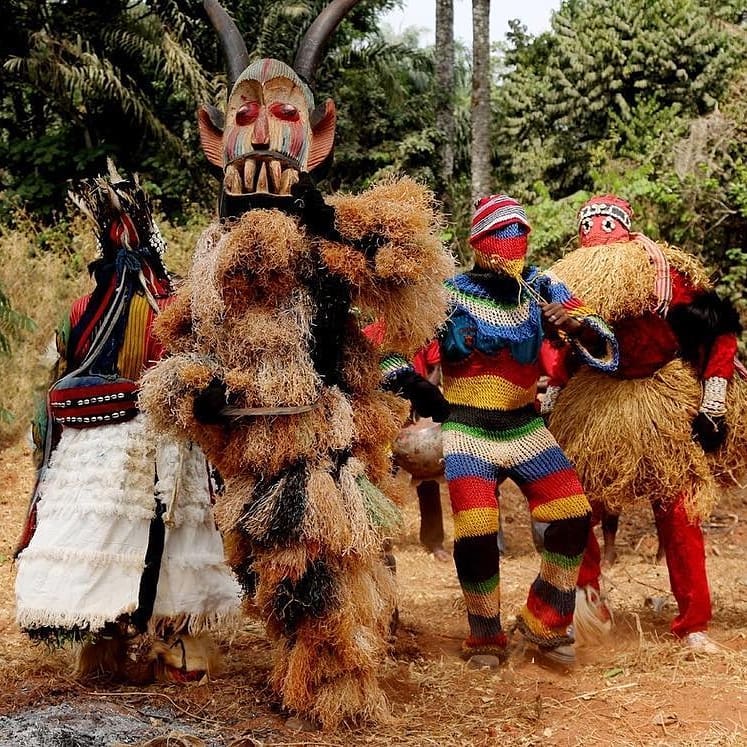
Their religious tradition includes belief in water spirits and ancestral masquerades. The Owu-Aru-Sun Festival is among the most celebrated where masquerades perform, chiefs make sacrifices, and spiritual power is publicly expressed.
Cosmology and ritual are deeply interconnected with their riverine environment: water, spirits, trade, and ancestry all tie into Kalabari identity.
Decline, Fragmentation, and Colonial Impact
By the late 19th century, Kalabari faced internal and external pressures. Rivalries grew with neighboring states (such as Bonny, Nembe, and Okrika) over trade and access to European goods.
Colonial intervention further reshaped their political structure. Treaties with the British, as well as disputes mediated by colonial agents, fragmented the traditional polity. Some key centers like Abonnema (founded 1882) and Buguma emerged as new seats of power under colonial disruption.
Part of Elem Kalabari was abandoned in the late 19th century. Historical records show that by 1885, this ancestral seat had been largely vacated.
Revival and Rebirth: The Return to Elem Kalabari
In a historic turn, Alhaji Mujahid Asari Dokubo, a notable Niger-Delta figure, was installed as Amanyanabo (king) of Elem Kalabari in December 2024. This marked a symbolic return to their ancestral seat after 140 years of abandonment.
Since his installation, Dokubo has led reconstruction efforts in Elem Kalabari, calling for cultural revival, infrastructural development, and economic investments. Leaders describe the revival as a deeply spiritual and communal mission: “we are bringing back the kingdom to the global map.”
This return is interwoven with the revival of cultural celebrations such as the unified New Year Festival, signaling a renewed hope for social cohesion and economic growth.
The story of Elem Kalabari underscores several important themes in African history:
Maritime adaptation: The Kalabari converted their watery environment into a powerful economic base.
City-state evolution: From fishing village to trading kingdom, their trajectory shows how riverine societies could become economically and politically significant.
Traditional resilience: Despite colonial disruption and decline, the cultural structures (houses, monarchy, festival) endured.
Cultural revival: The return to Elem Kalabari under Dokubo is more than symbolic. It represents reclamation of history, identity, and tradition.
Elem Kalabari’s journey from a humble fishing settlement to a recognized delta city-state and its recent renaissance is a powerful story of adaptation, trade, and cultural resilience. The water-born Kalabari leveraged their environment, house system, and trade networks to build a distinct kingdom that influenced the Niger Delta for centuries. Today, with the symbolic return to their ancestral home, they are not just reviving a place, but reasserting a legacy. One of maritime strength, spiritual richness, and enduring community.
Sources and references
- Asuk, O. C. (2020). Oruwari-Briggs house and the evolution of contemporary Kalabari society. International Journal of Humanities and Innovation, 3(1), 22–28.
- National Express Nigeria Newspaper. (2013, April 4). Kalabari Kingdom-Celebrating a unique culture.
- Oyebode, A. (2025, October 7). Coasts of Exchange: The Kalabari Kingdom and Its Trade Heritage. Historical Nigeria.
- Vanguard. (2024, December 31). Dokubo-Asari receives staff of office as Amanyanabo of Elem Kalabari.
- Godwin, A. (2025, June 3). After 140 years, the deserted Rivers community comes alive. The Guardian.
- Ibunge, B. (2025, November 22). Kalabari New Year Festival: Where Culture, Spirit and Nature Converge.
Cite this article
Discussion
Sign in to join the discussion
Comments are checked by an editor before they appear. Leave a source or a correction and it is read first.
Continue reading
Related histories
 Anthropology and EthnographyThe Demography of Biafran Slave Exports (1650–1850)Read history →
 Anthropology and EthnographyMasquerade Traditions from Igboland to the Caribbean (Jonkonnu, Mocko Jumbie)Read history →
 Anthropology and EthnographyMapping Igbo Destinations in the Americas: A Comparative AnalysisRead history →
No comments yet
Nothing has been approved on this record yet. Comments are checked by an editor before they appear, so one written now shows on this page after that check.