 Ozikoro
 Anthropology and Ethnography · Published history
The role of age-grades (Ọgbo) in Igbo social organization
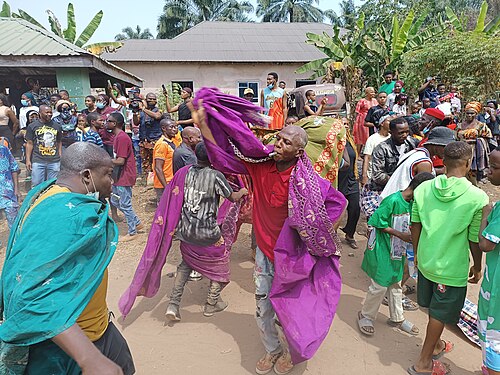
The traditional socio-political structure of the Igbo people is famously decentralized, often described by anthropologists as an “acephalous” or “segmentary” society. In the absence of a singular, centralized monarchical authority across the entire ethnic group, the Igbo developed a highly sophisticated system of “horizontal governance.” Central to this democratic and republican ethos is the Ọgbo, or Age-Grade system. An age-grade consists of a cohort of individuals, usually men but often including parallel women’s groups, born within a specific three-to-five-year window in the same community. Far from being a mere social club, the age-grade is a “pillar of civil administration,” acting as the executive arm of village government, the primary vehicle for developmental projects, and a crucial agent of socialization. This article examines the structural formation, the multifaceted responsibilities, and the contemporary relevance of the age-grade in Igbo social organization.
The written record
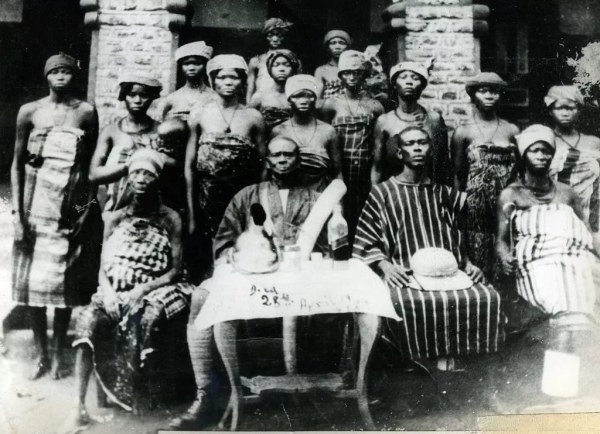
Photo Credit: National Archives of Nigeria / Thomas Northcote Collection.
Formation and Initiation: The Birth of a Peer Collective
The creation of an age-grade is a “formalized communal event” that transitions youth from the periphery of society to the core of its responsibilities;
- The Recognition Phase: Once a group of young people reaches a certain level of physical and social maturity (usually in their late teens or early twenties), they approach the elders of the community to be formally recognized as a distinct Ọgbo.
- Naming the Grade: The naming of an age-grade is a significant event. The name chosen usually reflects a “historical milestone,” a communal aspiration, or a specific characteristic of the era. For example, an age-grade born during a time of peace might be named Udoka (Peace is Greater), while one formed during a period of infrastructure expansion might be named Oganiru (Progress).
- The Rite of Passage: In many Igbo sub-groups, the formal inauguration of an age-grade involves “rites of passage” or public festivals. This initiation serves as a “social contract,” where the members swear to uphold the laws of the land (Ome n’ala) and protect the interests of their peers and the broader community.
The Executive Arm: Law Enforcement and Public Order
Historical context
In the traditional Igbo “republican” system, the elders (Ndi Ichie) or the village assembly (Oha na Eze) made the laws, but the age-grades were the ones who “enforced” them;
- Policing the Community: Middle-aged age-grades often functioned as the “village police.” They were responsible for apprehending thieves, enforcing “market taboos,” and ensuring that individuals performed their communal duties.
- The Power of Fines: Age-grades had the authority to impose and collect “fines” from members of the community who violated social norms. Because the age-grade was a peer group, their enforcement was often viewed as “impartial and transparent,” reducing the likelihood of tyranny.
- Environmental Stewardship: The maintenance of the “village commons” , the streams, the marketplace, and the sacred groves was assigned to specific younger age-grades. They organized regular “cleaning exercises” and ensured that the physical environment remained conducive to health and ritual purity.
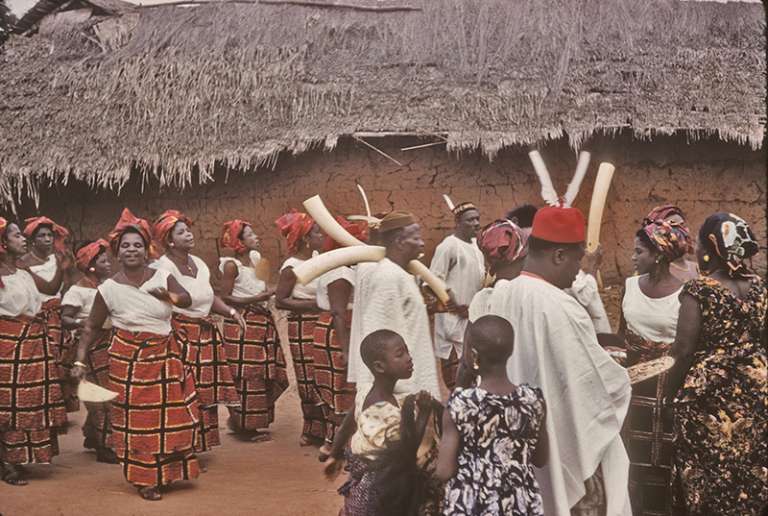
Photo Credit: G.I. Jones Archives / Museum of Archaeology and Anthropology, University of Cambridge.
Agents of Development: The “Competitive Philanthropy” Model
One of the most unique aspects of the Ọgbo system is its role in “rural development” through a culture of healthy competition;
- Communal Projects: Each age-grade is expected to leave a “visible legacy” in the community. This often takes the form of building “village squares, town halls, schools, or health centers.” As one age-grade completes a project, the succeeding one feels a social pressure to surpass it, leading to a “continuous cycle of development.”
- Resource Mobilization: The age-grade functions as a “micro-economy.” Members contribute dues and levies, which are then pooled to fund these large-scale projects. This internal “taxation” system ensures that the community does not rely solely on the government for basic infrastructure.
- Mutual Aid and Insurance: Beyond public works, the age-grade acts as a “social safety net” for its members. If a member falls ill, suffers a business loss, or faces a bereavement, the Ọgbo provides financial and emotional support. This “fraternal insurance” is a cornerstone of Igbo resilience.
Judicial and Advisory Roles: The Wisdom of the Seniors
As an age-grade matures and its members become “elders,” their role shifts from physical labor and enforcement to “mediation and consultancy”;
- Conflict Resolution: Senior age-grades are often called upon to mediate “intra-family disputes” or land quarrels. Their long history of shared experience gives them the moral authority to provide balanced judgments.
- Custodians of Tradition: The senior Ọgbos are the “living archives” of the community. They are consulted on matters of “genealogy, traditional boundaries, and the interpretation of ancient taboos.”
- Checks and Balances: The age-grade system provides a natural system of “checks and balances.” No single age group can monopolize power, as each grade has a specific jurisdiction and the senior grades act as a “moral compass” for the younger, more executive grades.
Socialization and the “Character-Building” Function
The age-grade is perhaps the most important “educational institution” in traditional Igboland, molding individuals into “responsible citizens”;
- Peer Mentorship: Within the Ọgbo, members are encouraged to “police each other’s character.” If a member behaves in a way that brings shame to the group (such as through crime or cowardice), the age-grade may “discipline or ostracize” them. This peer pressure is a powerful deterrent against anti-social behavior.
- Identity and Belonging: For an Igbo man or woman, their age-grade is a primary source of “identity.” It provides a sense of “belonging” that transcends the immediate family unit, linking the individual to the wider village history.
- Democratic Training: The internal administration of an age-grade with its own “Chairman, Secretary, and Treasurer” serves as a “training ground for leadership.” Many prominent Igbo politicians and business leaders began their “leadership journeys” as officers within their respective age-grades.
Contemporary Relevance and the Impact of Modernity
While the “urbanization of Nigeria” has challenged many traditional institutions, the age-grade system has shown remarkable “adaptability”;
- The Diaspora Connection: Igbo “Town Unions” in cities like London, New York, or Lagos often organize themselves into age-grades. These diaspora branches continue to send “remittances and funds” back to their ancestral villages to complete development projects initiated by their local counterparts.
- Integration with Modern Governance: In many parts of Southeastern Nigeria, the state government recognizes the age-grade as a “legitimate partner in rural development.” Local governments often coordinate with age-grades for “vaccination drives, census activities, and security initiatives.”
- The Challenge of Modernity: The rise of “individualism” and the decay of rural communities have threatened the Ọgbo system. However, the system’s “intrinsic benefits” social security and developmental efficiency ensure that it remains a vital part of the “Igbo socio-political DNA.”
The role of age-grades (Ọgbo) in Igbo social organization is a testament to the “indigenous genius” of a people who prioritized collective responsibility over autocratic rule. By dividing the community into “functional cohorts,” the Igbo ensured that every stage of human life from the strength of youth to the wisdom of old age was harnessed for the “common good.” The age-grade is the “engine of the village,” driving development, maintaining order, and preserving the moral fabric of the society. In a modern era characterized by “state failure” in many parts of the developing world, the Ọgbo system remains a shining example of “bottom-up governance” and “communal self-reliance.” As long as the Igbo value their heritage of “competitive progress and mutual respect,” the rhythmic heart of the age-grade will continue to beat in every village square and town hall.
Sources and references
- Achebe, C. (1958). Things Fall Apart. London: Heinemann. (Providing literary evidence of age-grade roles in traditional justice).
- Aniakor, C. C. (1984). Igbo Arts: Community and Cosmos. Los Angeles: Museum of Cultural History, University of California.
- Henderson, R. N. (1972). The King in Every Man: Evolutionary Trends in Onitsha Ibo Society and Culture. Yale University Press.
- Isichei, E. (1976). A History of the Igbo People. London: Macmillan.
- Nzimiro, I. (1972). Studies in Ibo Political Systems: Chieftaincy and Politics in Four Niger States. University of California Press.
- Ottenberg, S. (1971). Leadership and Authority in an African Society: The Afikpo Village-Group. University of Washington Press.
- Uchendu, V. C. (1965). The Igbo of Southeast Nigeria. Holt, Rinehart and Winston.
Cite this article
Continue reading
Related histories
 Anthropology and EthnographyThe Demography of Biafran Slave Exports (1650–1850)Read history →
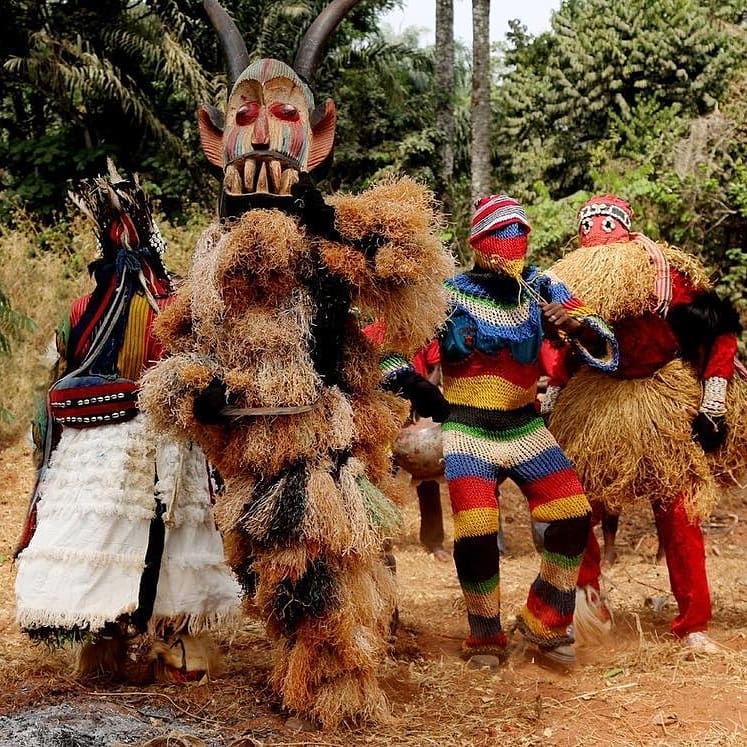 Anthropology and EthnographyMasquerade Traditions from Igboland to the Caribbean (Jonkonnu, Mocko Jumbie)Read history →
 Anthropology and EthnographyMapping Igbo Destinations in the Americas: A Comparative AnalysisRead history →
No comments yet
Nothing has been approved on this record yet. Comments are checked by an editor before they appear, so one written now shows on this page after that check.