 Ozikoro
 Anthropology and Ethnography · Published history
The Royal Bronze Casters of the Benin Kingdom
The written record
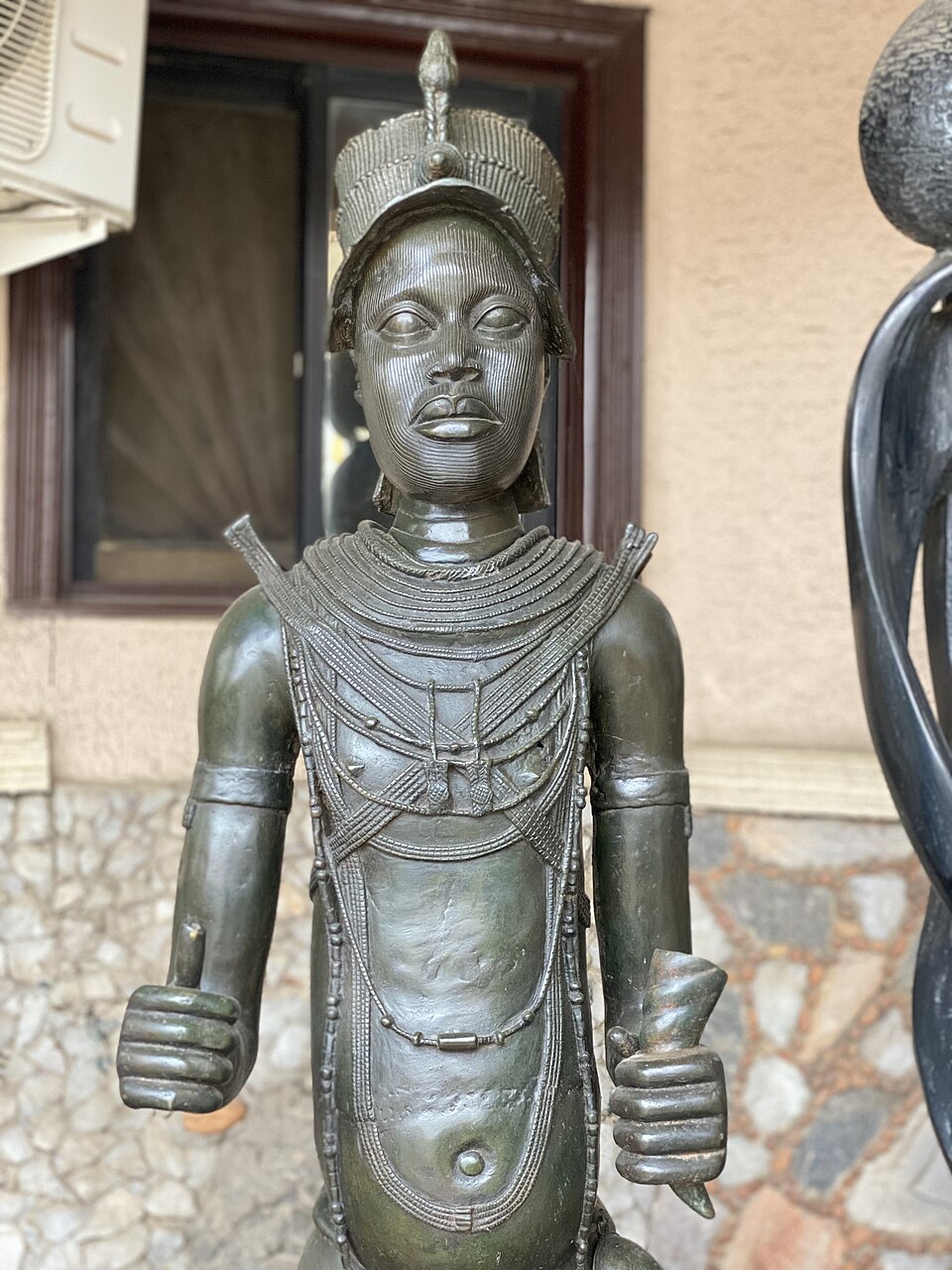
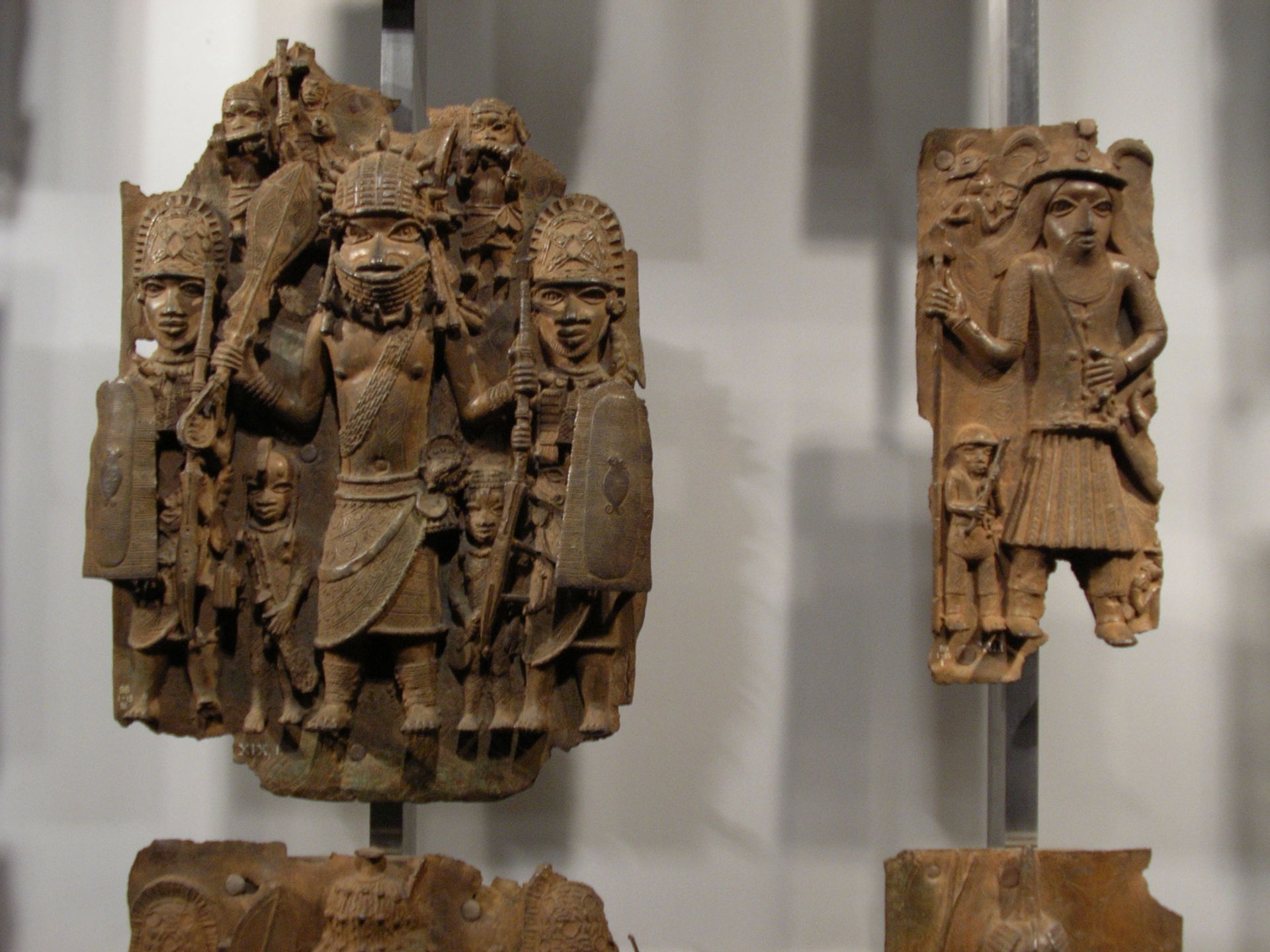
The royal bronze casters of the Benin Kingdom constitute one of Africa’s most renowned artistic guilds, whose works commonly called the “Benin Bronzes” stand among the finest examples of precolonial craftsmanship in the world. For centuries, the casters produced brass and bronze plaques, commemorative heads, royal regalia, and ritual objects that documented the political history, cosmology, and cultural practices of the Edo people. Their craft was organized within a hereditary guild known as the Igun Eronmwon, operating exclusively under the authority of the Oba of Benin.
Historical context
Origins of Bronze Casting in Benin
- Historical Development
Bronze casting in Benin dates back to at least the 13th century, although some scholars argue for even earlier origins. According to the “Benin Bronzes,” the craft reached its artistic height between the 15th and 17th centuries during the reigns of powerful Obas such as Ewuare, Esigie, and Ehengbuda. Oral traditions attribute the introduction of brass casting to craftsmen from Ife, a major Yoruba cultural center known for its sophisticated lost-wax metalwork. Other accounts describe independent Edo innovation encouraged by royal patronage.
- Establishment of the Igun Eronmwon Guild
The royal bronze casters were organized into a guild called “Igun Eronmwon,” meaning “bronze-casting guild” in Edo language. The guild was hereditary, with membership restricted to families designated centuries earlier by royal decree. Bradbury notes that guilds formed an integral part of Benin’s administrative and ceremonial life, with each guild responsible for producing items essential to ritual, warfare, governance, and palace culture. The Igun Eronmwon’s exclusive right to cast brass for the Oba reinforced their elite status.
Organizational Structure of the Guild
- Hierarchy and Leadership
The Igun guild was led by the “Ineh n’Igun,” the chief of bronze casters, who served as both administrator and ritual intermediary to the Oba. Beneath him were masters, apprentices, and laborers who specialized in wax modeling, metal preparation, furnace operation, and finishing.
- Apprenticeship System
Skill transmission followed a strict apprenticeship model. Young boys from caster families were trained for years, learning not only technical processes but also the rituals, taboos, and ethical obligations associated with the craft. McCall emphasizes that bronze casting was regarded as sacred work requiring spiritual discipline.
- Oba’s Patronage and Royal Monopoly
All bronze casting for political or ceremonial use was carried out solely for the Oba. The casters lived and worked near the royal palace on Igun Street, a neighborhood still occupied by their descendants today. This monopoly reinforced the kingdom’s centralized power and ensured that artistic production reflected royal ideology.
Techniques of Bronze Casting
- The Lost-Wax Process (Cire Perdue)
Benin bronze casters employed the ancient “lost-wax” method, a complex technique involving creating a wax model, coating it with clay, heating it to melt the wax, and then pouring molten metal into the mold. This process allowed intricate detail and naturalistic representation, characteristic of Benin artworks.
- Metal Sources and Alloy Composition
Brass, not bronze, was the primary metal used historically. Much of it came from European trade, especially in the form of brass manillas currency bracelets exchanged for goods in the 16th–19th centuries.
- Furnaces and Technical Mastery
Archaeological and ethnographic studies show that bronze casters used well-designed furnaces, bellows, and crucibles to achieve high temperatures. Their technical mastery enabled them to create large plaques, hollow heads, and complex figurines with remarkable durability.
Symbolism and Function of Benin Bronze Works
- Commemorative and Dynastic Significance
Many bronze pieces served as commemorative heads placed on royal ancestral altars. These works symbolized continuity, lineage, and the spiritual authority of the Oba. Each head represented a deceased Oba or queen mother (“Iyoba”) and was shaped according to rank and ritual symbolism.
- Documentation of History and Court Life
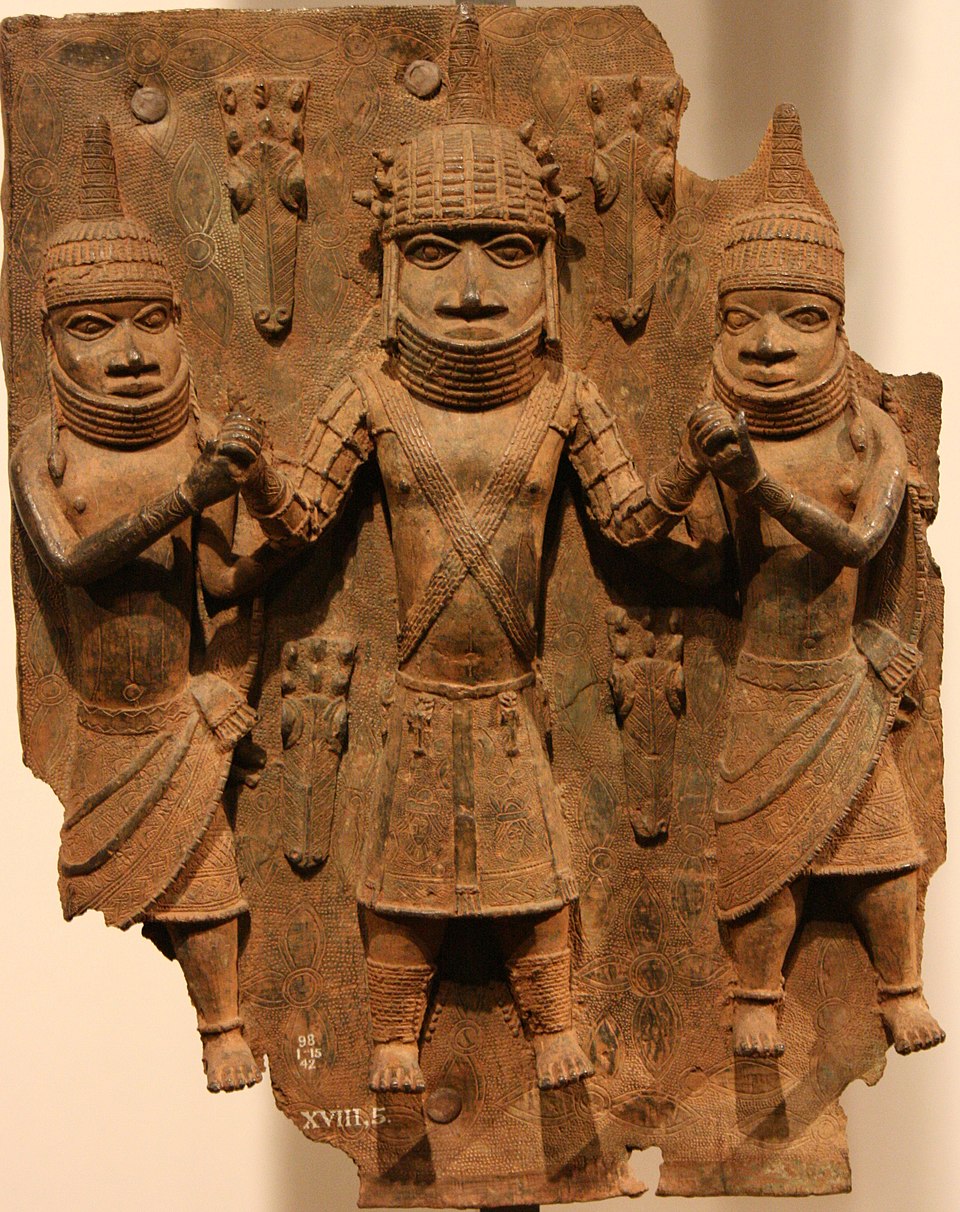
The famous Benin plaques, hundreds of which decorated the palace walls before 1897, recorded scenes of warfare, diplomacy, trade, and ritual. Scholars like Ben-Amos describe them as a visual archive, offering insight into precolonial Benin’s political structure, military organization, and interactions with the Portuguese.
- Ritual and Spiritual Dimensions
Bronze objects including bells, altarpieces, and ritual vessels played important roles in ancestral worship and court ceremony. The weight and durability of bronze symbolized permanence and the eternal nature of kingship.
The 1897 British Expedition and Its Impact
- The Looting of the Royal Palace
In 1897, the British launched a punitive expedition against Benin City, destroyed the palace, and looted thousands of bronze artworks. These pieces were later sold or taken into museums across Europe and America. “Benin Bronzes” entry lists major collections in the British Museum, the Ethnological Museum of Berlin, and others.
- Disruption and Survival of the Guild
The destruction of the palace disrupted the guild system, but the Igun Eronmwon survived. Casters continued working on a smaller scale and eventually adapted to new markets such as colonial administrators, tourists, and collectors. Today, Igun Street remains the artistic center of Benin City.
- Calls for Repatriation
The 21st century has seen renewed international efforts to repatriate looted Benin Bronzes. This movement underscores the cultural importance of the Igun guild and highlights global recognition of their artistic legacy.
Modern Continuity and Legacy
- Revival of Traditional Guild Practices
The current Oba of Benin continues to patronize the bronze casters, maintaining the sacred bond between kingship and craftsmanship. Guild rituals, titles, and taboos remain preserved among practicing families.
- Influence on Contemporary African Art
Benin bronze casting has influenced modern Nigerian sculptors and artists across the continent. Works inspired by Igun craftsmanship appear in museums, universities, and global exhibitions, testifying to the enduring impact of this heritage.
- Global Recognition
Today, Benin Bronzes are studied worldwide for their artistic excellence, symbolic depth, and historical significance. Their status as masterpieces of African art has made the Igun Eronmwon one of the most celebrated artistic guilds in world history.
The royal bronze casters of Benin represent a remarkable tradition of artistic excellence, technical expertise, and royal patronage. Organized within the Igun Eronmwon guild, they forged a visual and symbolic language that documented the political history, cosmology, and cultural identity of the Edo people. Despite colonial disruption, their legacy endures in modern Benin City and in museums worldwide. Their story illustrates how art, power, and memory intertwine in the making of African civilizations.
Sources and references
- Ben-Amos, P. (1995). The art of Benin. Smithsonian Institution Press.
- Bradbury, R. E. (1957). The Benin Kingdom and the Edo-speaking peoples of South-Western Nigeria. International African Institute.
- Dark, P. J. C. (1973). Benin Bronze Casting. OUP for University of Ife Press.
- McCall, J. C. (1991). Casting bronze, casting life: Representing history in the Benin Kingdom. African Arts, 24(2), 52–67.
- Tal bot, P. A. (1926). The peoples of Southern Nigeria (Vol. 2). Oxford University Press.
Cite this article
Discussion
Sign in to join the discussion
Comments are checked by an editor before they appear. Leave a source or a correction and it is read first.
Continue reading
Related histories
 Anthropology and EthnographyThe Demography of Biafran Slave Exports (1650–1850)Read history →
 Anthropology and EthnographyMasquerade Traditions from Igboland to the Caribbean (Jonkonnu, Mocko Jumbie)Read history →
 Anthropology and EthnographyMapping Igbo Destinations in the Americas: A Comparative AnalysisRead history →
No comments yet
Nothing has been approved on this record yet. Comments are checked by an editor before they appear, so one written now shows on this page after that check.