 Ozikoro
 Anthropology and Ethnography · Published history
The Use of Uli Body Art Among Igbo Women – Designs and Occasions
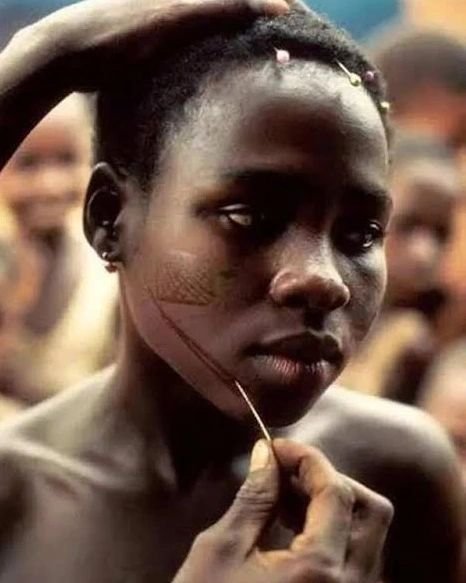
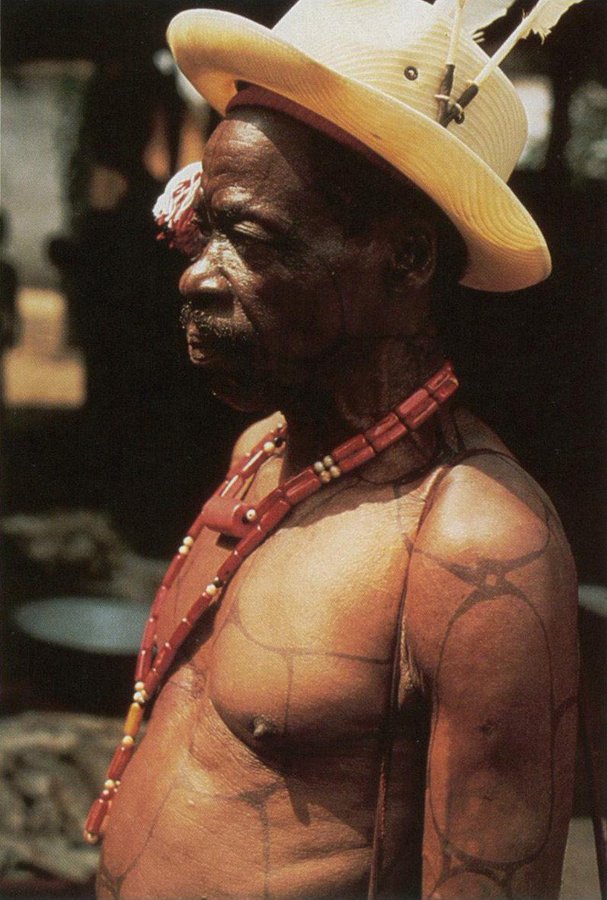
In the traditional aesthetic landscape of the Igbo people of Southeastern Nigeria, the human body served as a primary canvas for the expression of identity, status, and beauty. Central to this visual culture was Uli, a sophisticated form of body and wall art practiced predominantly by women. Uli is not merely a decorative technique; it is a “linear, abstract language” that distills the complexities of the Igbo cosmos into elegant, minimalist strokes. Unlike the permanent tattoos found in other cultures, Uli is an ephemeral art form, lasting only about a week on the skin. This temporality mirrors the Igbo philosophy of “constant change and renewal.” From the intricate patterns applied to a young maiden’s skin to the bold symbols on the walls of a sacred shrine, Uli remains one of the most significant artistic legacies of West Africa. This article explores the organic origins of Uli, the symbolic weight of its designs, and the specific communal occasions that demanded its application.
The written record
Historical context
The Botanical Alchemy: Sourcing and Preparing Uli
The creation of Uli is an intimate “dialogue with nature,” requiring a deep knowledge of local flora and chemical reactions;
The Uli Liquid: The dye is extracted from several species of plants, most notably Rothmannia whitfieldii, Rothmannia hispida, and Cremaspora triflora. The seeds or pods of these plants are crushed, and the juice is extracted.
The Chemical Reaction: When first applied to the skin with a small wooden or metal spatula (mmanwa), the liquid is clear or yellowish. However, upon exposure to air, it undergoes an “oxidization process,” turning into a deep, indelible black or dark indigo hue that contrasts sharply against the skin.
Application Tools: The tools used are as delicate as the art itself. Artists use thin slivers of wood, iron needles, or even the mid-rib of a palm leaf to achieve the “razor-thin precision” that defines the high-quality Uli style.
The Grammar of Design: Symbols and Minimalism
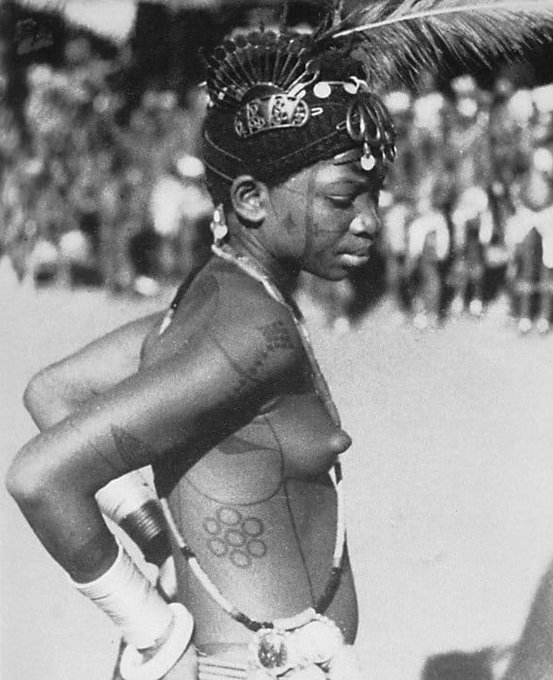
Uli is characterized by a “preference for negative space” and the use of abstract symbols derived from the natural world and domestic life;
Abstracting Reality: Uli designs rarely seek to create a realistic portrait of an object. Instead, they capture the “essence” of the subject. For instance, the Agwolagwo (the snake or python) is represented by a series of concentric circles or spirals, symbolizing “infinity and protection.”
Key Motifs: Common designs include the Isi Nwaoji (Kola nut head), Okala Isu (the tail of a fish), and Mbe (the tortoise). Each symbol carries a specific meaning; the tortoise, for example, represents “wisdom and the slow but steady progress of life.”
Compositional Balance: A master Uli artist understands the importance of “spatial equilibrium.” The designs are placed strategically on the body, the forehead, the small of the back, the thighs to accentuate the woman’s natural curves and physical grace.
Occasions for Adornment: The Social Clock of Uli
In traditional Igbo society, the presence of Uli on a woman’s body was a “visual announcement” that a significant event was occurring or about to occur;
Rites of Passage (Ichi-Ochi): For young girls transitioning into womanhood, Uli was an essential part of the “fattening room” process (Nkpu). During this period of seclusion, the girl’s body was meticulously decorated to signal her “readiness for marriage” and her family’s wealth.
Marriages and Festivals: During the Igba Nkwu (traditional wedding) or communal festivals like the Iwa Akwa, women would compete to have the most intricate Uli designs. It was a time of “public display,” where the quality of the Uli reflected the woman’s personal hygiene, patience, and social standing.
Title-Taking Ceremonies: When a man took a high title like the Ozo, his wife (the Lolo) was required to appear in public with specific Uli patterns. In this context, the art served as a “badge of office,” indicating that she was a woman of high prestige and ritual purity.
Daily Beauty and Mourning: While “heavy Uli” was for festivals, simpler patterns were worn as daily makeup. Conversely, during periods of deep mourning, Uli was often omitted, as its “celebratory beauty” would be inappropriate during a time of communal grief.
Uli as a Sacred Script: Wall Art and Shrines
While body art is the most personal application, Uli also transitioned into the architectural realm, particularly on the walls of houses and sacred shrines (Ihu Ala);
Mural Painting: In the northern Igbo areas, women would gather to paint the mud walls of the Obi (main house) with large-scale Uli motifs. This was often a “collaborative effort” that strengthened female bonds within the kindred.
Communicating with the Deities: Mural Uli was often more “symbolically dense” than body Uli. It was used to decorate the shrines of the Earth Goddess (Ala) to appease the spirits and ensure a bountiful harvest. The bold patterns acted as a “visual prayer,” inviting divine presence into the communal space.
The Decline and the “Uli Renaissance” in Modern Art
The 20th century saw a decline in the traditional practice of Uli due to Western influence, but it sparked a major movement in contemporary African art;
The Impact of Colonialism: Missionaries often viewed Uli as “pagan” or “immodest,” leading many converts to abandon the practice. The introduction of Western cosmetics and permanent clothing also reduced the “practical necessity” of body painting.
The Nsukka School: In the 1960s and 70s, a group of artists at the University of Nigeria, Nsukka led by figures like Uche Okeke and Obiora Udechukwu began to “intellectualize Uli.” They took the linear motifs of their mothers and grandmothers and applied them to canvas and paper.
Global Influence: Today, Uli-inspired designs are found in global fashion, graphic design, and modern Nigerian architecture. While fewer women wear the “organic dye” on their skin in daily life, the “aesthetic DNA” of Uli remains a primary source of pride for the Igbo people.
The use of Uli body art among Igbo women represents a “harmonious intersection” of biology, art, and social hierarchy. It was an art form that required no canvas other than the human form and no pigment other than the fruit of the earth. Through Uli, Igbo women exerted “creative agency,” turning their bodies into living archives of their culture’s history and values. Whether it was the “delicate spiral” on a maiden’s cheek or the “bold crescent” on a priestess’s wall, Uli was a testament to the belief that beauty is not just something to be looked at, but something to be “lived and breathed.” Although the physical liquid may wash away in a week, the “symbolic weight” of Uli continues to anchor the Igbo aesthetic in a world of ever-shifting trends. To understand Uli is to understand the “soul of Igbo femininity” , elegant, resilient, and deeply rooted in the soil.
Sources and references
- Achebe, C. (1958). Things Fall Apart. London: Heinemann. (Describing the visual culture and the use of Uli in traditional ceremonies).
- Cole, H. M., & Aniakor, C. C. (1984). Igbo Arts: Community and Cosmos. Los Angeles: Museum of Cultural History, University of California. (The definitive text on Igbo visual symbolism).
- Nwafor, O. (2012). The Visual Language of Uli: Meaning and Modernity. Journal of Contemporary African Art.
- Okeke, U. (1971). Tales of Land of Death: Igbo Folk Tales. Zenith Books. (Discussing the philosophy behind Uli aesthetics).
- Ottonberg, S. (1997). New Traditions from Nigeria: Seven Artists of the Nsukka Group. Smithsonian Institution Press.
- Udechukwu, O. ( 1981). Uli and the Development of Contemporary Nigerian Art. Nigeria Magazine.
Cite this article
Discussion
Sign in to join the discussion
Comments are checked by an editor before they appear. Leave a source or a correction and it is read first.
Continue reading
Related histories
 Anthropology and EthnographyThe Demography of Biafran Slave Exports (1650–1850)Read history →
 Anthropology and EthnographyMasquerade Traditions from Igboland to the Caribbean (Jonkonnu, Mocko Jumbie)Read history →
 Anthropology and EthnographyMapping Igbo Destinations in the Americas: A Comparative AnalysisRead history →
No comments yet
Nothing has been approved on this record yet. Comments are checked by an editor before they appear, so one written now shows on this page after that check.