 Ozikoro
 Anthropology and Ethnography · Published history
The Weight of Prestige: The Historical Evolution and Regional Styles of Igbo Brass Anklets
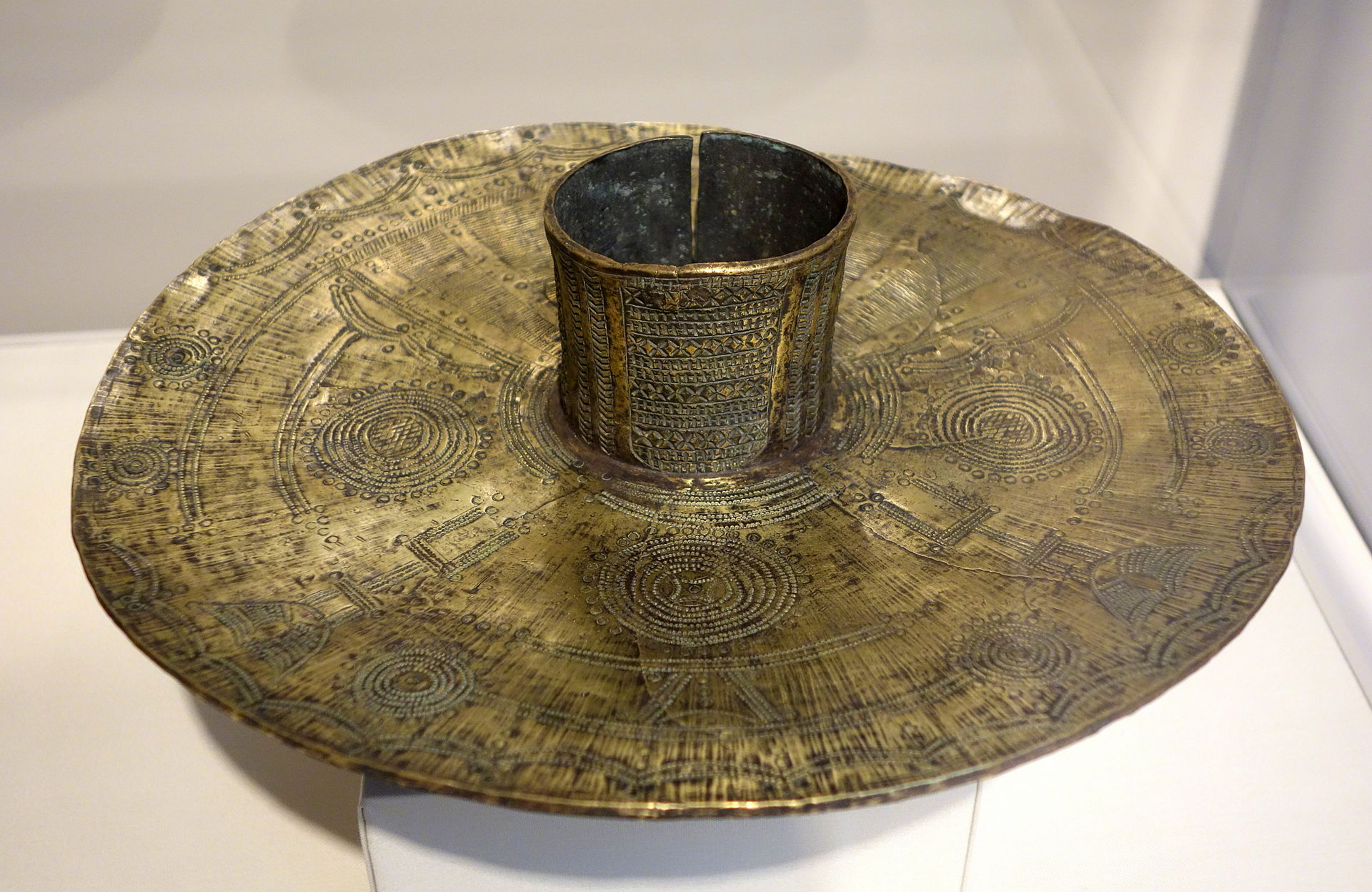
In the socio-cultural landscape of pre-colonial and early colonial Igboland, jewelry was far more than mere ornamentation; it was a complex semiotic system indicating rank, wealth, and marital status. Among the most striking of these adornments were the brass anklets, known variously as Njikota, Ọla-arọ, or Ọla-edo. These massive, often cumbersome leg ornaments were the exclusive preserve of women of high standing, specifically those who had attained the title of Lolo or whose husbands had taken the prestigious Ozo title. The evolution of these anklets reflects the broader history of metallurgy in West Africa, the shift from local smelting to the influx of European “manillas,” and the diverse aesthetic preferences of the various Igbo sub-groups. This article explores the historical trajectory of these anklets and the distinct regional styles that defined the “visual language” of Igbo feminine prestige.
The written record
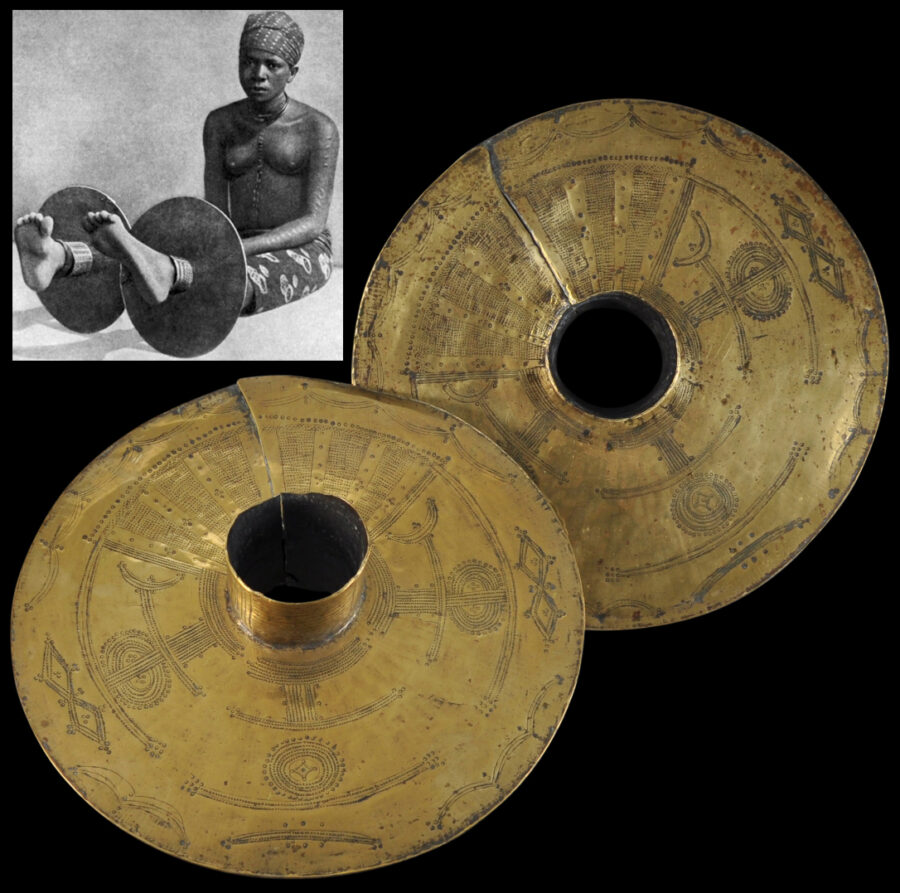
Photo Credit: G. I. Jones Archives / Museum of Archaeology and Anthropology, Cambridge.
Historical context
The Metallurgical Origins: From Igbo-Ukwu to the Manilla Trade
The tradition of brass casting among the Igbo is ancient, with roots stretching back over a millennium. The evolution of the anklets is intrinsically tied to the availability of copper and its alloys;
The Igbo-Ukwu Legacy: Archaeological evidence from the 9th-century Igbo-Ukwu sites reveals a highly sophisticated “lost-wax” casting technique. While the early finds were predominantly bronze, they established the cultural value of “yellow metal” as a sacred material associated with authority.
The Influx of European Brass: By the 15th and 16th centuries, the Atlantic trade introduced “manillas”, C-shaped brass or copper bracelets used as currency. Igbo blacksmiths, particularly from the renowned Awka and Abiriba guilds, began melting down these currencies to create the massive, hollow, or solid anklets seen in later centuries.
Symbolism of the Material: Brass was favored not only for its golden luster, which was likened to the sun, but also for its durability. A woman wearing Ọla was seen as “anchored” to her status, the weight of the metal physically manifesting her social gravity.
Regional Styles: The Ọmụmụ and Njikota Variations
As the practice spread across the Igbo heartland, distinct “regional aesthetics” emerged, allowing for the identification of a woman’s origin based on the shape and size of her anklets;
The Northern Igbo (Nri-Awka Axis): In this region, the anklets were often characterized by their massive, disc-like circumference. Known as Ọla-arọ (heavy brass), these were often flattened plates that extended horizontally from the ankle. They required the wearer to adopt a specific “graceful, slow gait” because the discs would overlap if the feet were placed too close together.
The Southern and Cross River Igbo (Owerri and Abiriba): Here, the style tended toward the Njikota or “joined” style. These were often more cylindrical, covering a significant portion of the lower leg. In Abiriba, known for its “merchant princes,” the anklets were frequently intricately engraved with geometric patterns symbolizing fertility and the python (eke), a sacred totem.
The Western Igbo (Anioma): Influenced by the proximity to the Benin Empire, the brass work here sometimes incorporated “beaded textures” cast directly into the metal, mimicking the coral bead regalia of the royalty.
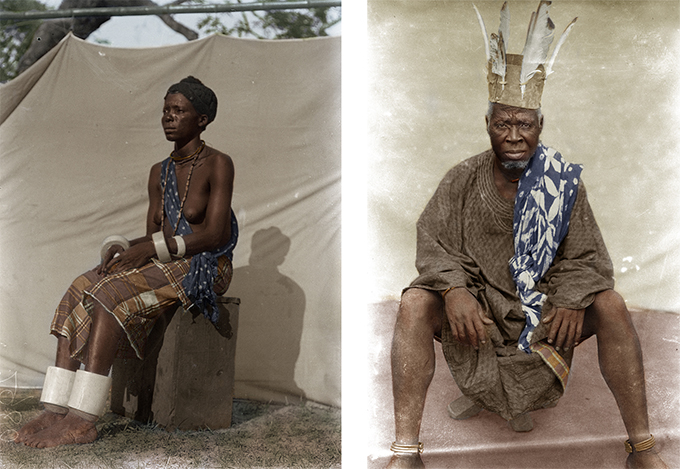
Photo Credit: University of Cambridge Museum of Archaeology and Anthropology / Northcote Thomas Collection.
The Social Mechanics of the “Anklet-Wearing” Ceremony
The acquisition of brass anklets was not a simple purchase but a “rite of passage” involving significant communal validation;
The Cost of Entry: The amount of brass required for a pair of high-status anklets could weigh anywhere from 5 to 15 pounds per leg. In an economy where brass was currency, wearing such weight was a literal “display of frozen capital.”
The Smithing Process: Blacksmiths would often travel to the home of the patron to fit the anklets. Because many of these ornaments were “permanently welded” or hammered shut around the leg, they were intended to be worn for life, or at least until a specific title was relinquished.
Physical Sacrifice for Status: The “heavy burden” of the anklets was a point of pride. It signaled that the woman was of such high rank that she was exempt from rigorous manual farm labor, as the anklets made such movement nearly impossible.
Ornamentation and Symbolic Engravings
The surface of the brass served as a canvas for “Uli-inspired” motifs and spiritual symbols;
Geometric Patterns: Triangles, concentric circles, and zig-zags were common. These were not merely decorative; they often represented the “path of the ancestors” or the ripples of the “sacred stream.”
The Python and the Tortoise: Engravings of the python symbolized “divine protection,” while the tortoise represented “wisdom and resilience.”
Tactile Aesthetics: Some anklets featured a “ribbed” or “ringed” texture, which was achieved by winding wax threads during the casting process, creating a surface that caught the light as the wearer moved during traditional dances.
The Colonial Impact and the Decline of Brass Regalia
The transition into the 20th century saw a decline in the wearing of heavy brass anklets, driven by shifts in “economy, fashion, and colonial intervention;
Missionary Opposition: Christian missionaries often viewed the anklets as “fetishistic” or as symbols of “heathen titles.” Converts were frequently pressured to remove their metal regalia as a sign of their new faith.
The Shift to Ivory: As brass became more common and less associated with exclusive currency, the ultra-elite shifted their preference toward ivory tusks (Ọdu). Ivory was lighter, rarer, and became the new standard for the Lolo title in many regions.
The Commercialization of Metal: With the introduction of the British pound, the “intrinsic value” of the brass anklet as a store of wealth vanished, leading many families to melt them down or sell them to collectors and museums.
Contemporary Legacy and Artistic Revival
While no longer worn as daily attire, the Igbo brass anklet remains a potent “icon of cultural heritage”:
Ceremonial Re-enactments: During festivals like the Iwa Akwa or Ozo title-taking ceremonies, women may wear lighter, modern replicas made of gold-plated materials or lighter alloys to honor their ancestors.
Museum Conservation: The finest examples of pre-colonial Ọla are now housed in the National Museum in Lagos and various international galleries, where they are studied as masterpieces of “African abstract sculpture.”
Influence on Modern Jewelry: Contemporary Nigerian designers continue to draw inspiration from the “bold, structural forms” of the Njikota, translating ancient prestige into modern high fashion.
The historical evolution of Igbo brass anklets is a narrative of “wealth, weight, and womanhood.” These ornaments were not passive accessories but active participants in the social hierarchy of the Niger Delta and the Igbo hinterland. From the ancient foundries of Awka to the prestigious households of the Nri Kingdom, the Ọla represented the “gold standard” of feminine achievement. Although the physical weight of the metal has been lifted from the ankles of modern Igbo women, the “symbolic weight” of the prestige, discipline, and cultural pride they represented continues to resonate in the identity of the Igbo people today.
Sources and references
- Achebe, C. (1958). Things Fall Apart. London: Heinemann. (Describing the social status of titled women and their adornments).
- Cole, H. M., & Aniakor, C. C. (1984). Igbo Arts: Community and Cosmos. Los Angeles: Museum of Cultural History, University of California.
- Eyo, E., & Willett, F. (1980). Treasures of Ancient Nigeria. New York: Alfred A. Knopf.
- Herbert, E. W. (1984). Red Gold of Africa: Copper in Precolonial History and Culture. Madison: University of Wisconsin Press.
- Neaher, N. C. (1979). Nigerian Bronze Bells. African Arts, 12(3), 42-47. (Discussing the metalworking traditions of the Awka smiths).
- Shaw, T. (1970). Igbo-Ukwu: An Account of Archaeological Discoveries in Eastern Nigeria. Evanston: Northwestern University Press.
Cite this article
Discussion
Sign in to join the discussion
Comments are checked by an editor before they appear. Leave a source or a correction and it is read first.
Continue reading
Related histories
 Anthropology and EthnographyThe Demography of Biafran Slave Exports (1650–1850)Read history →
 Anthropology and EthnographyMasquerade Traditions from Igboland to the Caribbean (Jonkonnu, Mocko Jumbie)Read history →
 Anthropology and EthnographyMapping Igbo Destinations in the Americas: A Comparative AnalysisRead history →
No comments yet
Nothing has been approved on this record yet. Comments are checked by an editor before they appear, so one written now shows on this page after that check.