 Ozikoro
 Anthropology and Ethnography · Published history
Traditional fishing and river practices in western Igbo areas
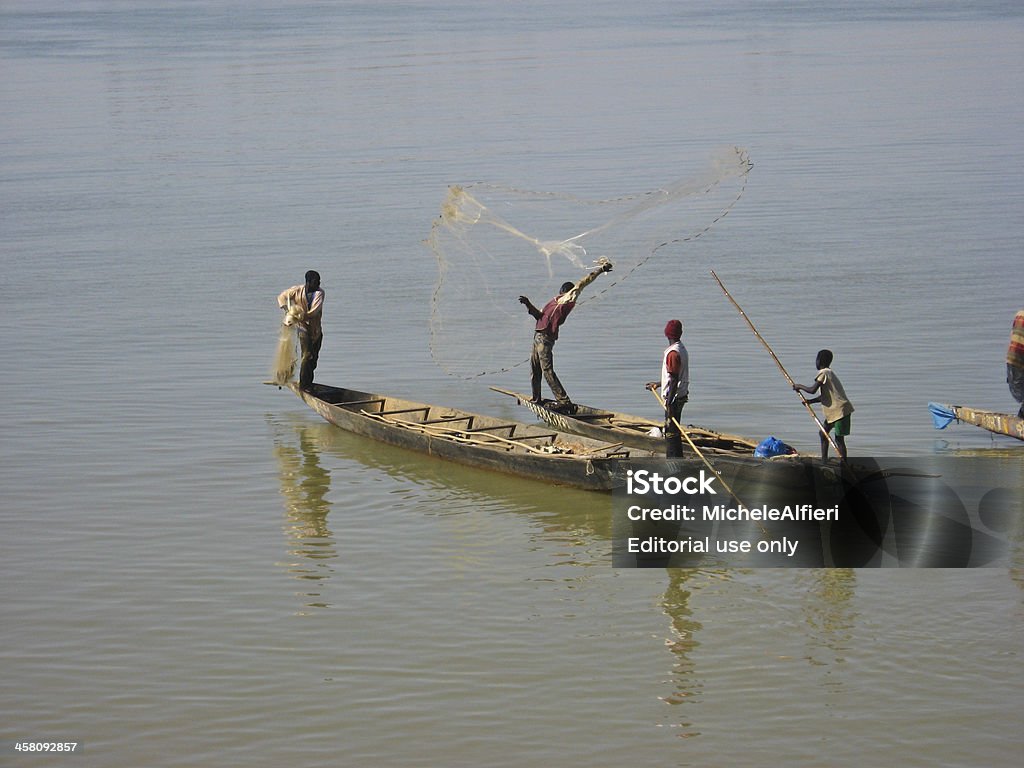
The Western Igbo people, geographically situated in the lush basins of the River Niger and its numerous tributaries in present-day Delta and northern Edo States, possess a cultural identity deeply entwined with the “rhythms of the water.” Unlike their hinterland counterparts who focused primarily on upland yam cultivation, the communities of the Anioma region including Asaba, Aboh, Onitsha-Olona, and Illah developed a sophisticated “aquatic civilization.” Their traditional fishing and river practices are not merely economic activities; they are a complex tapestry of “indigenous engineering,” spiritual reverence, and communal governance. The river, particularly the majestic Oshimili (River Niger), is viewed as a “living provider” and a sacred highway. This article explores the historical evolution of fishing techniques, the spiritual governance of the waterways, and the enduring communal traditions that define the Western Igbo relationship with the river.
The written record
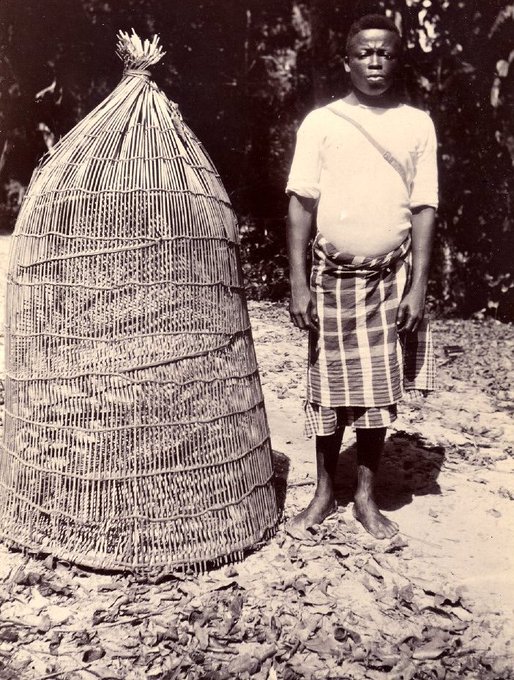
Photo: Charles Partridge, 25 April 1905.
Historical context
The Technology of the Catch: Indigenous Engineering
The Western Igbo developed a diverse array of fishing tools and methods, each meticulously adapted to the seasonal fluctuations of the river levels;
Net Weaving and Design: The traditional “throw net” (mbaili) and stationary gill nets were crafted from locally sourced fibers, though later replaced by nylon. The mesh size was strictly regulated by communal custom to ensure that “juvenile fish” could escape, a primitive but effective form of sustainable resource management.
The Fish Fence (Nko): One of the most ingenious practices is the construction of “bamboo and raffia fences” across smaller tributaries and flooded plains during the receding tide. These fences act as “funnels,” leading fish into intricate trap baskets (ugbo) from which they cannot retreat.
Night Fishing and Spear Techniques: In the calmer reaches of the river, fishers utilized “long-handled spears” (ogba) and lanterns. The light from the lanterns originally fueled by palm oil would attract fish to the surface, where the fisher would demonstrate “extraordinary precision” in striking the prey.
The Canoe-Culture: Naval Architecture and Navigation
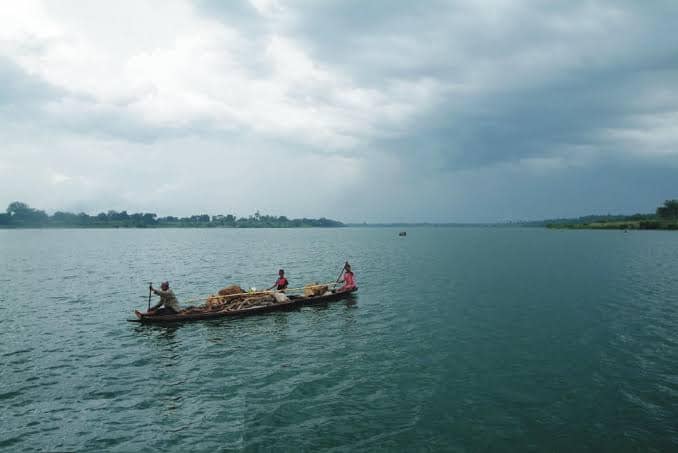
In Western Igbo areas, the canoe (uboko) is the “primary vehicle of life,” serving as a floating home, a market stall, and a war machine;
Dugout Construction: The crafting of a canoe was a ritualized process involving the selection of massive hardwood trees like the “Silk Cotton” or “Iroko.” Artisans used fire and specialized adzes to hollow out the trunk, a process that required a deep understanding of “buoyancy and hydrodynamic balance”.
Navigation and River Lore: Professional fishers and ferrymen possessed a “mental map” of the river’s currents, sandbanks, and underwater hazards. This “river lore” was passed down through apprenticeships, ensuring that the community could navigate safely even during the “turbulent floods” of the rainy season.
The Professional Guilds: River practices were often managed by guilds of expert paddlers and fishers. These groups held the “monopoly on long-distance transport,” moving goods from the hinterland to the great riverine ports of Aboh and Asaba.
Spiritual Governance: The Water Spirits and Taboos
The river is not seen as an inanimate resource but as a “spiritual domain” governed by powerful deities, most notably the water goddess, Ani Mmiri;
Sacrifice and Protection: Before any major fishing expedition or the launch of a new canoe, rituals were performed to appease the “water spirits.” Libations of local gin and the offering of kola nuts were essential to ensure “safe passage and a bountiful harvest.”
Sacred Days and Fishing Prohibitions: Traditional law often designated specific days as “taboo” (nso) for fishing. These days usually coincide with the festivals of water deities. Ecologically, these prohibitions acted as “closed seasons,” allowing the fish populations to replenish without human interference.
The Crocodile and the Manatee: Certain river animals were held in “sacred esteem.” In some Western Igbo communities, the crocodile or the manatee was viewed as a “totem,” and killing them was a “sacred abomination” requiring intense purification rites.
The Socio-Economic Role of Women in River Practices
While the physical act of “deep-sea” or “big-river” fishing was often a male-dominated endeavor, Western Igbo women were the “commanders of the post-harvest economy”;
Smoking and Preservation: The “smoking kiln” (utara) was the domain of women. Using specific aromatic woods, they preserved the catch, transforming highly perishable fish into “dried stock” that could be transported and sold in distant hinterland markets.
Market Dominance: Women controlled the “riverbank markets.” They acted as the primary “brokers” between the fishers and the upland buyers. This economic power granted Western Igbo women a level of “financial independence” and social influence that was highly respected in Anioma society.
Shellfish Gathering: In the shallow creeks and mudflats, women and children engaged in the gathering of “clams, snails, and periwinkles,” providing a consistent source of protein that supplemented the larger seasonal catches of the men.
Historical Trade and the Rise of Riverine City-States
Traditional river practices laid the foundation for the “commercial dominance” of Western Igbo states like the Kingdom of Aboh:
The Middleman Economy: By the 18th and 19th centuries, Aboh had become a “maritime superpower” on the Niger. They used their massive war canoes to “patrol the trade routes,” collecting tolls and controlling the flow of salt, European goods, and agricultural produce.
Diplomacy on the Water: River practices included a complex system of “water-right treaties” between the Igbo and their neighbors, such as the Ijaw and the Igala. These treaties ensured that trade could continue even during times of “inter-communal conflict.”
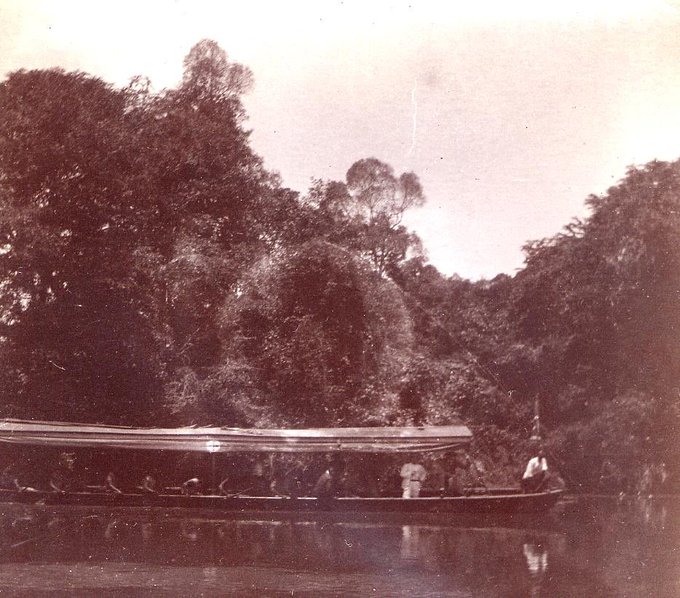
The Impact of the Steamship: The arrival of European steamships in the mid-19th century began to “disrupt the traditional river order.” The superior firepower and cargo capacity of British vessels eventually broke the “monopoly of the traditional canoe-houses.”
Modern Challenges: Environmental Decay and the Loss of Tradition
Today, the traditional fishing and river practices of the Western Igbo face “unprecedented threats” from industrialization and environmental neglect;
Pollution and Siltation: Oil exploration in the nearby Delta and “industrial runoff” have severely degraded the water quality of the Niger. The once-clear creeks are now often plagued by “siltation and plastic pollution,” which has decimated the indigenous fish species.
The Displacement of Indigenous Tech: Cheap, imported outboard engines and monofilament nets have replaced the “hand-crafted canoes and traditional traps.” While more efficient, these modern tools lack the “ecological balance” inherent in traditional practices, leading to overfishing.
The “Dying” Oral History: As the youth migrate to urban centers, the “river lore” , the names of the currents, the medicinal properties of river weeds, and the traditional songs of the paddlers is being lost. There is an urgent need for “cultural documentation” to preserve this aquatic heritage.
Traditional fishing and river practices in western Igbo areas represent a “profound dialogue” between a people and their environment. The Anioma culture proved that it was possible to build a “wealthy, complex society” while maintaining a sacred respect for the waterways. The “bamboo fence,” the “dugout canoe,” and the “sacred grove on the riverbank” were not signs of a “primitive past,” but components of a “sustainable future” that prioritized communal well-being over individual greed. As the modern world grapples with “climate change and water scarcity,” the ancient practices of the Western Igbo offer a “blueprint for resilience.” Preserving these traditions is not just an act of “nostalgia”; it is an essential step in ensuring that the Oshimili remains a “source of life” for generations to come. The “song of the paddler” may be faint, but its “wisdom” remains as deep as the river itself.
Sources and references
- Alagoa, E. J. (1970). Long-Distance Trade and States in the Niger Delta. Journal of African History, 11(3), 319-329.
- Dmochowski, Z. R. (1990). An Introduction to Nigerian Traditional Architecture: Vol. 3 South-Eastern Nigeria. Ethnographica Ltd. (Detailing riverine settlement patterns).
- Henderson, R. N. (1972). The King in Every Man: Evolutionary Trends in Onitsha Ibo Society and Culture. Yale University Press.
- Isichei, E. (1976). A History of the Igbo People. London: Macmillan.
- Nzimiro, I. (1972). Studies in Ibo Political Systems: Chieftaincy and Politics in Four Niger States. University of California Press. (Focusing on the Kingdom of Aboh).
- Ogedengbe, K. O. (1971). The Aboh Kingdom of the Lower Niger, c. 1650-1900. University of Wisconsin-Madison.
Cite this article
Discussion
Sign in to join the discussion
Comments are checked by an editor before they appear. Leave a source or a correction and it is read first.
Continue reading
Related histories
 Anthropology and EthnographyThe Demography of Biafran Slave Exports (1650–1850)Read history →
 Anthropology and EthnographyMasquerade Traditions from Igboland to the Caribbean (Jonkonnu, Mocko Jumbie)Read history →
 Anthropology and EthnographyMapping Igbo Destinations in the Americas: A Comparative AnalysisRead history →
No comments yet
Nothing has been approved on this record yet. Comments are checked by an editor before they appear, so one written now shows on this page after that check.