 Ozikoro
Anthropology and Ethnography · Published history
Embodied Spirits: Igbo Wood-Masked Dancers and the Cultural Significance of Masquerades in Ugwuoba, 1959
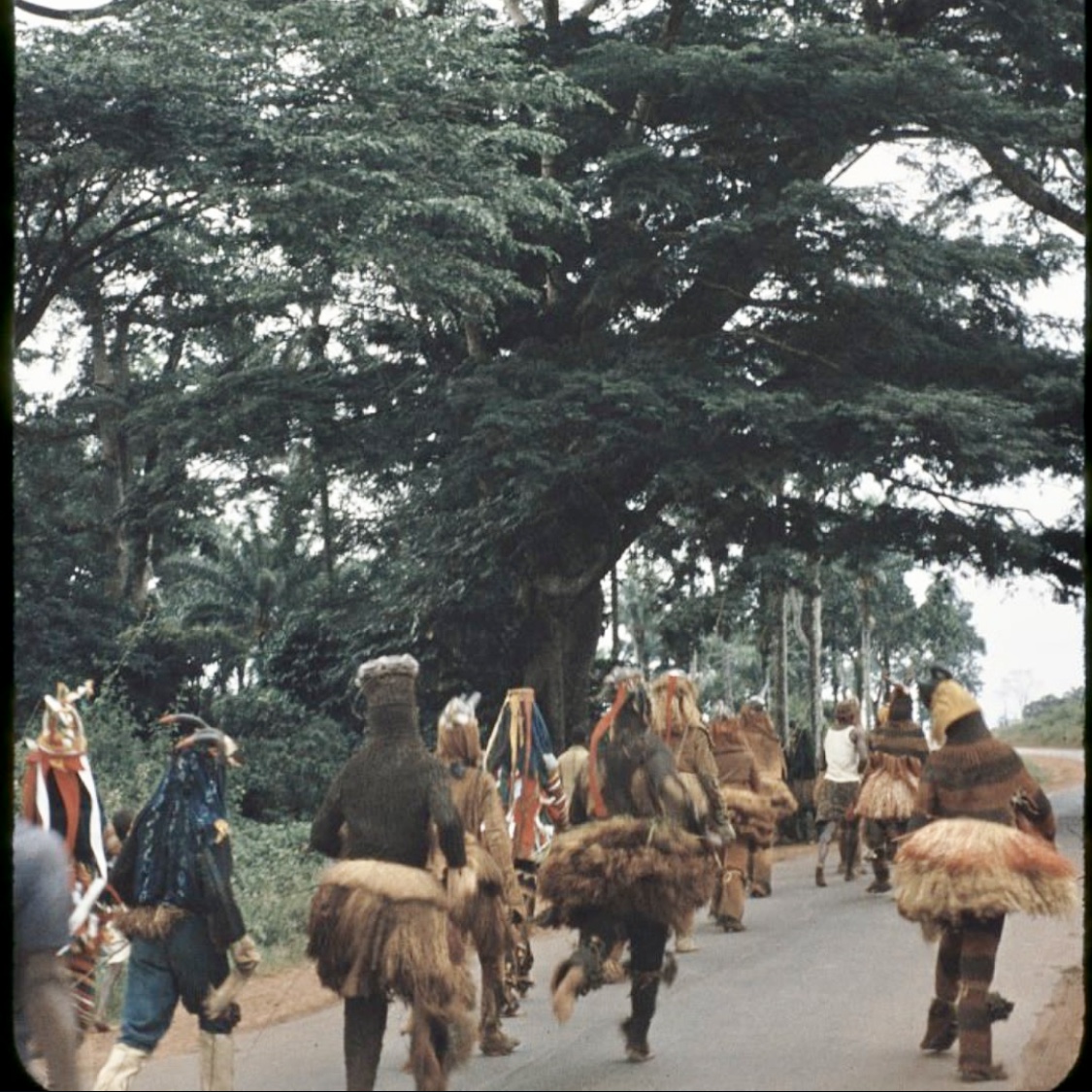
In 1959, anthropologist Simon Ottenberg documented a small group of Igbo wood-masked dancers in Ugwuoba village, Nigeria. These dancers wore elaborate costumes made of raffia and leaves, which are traditional materials commonly used in masquerades across various Igbo communities.
The written record
Historical context
Masquerades are integral to Igbo cultural and spiritual life, serving both entertainment and ceremonial purposes. The masks represent spirits, ancestors, or deities, and the performers, often believed to embody these supernatural beings, play roles that uphold social norms, enforce justice, or mark significant communal events.
Sources and references
- Ottenberg, S. (1959). Small group of Igbo wood-masked dancers in various raffia and leaf costumes, Ugwuoba village, Nigeria
Cite this article
Discussion
Sign in to join the discussion
Comments are checked by an editor before they appear. Leave a source or a correction and it is read first.
Continue reading
Related histories
 Anthropology and EthnographyThe Demography of Biafran Slave Exports (1650–1850)Read history →
 Anthropology and EthnographyMasquerade Traditions from Igboland to the Caribbean (Jonkonnu, Mocko Jumbie)Read history →
 Anthropology and EthnographyMapping Igbo Destinations in the Americas: A Comparative AnalysisRead history →
No comments yet
Nothing has been approved on this record yet. Comments are checked by an editor before they appear, so one written now shows on this page after that check.