 Ozikoro
 Anthropology and Ethnography · Published history
The First Baptist Church, Sapele (1917): A Landmark in the Modern Itsekiri Christian Movement

The religious landscape of the Western Niger Delta underwent a seismic shift at the turn of the 20th century. While the Portuguese had introduced Catholicism to the Itsekiri royalty in the 16th century, and the Church Missionary Society (CMS) had established Anglicanism in the late 1800s, it was the arrival of the Baptist mission that arguably sparked a more “populist” and “indigenized” Christian movement. At the heart of this transformation stands the First Baptist Church, Sapele, established in 1917. More than just a house of worship, this institution became a bastion of social reform, Western education, and a unique form of “Itsekiri-Christian identity.” By merging the egalitarian principles of the Baptist faith with the existing commercial energy of the Sapele port town, the church helped shape the modern social fabric of the Itsekiri and their neighbors.
The written record
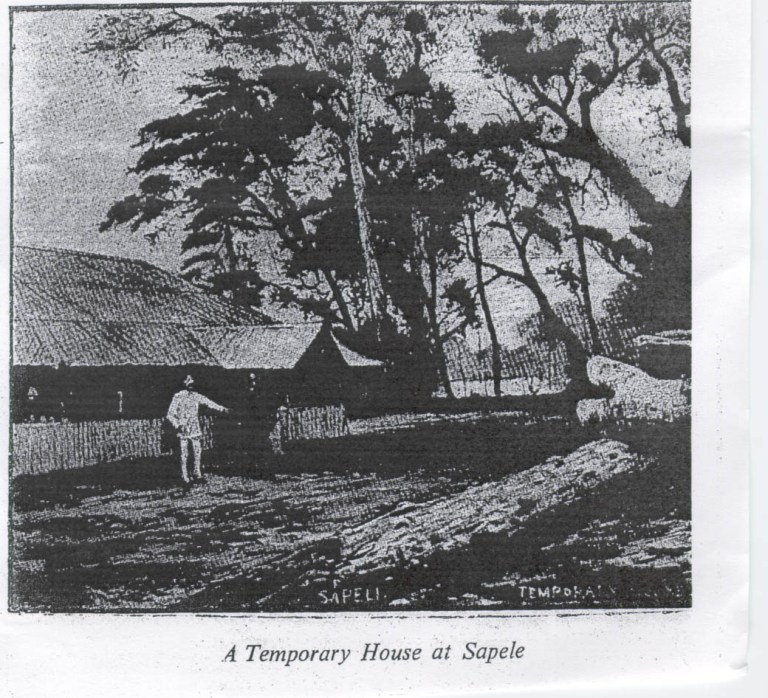
Photo Credit: The National Archives (UK) / Foreign and Commonwealth Office Collection.
Historical context
The Genesis: From Yorubaland to the Ethiope River
The establishment of the First Baptist Church in Sapele was not a direct import from Europe or America, but rather a “secondary mission” originating from Western Nigeria;
The Yoruba Connection: The Baptist faith in Nigeria gained its strongest early foothold in Ogbomoso and Abeokuta. Many of the early congregants in Sapele were Yoruba traders and civil servants who had migrated to the “commercial hub” of Sapele for the timber boom.
The 1917 Foundation: Under the spiritual guidance of figures like the Reverend A.S. Agbebi, the small fellowship in Sapele formally organized into the First Baptist Church in 1917. This marked the official entry of the American Southern Baptist influence into the western Delta.
A Diverse Congregation: While rooted in Yoruba missionary efforts, the church quickly attracted the “Itsekiri merchant class,” who saw the Baptist model of local church autonomy as an attractive alternative to the more rigid, hierarchical structures of the Anglican and Catholic missions.
The Architecture of Faith and Community
The physical and organizational presence of the First Baptist Church served as a beacon of “modernity” in early 20th-century Sapele;
The Historic Edifice: The construction of the church building itself was a major community undertaking. It reflected a “colonial Gothic” style that signaled the permanence of the Christian movement in a town that was rapidly evolving from a collection of “trading factories” into a permanent urban center.
Democratic Governance: One of the key “Baptist ideals” was the autonomy of the local congregation. This appealed to the Itsekiri “House System” mentality, where local leaders preferred a degree of independence from foreign or centralized control.
A Center for Social Gathering: The church served as one of the first “inter-ethnic” social spaces in Sapele. It provided a platform where Itsekiri, Urhobo, Ijaw, and Yoruba residents could interact outside the “competitive pressures” of the marketplace.
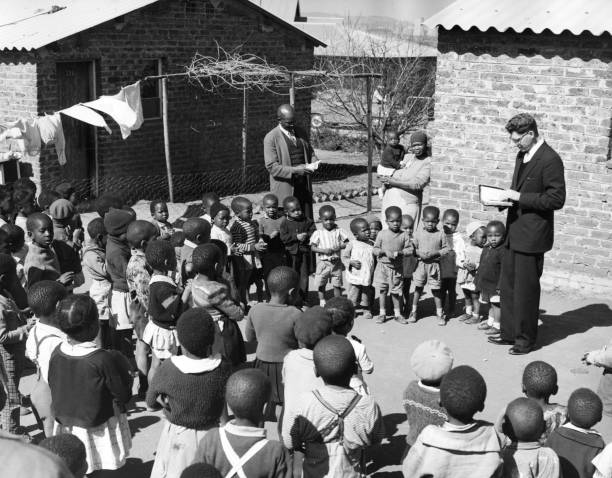
Photo Credit: Southern Baptist Historical Library and Archives / Foreign Mission Board Collection.
Education as an Instrument of the Movement
Like other missions of the era, the First Baptist Church, Sapele, recognized that the survival of the “movement” depended on the “literacy” of its members;
The Baptist School System: Shortly after the church’s founding, the Baptist Primary School was established. This institution was critical in providing an alternative to the CMS schools, fostering a “competitive educational environment” that benefited the town’s youth.
Vocational and Moral Instruction: The Baptist curriculum emphasized “self-reliance” and “moral discipline,” traits that were highly valued by the Itsekiri commercial elite who needed trustworthy clerks and agents for their “palm oil and timber empires.
The Rise of the Educated Elite: Many prominent Itsekiri families sent their children to Baptist schools, producing a generation of “Western-educated leaders” who would eventually navigate the transition from British colonial rule to Nigerian independence.
The Church and Itsekiri Cultural Identity
The First Baptist Church played a complex role in the evolution of “Modern Itsekiri Culture,” often acting as a bridge between “tradition and transformation”;
Challenging the Secret Societies: The Baptist mission was often vocal in its opposition to “pagan” practices and the perceived “excesses” of secret societies like the Oghu. This created a new social class of Itsekiri who defined their “status” through their “church standing” rather than through traditional titles.
Hymnody and Language: The translation of Baptist hymns into the Itsekiri language was a significant cultural milestone. It provided a “new musical vocabulary” for the people, integrating Itsekiri tonal patterns into Western melodies, a practice that continues in Delta churches today.
Marriage and Family Reform: The church promoted “monogamy” and Western-style wedding ceremonies. The “White Wedding” at First Baptist became a “status symbol” for the burgeoning Itsekiri middle class in Sapele.
Challenges: Rivalry and Social Tension
The growth of the Baptist movement in Sapele was not without its “sectarian and social hurdles”;
The “Scramble for Souls”: The First Baptist Church faced intense competition from the Roman Catholic Mission (RCM) and the Anglican CMS. This “denominational rivalry” sometimes split families, as siblings would attend different mission schools and adopt different religious identities.
The Clash with Traditionalists: The church’s insistence on a “total break” from certain ancestral rites led to friction with the “traditional council of elders” in Sapele. There were periods where Baptist converts were viewed as “alienated” from their roots.
Internal Leadership Struggles: As the church grew, tensions occasionally arose between the “Yoruba missionary founders” and the “emerging Itsekiri leadership,” who desired more indigenous control over the church’s administration and resources.
Today, the First Baptist Church, Sapele, stands as a “mother church” for many other Baptist congregations across Delta State.
The Proliferation of the Faith: From the 1917 foundation, Baptist missions spread into the Urhobo hinterland and further into the riverine Ijaw communities, largely using Sapele as the “administrative and spiritual springboard.”
A Pillar of Stability: Throughout the political upheavals of the 20th century, including the Warri Crisis and various labor strikes in the timber mills, the church remained a “stabilizing force” in Sapele, advocating for peace and communal welfare.
The Modern Movement: The church continues to be a central part of the “Itsekiri Christian Movement,” balancing the preservation of its “historic heritage” with the demands of a contemporary, globalized congregation.
The establishment of the First Baptist Church, Sapele, in 1917 was a defining moment in the “modernization” of the Western Niger Delta. It provided the Itsekiri people with a “spiritual and social framework” that complemented their commercial ambitions and provided a path for “upward mobility” through education. While it challenged traditional structures, it also offered a new way of being “Itsekiri” one that was literate, globally connected, and anchored in a modern Christian identity. As a “landmark of faith,” the church remains a testament to the resilient spirit of a people who have always excelled at navigating the currents of change.
Sources and references
- Adedapo, A. O. (1992). The History of the Baptist Mission in Nigeria. Baptist Press.
- Ayandele, E. A. (1966). The Missionary Impact on Modern Nigeria, 1842-1914: A Political and Social Analysis. Longmans.
- Bassey, M. O. (1998). Missionary Rivalry and Educational Expansion in Nigeria, 1885-1932. Peter Lang Publishing.
- Ikime, O. (1969). Niger Delta Rivalry: Itsekiri-Urhobo Relations and the European Presence 1884-1936. Longmans.
- Lloyd, P. C. (1963). The Itsekiri. International African Institut e.
- Sagay, I. (1980). The Itsekiri: A History of the Warri Kingdom. Togbi Press.
Cite this article
Discussion
Sign in to join the discussion
Comments are checked by an editor before they appear. Leave a source or a correction and it is read first.
Continue reading
Related histories
 Anthropology and EthnographyThe Demography of Biafran Slave Exports (1650–1850)Read history →
 Anthropology and EthnographyMasquerade Traditions from Igboland to the Caribbean (Jonkonnu, Mocko Jumbie)Read history →
 Anthropology and EthnographyMapping Igbo Destinations in the Americas: A Comparative AnalysisRead history →
No comments yet
Nothing has been approved on this record yet. Comments are checked by an editor before they appear, so one written now shows on this page after that check.