 Ozikoro
 Anthropology and Ethnography · Published history
The Guild of Metal Workers: Itsekiri’s Independent Evolution in Brass and Iron Work for Maritime Tools
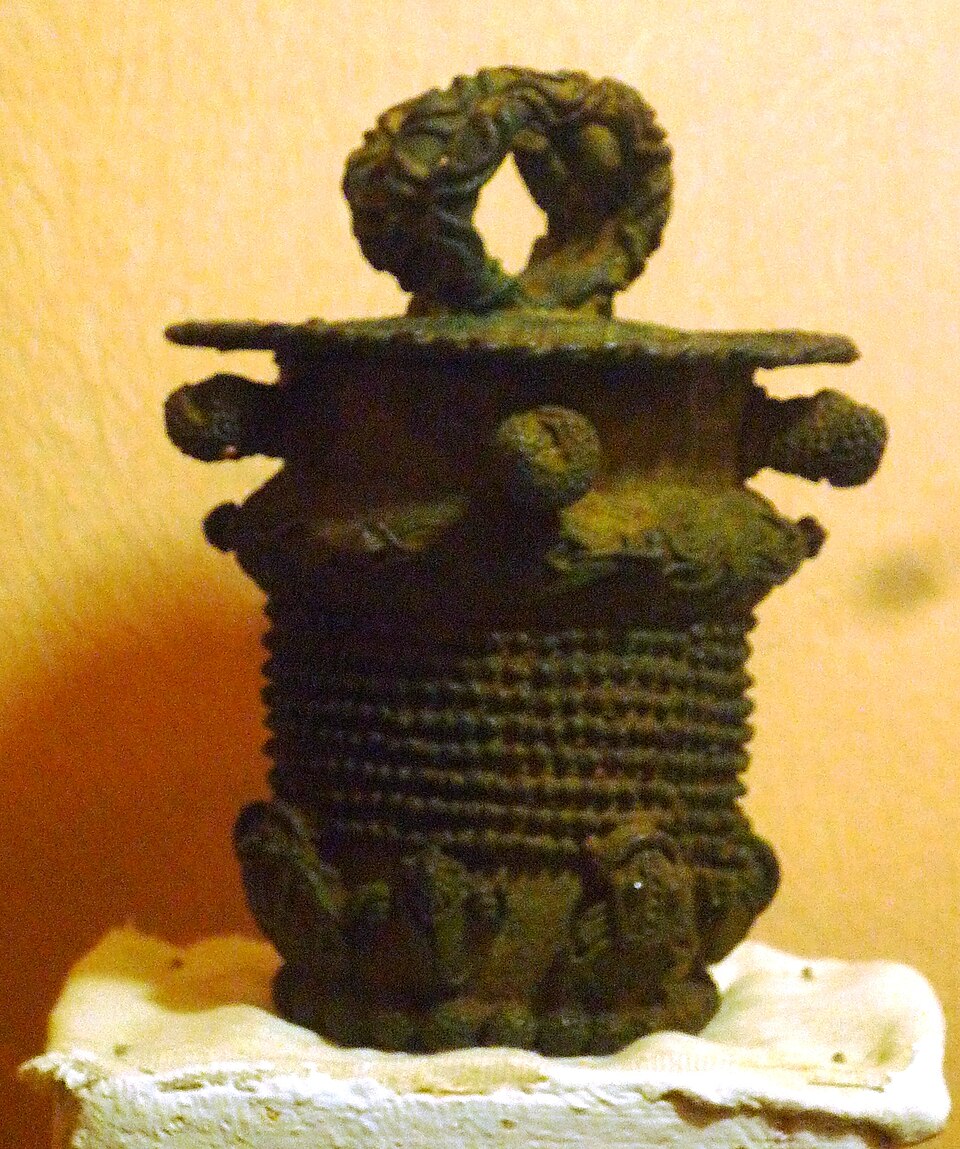
Throughout West African history, craftsmanship has played a crucial role in shaping technological, cultural, and economic development. Among the Itsekiri of the Warri Kingdom, metalworking emerged as a highly specialized tradition that served the kingdom’s maritime, commercial, and political needs. Although the Itsekiri interacted closely with Portuguese and later Dutch and English traders, the foundations of their metalworking skills especially in brass and iron were locally rooted and independently developed.
The written record
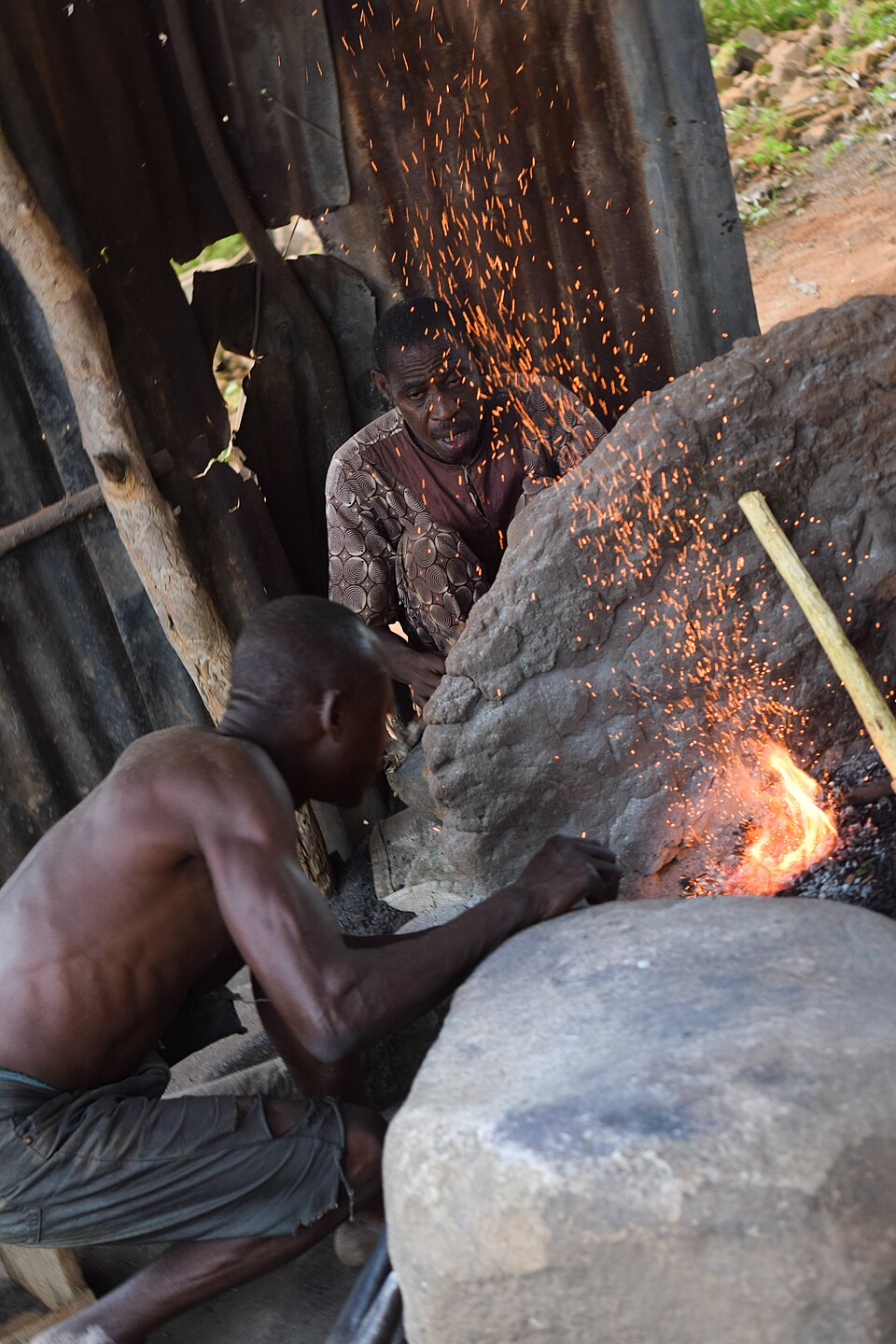
Photo credit: Nongov via Wikimedia Commons.
Historical context
Historical Background of Itsekiri Metalcraft
- Early Metallurgical Foundations
According to African Metallurgy, many West African societies developed iron smelting independently long before European contact. Archaeological evidence from the Niger Delta supports the notion that ironworking existed centuries prior to Portuguese arrival. Among the Itsekiri, iron was fundamental for agricultural tools, weaponry, fishing implements, and canoe-related instruments. These early industries formed the basis of what would later evolve into a more organized guild structure.
- Influence of Regional Exchange Networks
The Niger Delta has long been a center of artistic and industrial craft, particularly among neighboring Benin, Urhobo, and Ijaw peoples. While Benin’s famed brass and bronze guilds exerted some artistic influence, the Itsekiri developed their own distinctive maritime-oriented metal industries. According to scholars, the Itsekiri were culturally hybrid drawing from Yoruba, Igala, and Benin elements but developed unique practices shaped by their coastal environment. Metalworking, therefore, was both indigenous and adaptive.
Formation and Organization of the Guild
- Structure and Hierarchy
The Itsekiri Guild of Metal Workers emerged as a hereditary and apprenticeship-based institution. Skilled smiths formed families that passed down knowledge through generations. Their craft was organized around master smiths (“Olotu-Irere”) responsible for training and religious rituals, journeymen apprentices who learned technique and guild ethics, specialized craftsmen focusing on either brass casting, blacksmithing, or repairs of maritime tools.
The guild maintained strict control over techniques and trade secrets, ensuring quality and preventing non-members from diluting the standard of craftsmanship.
- Ritual and Spiritual Dimensions
Metalworking in many African cultures is associated with spiritual power. As documented in Horton, ironworkers often worked under the ritual protection of Ogun, the deity of iron. Among the Itsekiri, guild members made offerings before major smelting or casting seasons. These rituals affirmed identity, unity, and continuity of craftsmanship.
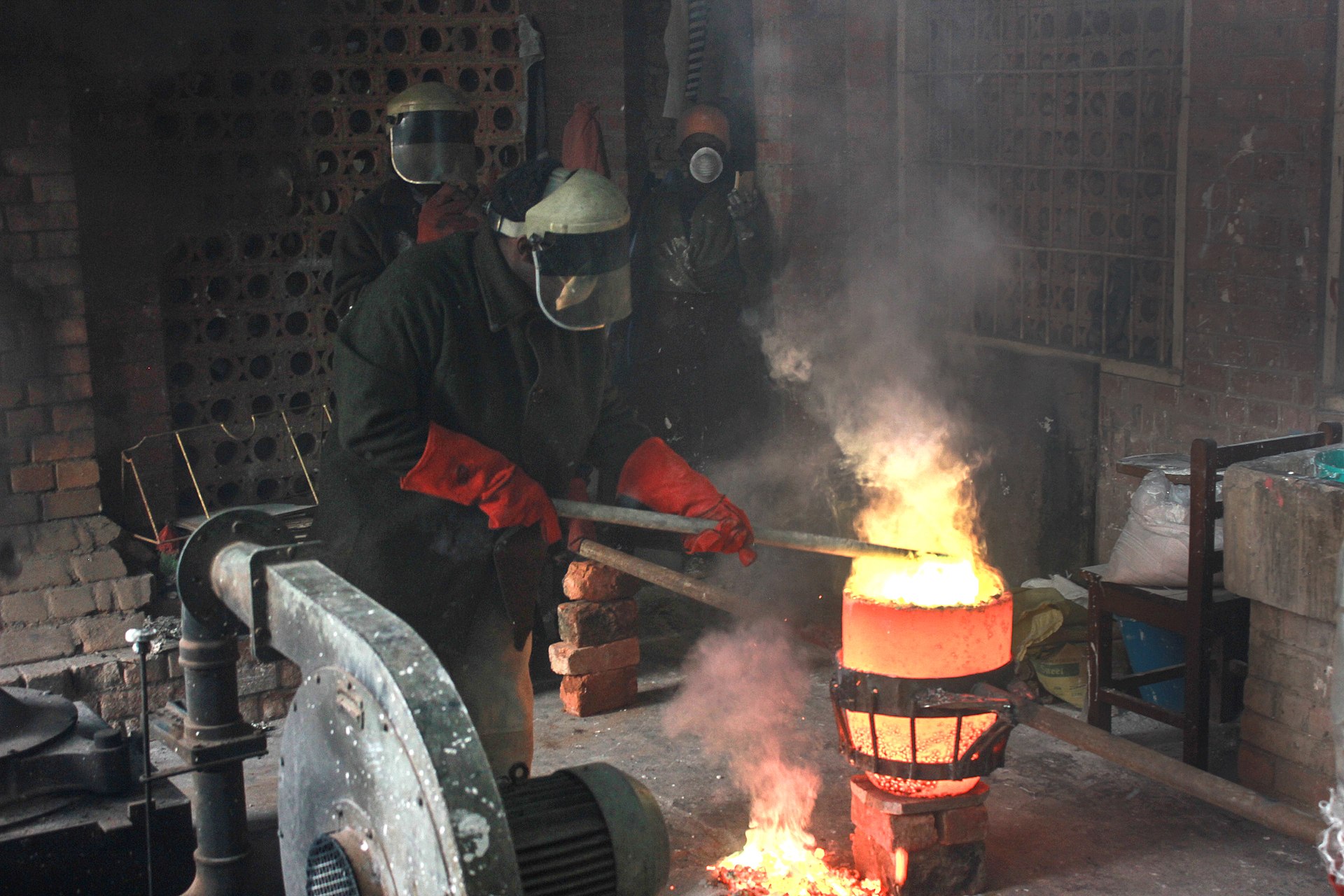
Photo credit:Samson iron via Wikimedia Commons.
Technological Evolution and Craft Methods
- Ironworking Techniques
Ironworkers produced an array of tools crucial for fishing, canoe building, and warfare. Techniques included bloomery smelting, using clay furnaces, forging with stone or iron anvils, quenching and tempering to harden blades, riveting and shaping of long iron nails used in canoe making.
These processes enabled the Itsekiri to dominate riverine activities, as their tools were durable and suited for mangrove and coastal environments.
- Brass and Bronze Casting
While Benin is most famous for bronze and brass casting, the Itsekiri adapted similar techniques on a smaller, more utilitarian scale. Their brasswork involved lost-wax casting (cire perdue),
Molding bells, bracelets, fishing weights, and ceremonial objects, and
Producing decorative items for nobles and merchants. Brass gained importance during the 16th–17th centuries through trade with the Portuguese, who supplied ingots and manillas (bracelet-shaped currency). Itsekiri adapted these materials into maritime tools and cultural artifacts.
Maritime Tools and Naval Technology
- Iron Tools for Canoe Construction
The Itsekiri were renowned canoe builders. Their war canoes, capable of carrying 50–100 warriors, relied heavily on metal tools. The Guild produced long iron adzes for hollowing canoe interiors, chisels and wedges for shaping planks, rivets and nails for fastening joints, caulking implements for sealing seams.
The precision of these tools contributed to the Itsekiri’s exceptional control of their waterways.
- Maritime Navigation and Fishing Equipment
Smiths produced specialized iron tools for fishing, including harpoons and fish hooks, long anchor spikes, chain links for stabilizing cargo, protective iron fittings for canoe prows.
These tools sustained the Itsekiri’s commercial fishing industry, which fed local populations and supported trade.
- Weapons for Naval Warfare
Ironworkers supplied the kingdom with weapons that complemented its famed musketeers. These included cutlasses and daggers for boarding enemy canoes, spears with hardened iron tips, shield fittings, reinforced cannon stands and swivel mounts (introduced later through European trade).
The guild thus stood at the center of Warri’s military-industrial strength.
Economic and Social Importance
- Drivers of Commercial Power
The Guild contributed significantly to Warri’s economic growth by maintaining the kingdom’s maritime infrastructure, producing tools that enabled long-distance trade, repairing foreign metal goods, reducing reliance on imports, creating ornaments that fed into social and diplomatic gift economies.
This made metalworkers indispensable to both palace and community.
- Relationship with the Olu and the Palace
The Guild maintained a special relationship with the Olu of Warri. Master smiths were sometimes attached to the palace as retainers. They crafted ceremonial items such as brass staffs (“udje”), iron scepters, gong instruments used in court rituals. This relationship reinforced political loyalty and elevated the guild’s prestige.
Cultural Symbolism and Artistic Expression
- Metalwork as Identity
Brass and iron items produced by the guild signified status, wealth, and lineage. Chiefs often wore brass bracelets and anklets during festivals. Fishing communities used decorated iron tools symbolizing maritime identity.
- Aesthetic and Functional Balance
Itsekiri metalwork blended utilitarian design with aesthetic detail. Even simple maritime tools sometimes featured stylized markings or patterns for spiritual protection or artistic expression.
Continuity and Change in the Colonial Era
- Disruption and Adaptation
British colonial rule disrupted traditional guild systems across Nigeria. Imported European tools reduced local demand, and colonial regulations limited local smelting operations. Nonetheless, many Itsekiri metalworkers adapted by focusing on repairs, ornament production, and hybrid techniques.
- Legacy in the Modern Itsekiri Community
Today, metalworking persists in forms such as boat repairs, production of fishing tools, blacksmith workshops in riverine communities, and ceremonial brass casting for festivals. The Guild’s legacy remains a testament to Itsekiri innovation, resilience, and maritime culture.
The Itsekiri Guild of Metal Workers exemplifies a remarkable tradition of indigenous technological evolution. Rooted in centuries-old metallurgical practices and shaped by the kingdom’s maritime environment, the guild produced iron and brass tools that sustained naval power, fishing industries, cultural identity, and palace administration. While influenced by regional trade and contact with Europeans, Itsekiri metalworking was fundamentally an independent and internally developed craft. Its legacy continues to reflect the creativity and sophistication of Niger Delta societies.
Sources and references
- Alpern, S. (1995). What Africans Got for Their Slaves: Reciprocal Exchange in the Slave Trade. Journal of African History, 36(1), 63–64.
- Ekeh, P. (2008). Warri City and British Colonial Rule in the Western Niger Delta. Urhobo Historical Society.
- Horton, R. (1975). African Religion in Transformation. Cambridge University Press.
- Ogunba, O. (1978). Traditional Arts of the Southern Nigerian Peoples. Journal of Cultural Studies, 4(2), 45–62.
Cite this article
Discussion
Sign in to join the discussion
Comments are checked by an editor before they appear. Leave a source or a correction and it is read first.
Continue reading
Related histories
 Anthropology and EthnographyThe Demography of Biafran Slave Exports (1650–1850)Read history →
 Anthropology and EthnographyMasquerade Traditions from Igboland to the Caribbean (Jonkonnu, Mocko Jumbie)Read history →
 Anthropology and EthnographyMapping Igbo Destinations in the Americas: A Comparative AnalysisRead history →
No comments yet
Nothing has been approved on this record yet. Comments are checked by an editor before they appear, so one written now shows on this page after that check.